
HX Expeditions Launches Free Alaska Educational Course for Responsible Arctic Cruise Travel in 2026
HX Expeditions partners with University of Tasmania to launch free pre-departure Alaska educational course, transforming how cruise passengers prepare for Arctic expedition travel with science-based learning.

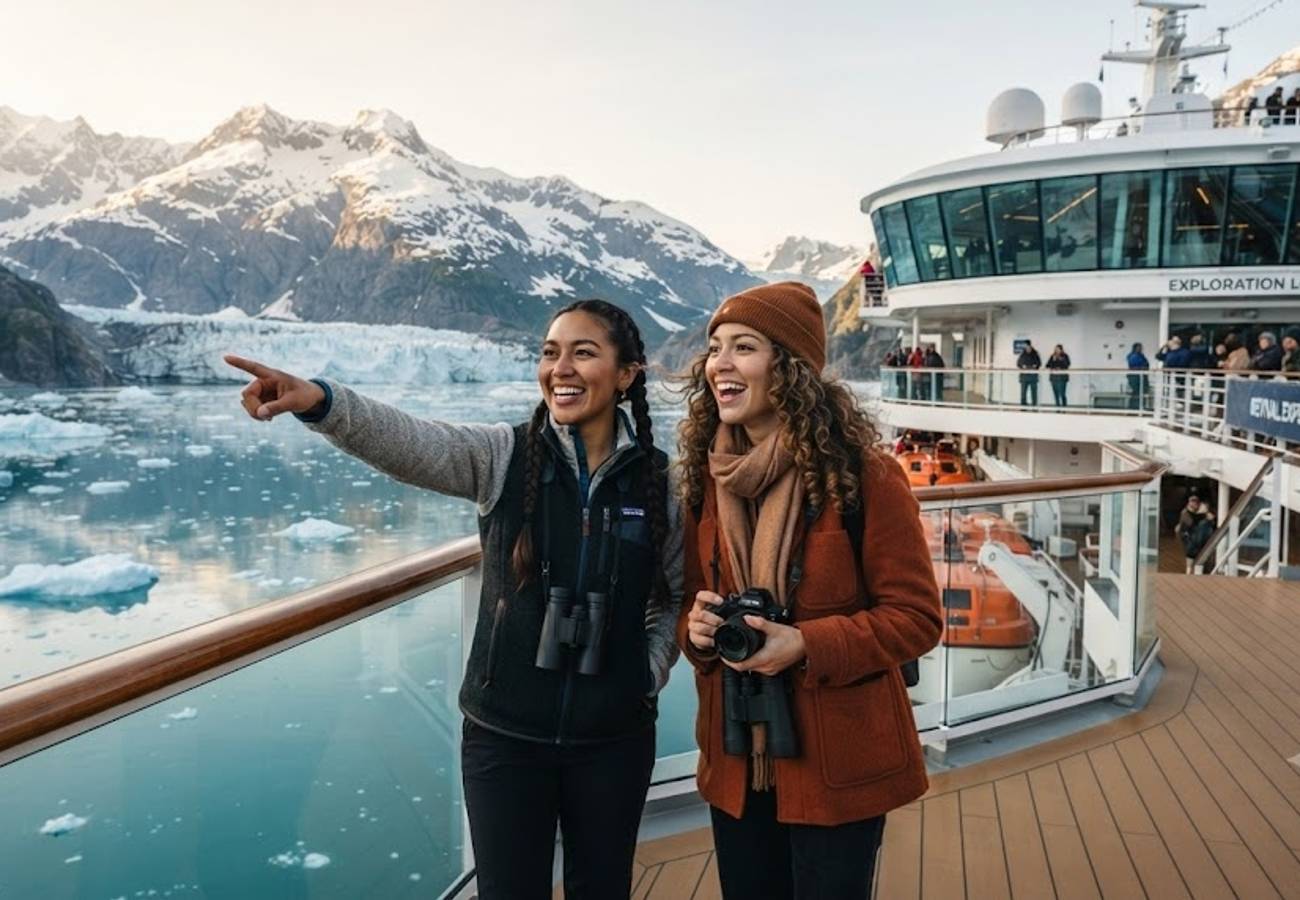
Image generated by AI
The New Frontier: Education at Sea
The global expedition cruise industry is undergoing a quiet revolution. HX Expeditions has just launched something that could reshape how thousands of Arctic travellers prepare for their voyages—a completely free, university-developed educational course focused on Alaska's fragile ecosystems.
This isn't your typical cruise orientation. The partnership with the University of Tasmania signals a fundamental shift: expedition cruising is becoming science-first, passenger-prepared, and accountability-driven.
Reddit: "Finally, cruise lines are treating Arctic destinations with the respect they deserve. Pre-departure education should be mandatory everywhere." — r/travel
What Exactly Is the HX + UTAS Alaska Course?
The newly launched HX + UTAS Alaska Course is an online, pre-departure learning programme delivered entirely free to passengers booking HX expeditions. Here's what makes it significant: it's structured, academic, and specifically designed to prepare travellers for sensitive Arctic and sub-Arctic environments before they ever set foot on a ship.
Each module takes approximately 30 minutes to complete. Upon finishing, passengers receive a certificate and loyalty programme benefits—integrating education directly into customer engagement strategies.
This represents a departure from traditional cruise industry practices, where environmental briefings typically occur aboard the vessel itself.
The Science Behind Responsible Arctic Tourism
Katmai National Park, Glacier Bay, and Alaska's vast marine ecosystems operate under strict federal protections enforced by the National Park Service and US Fish and Wildlife Service. These agencies maintain regulated visitor systems and wildlife interaction protocols to protect endangered brown bears, whale populations, and sensitive coastal habitats.
The HX course focuses on core ecological themes: Alaska's biodiversity, marine ecosystem dynamics, wildlife conservation principles, and regulated viewing practices. Travellers learn the why behind distance regulations, landing restrictions, and wildlife interaction guidelines—transforming compliance into genuine understanding.
This educational framework aligns with international environmental governance standards such as the Arctic Council guidelines and protocols established under existing polar region frameworks that emphasize environmental awareness in high-latitude ecosystems.
Why University Partnership Matters
The University of Tasmania collaboration signals an emerging trend: universities are now directly shaping sustainable tourism models. Academic institutions contribute scientific research, environmental data, and rigorous curriculum design to ensure passengers gain accurate, structured knowledge before visiting ecologically sensitive regions.
This isn't academic theatre. Universities bring credibility and scientific rigor that marketing departments cannot manufacture. When a passenger completes a course developed by university researchers who actually study polar ecosystems, behaviour changes—it becomes informed, not performative.
The Antarctic educational programme that preceded this Alaska initiative became one of the first university-developed learning experiences for cruise passengers visiting polar regions. Now it's expanding northward.
How This Fits Into Global Cruise Regulation
Expedition cruising operates under strict environmental regulations enforced by maritime authorities and regional conservation bodies. The International Maritime Organization (IMO) and environmental authorities set limitations on vessel size, passenger movement restrictions during landings, and wildlife interaction rules.
Educational programmes like HX's support these regulatory frameworks by preparing travellers to act responsibly before they encounter protected environments. It's preventative rather than punitive—passengers understand the reasoning behind rules, making compliance intuitive.
Arctic Council guidelines and the Antarctic Treaty System frame these efforts within international policy discussions recognizing that fragile polar regions demand knowledge-driven visitor behaviour.
The Bigger Picture: Knowledge-Driven Expedition Travel
What's happening here extends beyond a single cruise line. The shift toward pre-departure education reflects a fundamental transformation in how the expedition travel sector approaches Arctic and Antarctic tourism.
As polar tourism continues growing—driven by increased accessibility and traveller interest in seeing glaciers and wildlife before climate change renders them unrecognizable—cruise operators are investing in structured learning programmes as core offerings, not afterthoughts.
This evolution suggests a long-term industry pivot: exploration increasingly demands environmental stewardship and scientific understanding as prerequisites.
Alaska's Wildlife Tourism Under Federal Protection
Alaska's wildlife tourism landscape—bear viewing in Katmai National Park and Preserve, whale watching in coastal waters, and glacier ecosystem exploration—operates under tightly regulated visitor systems. These controls manage human-wildlife interaction to minimize disturbance to natural habitats.
Travellers on HX expeditions using this educational preparation will understand that the distance they're required to maintain from brown bears isn't bureaucratic inconvenience—it's the difference between a bear maintaining natural behaviour and one becoming habituated to human presence, potentially necessitating wildlife management intervention.
Knowledge changes perspective. That's the entire premise of this course.
What Completion Actually Provides
Passengers who complete the Alaska course receive certification and loyalty programme credits. The integration matters: HX has structured education to directly reward engagement, encouraging actual participation rather than passive enrolment.
Each module delivers specific, detailed insights into Arctic environments in digestible timeframes. This accessibility factor is crucial—complex environmental information compressed into 30-minute sessions makes pre-departure preparation realistic for busy travellers rather than an academic burden.
The Road Ahead for Expedition Cruising
The launch of HX Expeditions' Alaska course represents a watershed moment for the industry. Educational integration signals that expedition cruise operators are repositioning their business model around responsibility and sustainability, not just access.
As Arctic tourism intensifies, structured learning programmes are expected to become increasingly standard—potentially moving from competitive differentiation to minimum operational expectation.
The question now: will other expedition cruise lines follow, or will HX's commitment to science-based passenger preparation become a distinguishing market advantage?
The future of Arctic tourism runs through the classroom—and that's exactly where it should be.
Related Travel Guides
Disclaimer
This article is for informational and educational purposes only. It does not constitute legal, financial, or professional advice. While we strive to provide accurate and up-to-date information, travel policies, regulations, and conditions change rapidly. Always verify information with official sources before making travel decisions. Nomad Lawyer makes no representations about the accuracy, reliability, completeness, or suitability of the information provided. Readers should consult qualified professionals for advice specific to their circumstances. The views expressed in this article are those of the author and do not necessarily reflect the views of Nomad Lawyer.
Raushan Kumar
Founder & Lead Developer
Full-stack developer with 11+ years of experience and a passionate traveller. Raushan built Nomad Lawyer from the ground up with a vision to create the best travel and law experience on the web.
Learn more about our team →