
Hungary Restores Dombóvár–Komló Rail Link After Three-Year Suspension: 42-Minute Trains, InterCity Connections Return August 1, 2026
Hungary reopens the Dombóvár–Komló railway on 1 August 2026 after three years, restoring 42-minute train journeys, InterCity links, and upgraded infrastructure across southern Hungary.

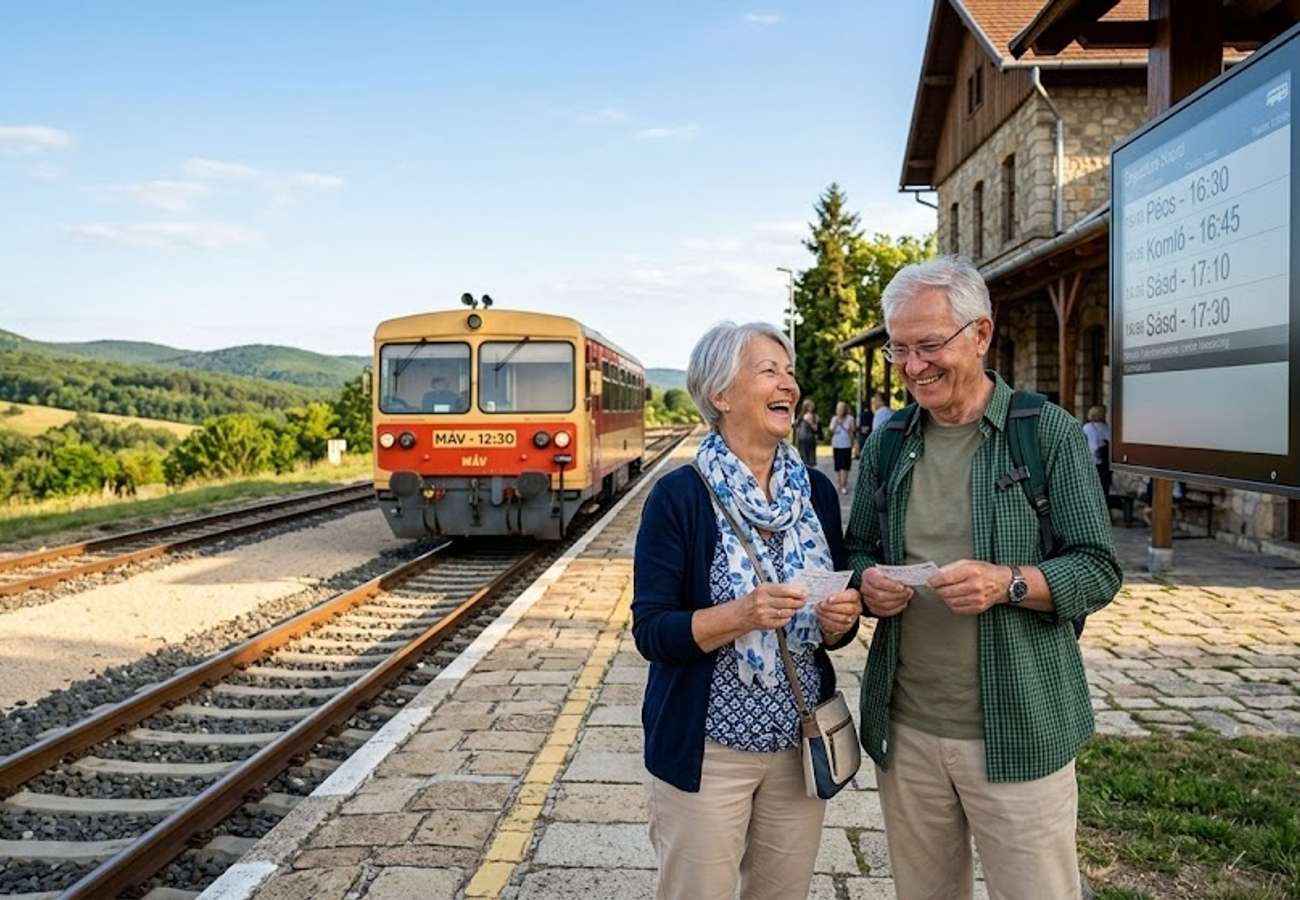
Image generated by AI
[Budapest, July 30, 2026] — After three years without passenger trains, Hungary's Dombóvár–Komló railway reopens on 1 August 2026, cutting journey times to 42 minutes and reconnecting southern Hungary's smaller communities to InterCity corridors serving Budapest, Pécs, Kaposvár, and Baja.
The suspension, in place since 2023, forced commuters and visitors onto substitute buses. The restored Line 47 service replaces that arrangement entirely, delivering eight-minute time savings, modernised passenger information systems, and a relaunched regional day ticket priced at 1,490 forints (approximately EUR 4.1).
Passenger Trains Return to Dombóvár–Komló Route With Faster 42-Minute Journeys
Rail operations between Dombóvár and Komló were paused in 2023, with replacement buses carrying passengers along the corridor during the interim period. That arrangement ends on 1 August, when single-car Bz diesel multiple units begin operating as S447 passenger services.
The renewed rail connection brings the journey time between the two endpoints down to approximately 42 minutes — roughly eight minutes faster than the bus service it replaces. For daily commuters and students travelling between these communities, that time saving compounds across a full week.
Outside peak morning and evening windows, trains will run on a two-hour frequency, giving passengers a predictable cadence throughout the day. The first departure from Dombóvár is scheduled for 4:24, while the first train from Komló will leave at 5:21, heading towards Sásd.
During daytime operations, the timetable follows a structured pattern: trains depart Dombóvár at seven minutes past every even hour and leave Komló at two minutes past every odd hour. This clock-face scheduling allows passengers to plan connections without consulting complex timetables.
Restored Railway Links Southern Hungary to Budapest, Pécs, Kaposvár, and Baja
The service redesign extends well beyond the Dombóvár–Komló corridor itself. Engineers and timetable planners built the schedule to synchronise with broader regional railway networks, giving passengers from smaller towns seamless access to major destinations.
Passengers transiting through Dombóvár will connect directly with Mecsek InterCity services running between Budapest and Pécs. Additional routing options strengthen accessibility towards Kaposvár and Baja, opening up travel possibilities that were cumbersome — or impossible — during the bus substitution period.
For the Mecsek region's tourism economy, the timing is significant. The area's hiking trails, natural reserves, and villages have drawn increasing visitor interest, but access without rail connections required private vehicles or irregular bus routes. The restored line gives day-trippers from Budapest and Pécs a practical public transport option.
Travel planners can review available routes and connection opportunities through the MÁVPlusz journey planning system, which integrates the new timetable into its broader network coverage.
Track Maintenance and Infrastructure Upgrades Precede Railway Reopening
The return of passenger operations required substantial physical preparation along the corridor. Maintenance teams completed ballast cleaning and track alignment works across more than 18 kilometres of railway track, addressing deterioration that accumulated during the suspension period.
Approximately 6,500 concrete sleeper fastening points were repaired to restore the route to safe operating condition. These fixes target the foundational elements that keep rails properly positioned — a critical requirement after three years without regular passenger traffic maintaining the line's operational baseline.
Beyond the track itself, passenger-facing infrastructure is also receiving attention. New regional information boards will be installed at stations and stops along the route. Komló station will receive a modernised information unit, replacing outdated displays with clearer travel guidance for passengers.
Mecsekpölöske Halt Receives Digital E-Paper Passenger Information System
Among the modernisation efforts, Mecsekpölöske halt stands out as a testbed for new display technology. A digital e-paper terminal will provide real-time train information at the small wayside stop, introducing advanced passenger communication to a location that previously had limited access to live data.
The system is engineered for outdoor railway environments. It maintains clear visibility in direct sunlight — a challenge for conventional LCD displays — and operates on minimal electricity. Rather than continuously refreshing, the e-paper screen updates only when information changes, reducing power consumption to negligible levels.
For smaller railway stops across Hungary's rural network, this installation could serve as a model. Live arrival and departure information has traditionally been concentrated at larger stations, leaving passengers at minor halts dependent on printed timetables or smartphone apps.
Mecsek Day Ticket Returns at 1,490 Forints to Boost Regional Tourism
Coinciding with the railway reopening, the 24-hour Mecsek day ticket returns on 1 August. Priced at 1,490 forints (approximately EUR 4.1), the ticket covers travel on the Dombóvár–Komló railway line, selected segments of the Dombóvár–Bátaszék and Budapest–Dombóvár–Pécs routes, and regional bus services within the designated area.
The ticket is designed for flexibility. Holders can explore the Mecsek region's mountain landscapes, outdoor recreation zones, and sections of the Hungarian Blue National Trail without purchasing individual fares for each leg of their journey.
A discounted fare of 400 forints (approximately EUR 1.1), introduced during the replacement bus period, will remain available on trains through at least the end of 2026. This reduced rate lowers the barrier for local residents who depend on the line for everyday travel.
Why This Matters: Real-World Impact for Travellers and Local Communities
For the traveller, this reopening eliminates a three-year friction point in southern Hungary's transport network. Anyone attempting to reach Komló or the Mecsek region by public transport since 2023 faced bus substitutions that were slower, less comfortable, and poorly integrated with rail timetables. The restored 42-minute train service — eight minutes faster than the bus — makes day trips from Budapest or Pécs genuinely viable again.
From a logistical standpoint, the clock-face scheduling matters as much as the speed. Trains departing at seven minutes past every even hour from Dombóvár and two minutes past every odd hour from Komló create a mental shorthand that passengers can remember without checking an app. This kind of predictable patterning is what makes regional rail usable for non-experts — people who travel occasionally rather than daily.
The 1,490-forint Mecsek day ticket deserves attention from visitors. At roughly EUR 4.1, it bundles rail and bus access across a broad tourism zone for 24 hours. For hikers targeting the Hungarian Blue National Trail or travellers exploring the Mecsek hills, the economics work strongly in favour of leaving private vehicles behind.
The infrastructure upgrades — 18 kilometres of track work, 6,500 sleeper fastening repairs, e-paper displays at Mecsekpölöske — signal that Hungarian rail authorities are investing in the corridor's long-term viability rather than simply restarting a dormant service. That distinction matters for passengers deciding whether to rely on the line for future travel plans.
Impact on Regional Mobility and Tourism Across Southern Hungary
The Dombóvár–Komló reopening feeds into a broader pattern of regional rail restoration across Hungary. Smaller corridors that lost passenger services during periods of austerity or infrastructure neglect are being reactivated as demand for sustainable transport grows.
The Mecsek region stands to benefit disproportionately. Its natural attractions — hiking areas, mountain landscapes, trail networks — align precisely with the type of destinations that rail access unlocks for urban day-trippers. The InterCity connection at Dombóvár means a passenger can travel from Budapest to the Mecsek foothills with a single transfer.
For daily commuters, students, and business travellers, the restored line reduces dependence on private cars along a corridor where bus frequency was limited. The two-hour off-peak rhythm provides a dependable baseline, while peak-period services accommodate higher demand.
Industry observers note that the combination of infrastructure investment, integrated ticketing, and timetable coordination with InterCity services represents a holistic approach to regional rail — one that addresses both the physical track condition and the passenger experience simultaneously.
[Hungary's railway revival rolls forward — one restored corridor at a time.]
Related Travel Guides
Disclaimer
This article is for informational and educational purposes only. It does not constitute legal, financial, or professional advice. While we strive to provide accurate and up-to-date information, travel policies, regulations, and conditions change rapidly. Always verify information with official sources before making travel decisions. Nomad Lawyer makes no representations about the accuracy, reliability, completeness, or suitability of the information provided. Readers should consult qualified professionals for advice specific to their circumstances. The views expressed in this article are those of the author and do not necessarily reflect the views of Nomad Lawyer.
Raushan Kumar
Founder & Lead Developer
Full-stack developer with 11+ years of experience and a passionate traveller. Raushan built Nomad Lawyer from the ground up with a vision to create the best travel and law experience on the web.
Learn more about our team →