
Hundreds Stranded Flights Disrupted Across Europe: 1,720 Delays, 61 Cancellations
Hundreds stranded across European airports as 1,720 flights delayed and 61 cancelled in April 2026. Major hubs including London, Paris, and Amsterdam report cascading disruptions affecting Lufthansa, KLM, and Finnair passengers.

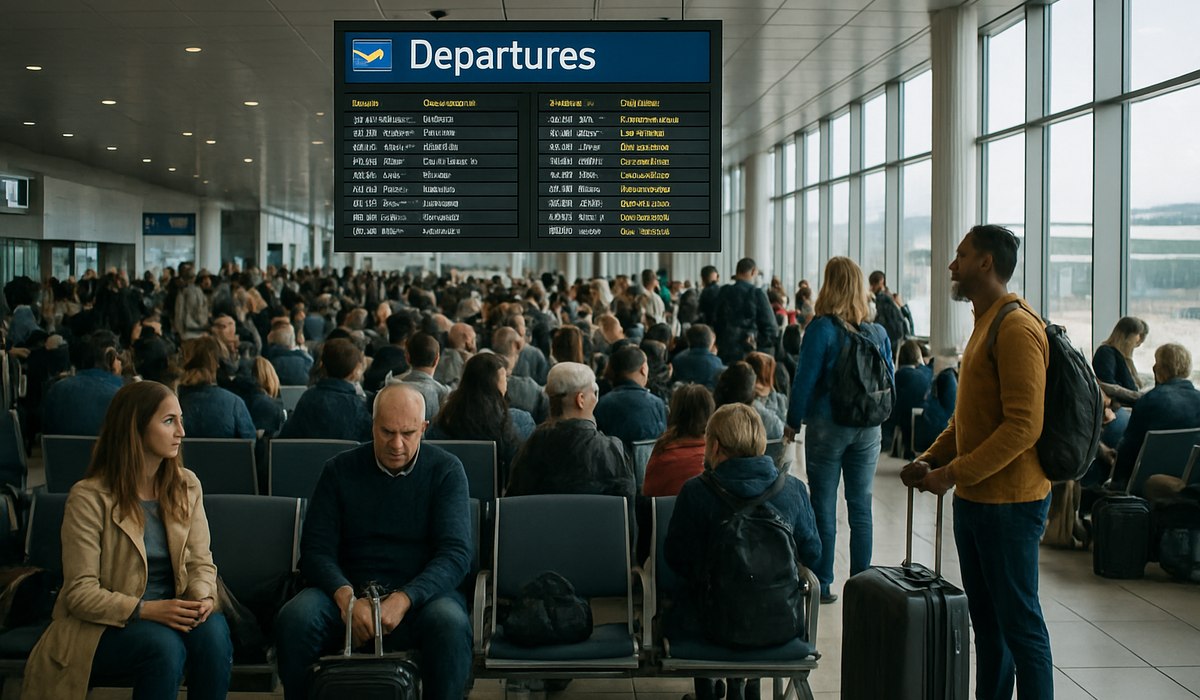
Image generated by AI
Major European Flight Disruption Leaves Hundreds Stranded Across Continent
A significant wave of operational chaos has cascaded through Europe's busiest aviation corridors, leaving hundreds stranded in transfer cities and disrupting networks for three of Europe's largest carriers. On April 9, 2026, data from aviation monitoring services confirmed that 1,720 flights faced delays while 61 received full cancellations, with the disruption concentrated across primary hubs including London Heathrow and Gatwick, Paris Charles de Gaulle, Amsterdam Schiphol, and major Italian gateways in Rome and Milan. Lufthansa, KLM, and Finnair reported the heaviest operational impact, as their hub-and-spoke models proved particularly vulnerable to the cascading effect of missed connections and aircraft running out of position.
The disruption primarily affected routes linking northwestern and southern Europe, with particularly acute delays on services connecting Spain, Italy, and Scandinavian cities to key transfer points. Passengers traveling through London, Paris, and Amsterdam experienced extended waits, missed connections, and overnight rescheduling as airlines struggled to recover their timetables before the end of the operating day.
Widespread Delays Hit Europe's Busiest Airports
Europe's premium aviation hubs bore the brunt of the April 2026 operational disruption. London's dual hub structure—with both Heathrow and Gatwick handling heavy traffic loads—meant that even modest schedule shock multiplied into hundreds of cascading delays. Paris Charles de Gaulle, serving as Europe's second-largest connection point, similarly reported extended queues at security checkpoints and crowded departure lounges as passengers sought information about revised boarding times.
Amsterdam Schiphol, already facing seasonal capacity constraints and recent weather-related challenges, absorbed additional pressure from the network-wide disruption. The airport's role as a critical European transit hub meant that delays on incoming short-haul services immediately impacted outbound long-haul connectivity. Italian airports including Rome Fiumicino and Milan Malpensa also reported significant backlogs, particularly affecting Mediterranean-to-northern Europe traffic that typically feeds onward transatlantic services.
The concentration of delays across these interconnected hubs created a perfect storm: aircraft and crews fell progressively out of position, forcing airlines to make real-time decisions about whether to hold connecting flights or depart on schedule, inevitably leaving passengers stranded with no immediate alternative routing options.
Cascading Effect Leaves Passengers Stranded in Transfer Cities
When a network carrier experiences disruption at multiple hubs simultaneously, the domino effect leaves passengers stranded in intermediate cities with limited recourse. The April 2026 disruptions demonstrated this reality sharply. Travelers connecting through London, Paris, and Amsterdam found themselves in positions where their onward flights departed without them, requiring rebooking on flights the following day or alternative routing that added 12 to 24 hours to planned journey times.
Network-dependent airlines face acute vulnerability during these periods. Each delayed arrival reduces the connecting time available for passengers, and when multiple feeder flights arrive late, downstream services face impossible mathematics—they cannot hold every connection without jeopardizing the entire subsequent day's schedule. Ground staff in departure lounges reported elevated frustration and confusion as passengers received conflicting information about rebooking possibilities and compensation eligibility.
The disruption highlighted a critical travel planning vulnerability: passengers booked on tight connections through major European hubs assumed 90-120 minute connection windows provided adequate buffer time, yet operational disruptions at this scale rendered those assumptions obsolete within hours.
Which Airlines and Routes Are Most Affected
Lufthansa's European network sustained pronounced disruption, particularly on routes terminating in Frankfurt and Munich where the airline schedules significant onward connections to North America, Asia, and Africa. When feeder flights from London, Paris, and northern Europe arrived delayed, Lufthansa faced cascading cancellations on subsequent intercontinental departures, forcing rebooking of long-haul passengers across multiple days.
KLM's Amsterdam-centric network similarly experienced acute pressure, as the Dutch carrier's entire business model depends on precise timing across waves of connecting traffic. Delays on incoming services from the United Kingdom, Scandinavia, and southern Europe directly translated into missed long-haul connections and stranded passengers awaiting repositioned aircraft.
Finnair, relying heavily on connections through European gateways to feed Helsinki-based operations, sustained particular impact on services originating from London and Paris. The Nordic carrier's Asia-bound connections and transatlantic routes depend on consistent feeder performance; the April 9 disruption forced significant operational rerouting and passenger rebooking cascades.
Regional partners operating under codeshare agreements with these majors also faced substantial pressure, as their departure slots and crew availability became constrained by system-wide bottlenecks. Routes most heavily affected included:
- London to Paris and Amsterdam services
- Southern Spanish and Italian routes northbound
- Nordic connections through continental hubs
- Iberian Peninsula services linking to transatlantic gateways
Disruption Causes: Weather, Airspace Restrictions, and Staffing Challenges
The April 2026 disruption stemmed from a confluence of operational headwinds. Active storm systems swept across northern and western Europe, prompting temporary capacity reductions at several critical facilities. Air traffic control services implemented flow management measures reducing the number of simultaneous aircraft on major corridors linking the United Kingdom, Benelux nations, France, Spain, and Italy.
These airspace restrictions frequently resulted in en-route holding patterns or extended diversion routings, pushing aircraft outside their planned arrival windows and creating immediate schedule pressure at hub airports. Additionally, ongoing staffing constraints among ground handlers and air traffic control personnel limited recovery capability—when disruption occurs, reduced staff levels prevent rapid tactical repositioning of aircraft and crews.
Aviation data providers noted that this combination created a "perfect storm" effect: weather-driven capacity restrictions intersected with already-constrained staffing resources, eliminating the operational flexibility typically available for rapid recovery. Extended aircraft utilization during disruption periods also triggered unscheduled maintenance checks, further reducing available capacity.
Recovery Outlook and Passenger Compensation
Recovery from disruptions of this magnitude typically requires 24 to 48 hours as airlines work through stranded passengers, reposition aircraft, and allow crews to comply with mandatory duty-time regulations. Airlines typically prioritize full-fare business passengers and frequent-flyer members for rebooking on subsequent services, while economy passengers often experience longer delays obtaining alternative routing.
Under EU Regulation 261/2004, passengers experience automatic compensation eligibility for flights delayed over three hours due to airline operational factors. However, disruptions attributed to weather or airspace restrictions may fall under "extraordinary circumstances" exemptions limiting carrier liability. Passengers should document delay duration and request compensation information from their airline, as many carriers implement compensation voluntarily regardless of exemption claims.
Passengers stranded overnight are entitled to meal vouchers, hotel accommodation, and communication services at the airline's expense. Verify compensation eligibility and status directly with your airline's customer service team, as procedures vary by carrier and specific circumstances.
Data Summary: April 9, 2026 European Disruption
| Metric | Value | Details |
|---|---|---|
| Total Delayed Flights | 1,720 | Concentrated across northwestern and southern European corridors |
| Total Cancelled Flights | 61 | Representing 3.4% of affected operations |
| Primary Affected Airports | 6+ major hubs | London Heathrow/Gatwick, Paris CDG, Amsterdam, Rome, Milan |
| Most Impacted Carriers | 3 major airlines | Lufthansa, KLM, Finnair plus regional partners |
| Geographic Scope | Multiple countries | Netherlands, United Kingdom, Italy, France, Spain, Nordic region |
| Primary Cause Factors |
Disclaimer
This article is for informational and educational purposes only. It does not constitute legal, financial, or professional advice. While we strive to provide accurate and up-to-date information, travel policies, regulations, and conditions change rapidly. Always verify information with official sources before making travel decisions. Nomad Lawyer makes no representations about the accuracy, reliability, completeness, or suitability of the information provided. Readers should consult qualified professionals for advice specific to their circumstances. The views expressed in this article are those of the author and do not necessarily reflect the views of Nomad Lawyer.
Kunal K Choudhary
Co-Founder & Contributor
A passionate traveller and tech enthusiast. Kunal contributes to the vision and growth of Nomad Lawyer, bringing fresh perspectives and driving the community forward.
Learn more about our team →