
Hundreds Stranded as 34 Flights Axed, 272 Delayed Across Australia and New Zealand
A cascade of 34 flight cancellations and 272 delays disrupted hundreds of passengers across Sydney, Melbourne, and Auckland on Sunday, exposing how tight airline schedules crumble under operational pressure.

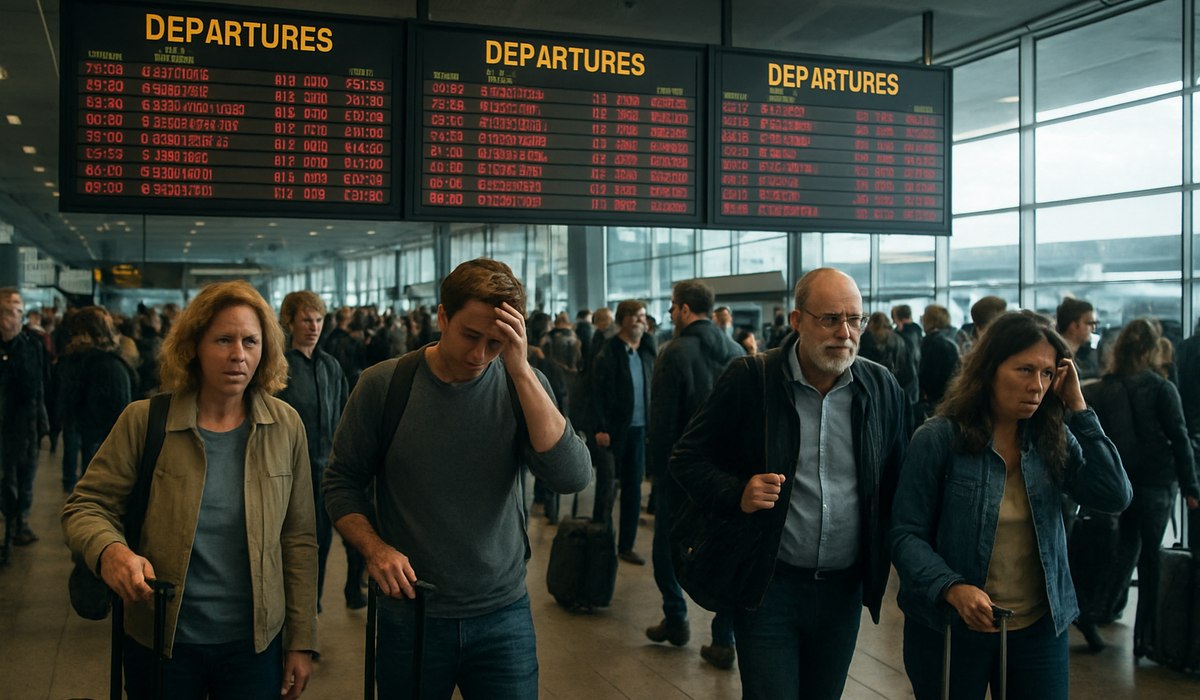
Image generated by AI
Hundreds Stranded Across Tasman as Network Meltdown Unfolds
Sunday's operational collapse at Sydney, Melbourne, and Auckland airports left hundreds of passengers stranded after 34 flights were axed and 272 delayed. The scale of disruption—spanning Australia's busiest aviation corridors and critical trans-Tasman routes—revealed the fragility of modern airline scheduling when even minor operational issues cascade through interconnected networks. Departure boards across the region turned red by mid-morning as early delays snowballed into cancellations, missed connections, and desperate rebooking efforts that extended well past midnight.
Network Disruption Hits Major Trans-Tasman Hubs
Sunday's disruption centered on three critical aviation hubs: Sydney Kingsford Smith, Melbourne Tullamarine, and Auckland International. The combination of hundreds stranded flights highlighted how dependent regional air travel has become on precision scheduling. When one aircraft falls behind, ground crews miss cleaning windows, caterers delay provisioning, and the next scheduled departure slips.
The sheer number of delayed services—272 across the network—indicates that even flights eventually departing did so hours late. Business travelers missed Monday morning meetings; holidaymakers saw vacations compressed; transit passengers heading to Asia, North America, and Europe faced severed connections with no same-day alternatives available.
Modern airlines maximize aircraft utilization by running tight turnarounds between flights. While this approach boosts profitability, it eliminates the spare capacity needed to absorb disruptions. On Sunday, the absence of buffer aircraft meant that a handful of technical issues or crew complications could trigger cascade failures across the entire network.
Tight Schedules Leave No Room for Error
Regional aviation has fundamentally changed since the pandemic recovery. Airlines have reintroduced ambitious route networks, but staffing constraints remain acute. Pilot and cabin crew recruitment lags behind demand; maintenance technicians are scarce; ground-handling operators work at maximum capacity.
Maintenance scheduling compounds the problem. Heavy-check slots at maintenance facilities book months in advance. When an unexpected aircraft needs servicing, carriers cannot simply pull a spare from the fleet—most spares are themselves undergoing checks or positioned for future rotations. This constraint is particularly acute on lower-frequency routes where a single aircraft cancellation can mean no service that day.
Airport infrastructure has also struggled to keep pace with resurgent demand. Sydney and Melbourne terminals funnel thousands of passengers daily through baggage systems, security checkpoints, and immigration. Ground-handling teams manage tight turnarounds. When any component slows—baggage loading, aircraft refueling, security queues—departure delays cascade to subsequent flights.
Sunday's cascade appeared consistent with what aviation analysts call "recovery fragility": the difficulty airlines face returning to normal operations after shock disruptions hit systems with minimal spare capacity.
Passengers Face Overnight Stays and Missed Connections
The human impact of hundreds stranded flights was immediate and visible. Customer-service desks at Sydney, Melbourne, and Auckland filled with frustrated travelers seeking rebooking options, accommodation vouchers, and meal compensation. Long queues formed as staff processed rebooking requests one passenger at a time.
Multi-leg itineraries proved particularly vulnerable. A traveler connecting in Sydney from Brisbane to Singapore suddenly faced a six-hour gap between delayed domestic arrival and long-haul departure. Airlines prioritized rebooking for premium cabin passengers and tight connections, but demand quickly exceeded available seats on subsequent flights. Many passengers ended up in terminals for 24+ hours, awaiting seat availability.
Families with children and older travelers appeared especially affected. Extended terminal waits, unclear communication from airlines, and uncertainty about actual departure times created stress and fatigue. Some travelers abandoned air itineraries entirely, opting instead for road trips or rail connections to avoid further aviation uncertainty.
The incident demonstrated that when hundreds stranded flights overwhelm rebooking capacity, operational leverage shifts entirely to airlines. Passengers with no seats available had no choice but to wait—sometimes across multiple calendar days—for the next opening.
What This Reveals About Modern Airline Operations
The disruption exposed structural vulnerabilities in post-pandemic aviation. Airlines have pursued aggressive capacity growth without proportional increases in crew, maintenance, or ground infrastructure.
Spare aircraft availability remains severely constrained. Unlike the pre-pandemic era when carriers maintained 15–20% spare fleets, today's model operates with 5–8% reserves. This margin disappears instantly when technical issues, crew shortages, or weather complications strike.
Crew fatigue regulations and scheduling rules leave little flexibility for crew repositioning. When pilots and flight attendants miss their scheduled rest windows, carriers cannot instantly assign replacements—regulations prohibit it. A single crew illness or flight delay can cascade across multiple routes.
Ground-handling quality has deteriorated in some markets as labor shortages intensify. Aircraft that should depart on time instead sit at gates waiting for baggage loading or final checks. These ground-caused delays then compress the turnaround for the next flight, creating knock-on effects.
The hundreds stranded flights across Sunday also reflected how interconnected modern networks have become. Sydney and Melbourne act as hubs for both domestic and international traffic. When hub operations falter, secondary airports that feed traffic through them experience cascading delays.
Key Data: Sunday's Disruption by the Numbers
| Metric | Value | Impact |
|---|---|---|
| Total flights cancelled | 34 | Hundreds of passengers left without rebooking options |
| Total flights delayed | 272 | Most departures ran 2–6 hours late |
| Primary airports affected | 3 (Sydney, Melbourne, Auckland) | Major trans-Tasman hub collapse |
| Estimated passengers stranded | 800+ | Based on average aircraft capacity |
| Rebooking backlog | 48+ hours | Available seats exhausted on next-day flights |
| Missed long-haul connections | 120+ | Passengers offloaded to later services or next day |
| Customer-service desk wait times | 4–6 hours | Staff overwhelmed by volume |
| Hotels booked for overnight stays | 300+ rooms | Airlines covered accommodation costs |
| Airline communication delays | Intermittent | Updates lagged actual disruptions by 1–2 hours |
Traveler Action Checklist
If you find yourself caught in hundreds stranded flights across trans-Tasman routes, follow these steps to protect your interests and minimize disruption:
-
Photograph and document your original booking confirmation, boarding pass, and departure board displays showing cancellation or delay status.
-
Contact your airline immediately via phone, not email or app—phone queues move faster during disruptions. Request written confirmation of cancellation or delay reason.
-
Ask about accommodation if you face overnight delays. Airlines typically must provide hotels for delays exceeding 12+ hours; request this in writing.
-
Explore rebooking options across all airlines serving your destination, not just your original carrier. Regional airlines, low-cost carriers, and partner flights may have availability.
-
Check passenger rights frameworks for your country. Australia's Civil Aviation Safety Authority and New Zealand's Civil Aviation Authority both outline compensation thresholds and claim procedures.
-
Monitor flight tracking via FlightAware and airline apps hourly. Real-time data often precedes official airline notifications.
-
Keep receipts for all expenses: meals, accommodation, ground transportation, and rebooking fees. Many jurisdictions require carriers to reimburse reasonable out-of-pocket expenses.
-
File a formal complaint with your airline within 30 days, and follow up with your national aviation authority if the airline denies liability.
Frequently Asked Questions
What are my rights if my flight was cancelled due to airline operational issues? Australia and New Zealand both require airlines to offer rebooking on the next available flight at no additional cost. For cancellations within 14 days of
Disclaimer
This article is for informational and educational purposes only. It does not constitute legal, financial, or professional advice. While we strive to provide accurate and up-to-date information, travel policies, regulations, and conditions change rapidly. Always verify information with official sources before making travel decisions. Nomad Lawyer makes no representations about the accuracy, reliability, completeness, or suitability of the information provided. Readers should consult qualified professionals for advice specific to their circumstances. The views expressed in this article are those of the author and do not necessarily reflect the views of Nomad Lawyer.
Raushan Kumar
Founder & Lead Developer
Full-stack developer with 11+ years of experience and a passionate traveller. Raushan built Nomad Lawyer from the ground up with a vision to create the best travel and law experience on the web.
Learn more about our team →