
Hundreds of Passengers Grounded at Ronald Reagan Washington National Airport As PSA Airlines, American Airlines, Jazz, Republic, JetBlue Face 49 Cancellations And 171 Delays, Affecting Tourism To Major Routes Across Toronto, Montreal, Nashville, Houston, Portland
Massive flight disruptions at Ronald Reagan Washington National Airport (DCA) cause 49 cancellations and 171 delays, imp

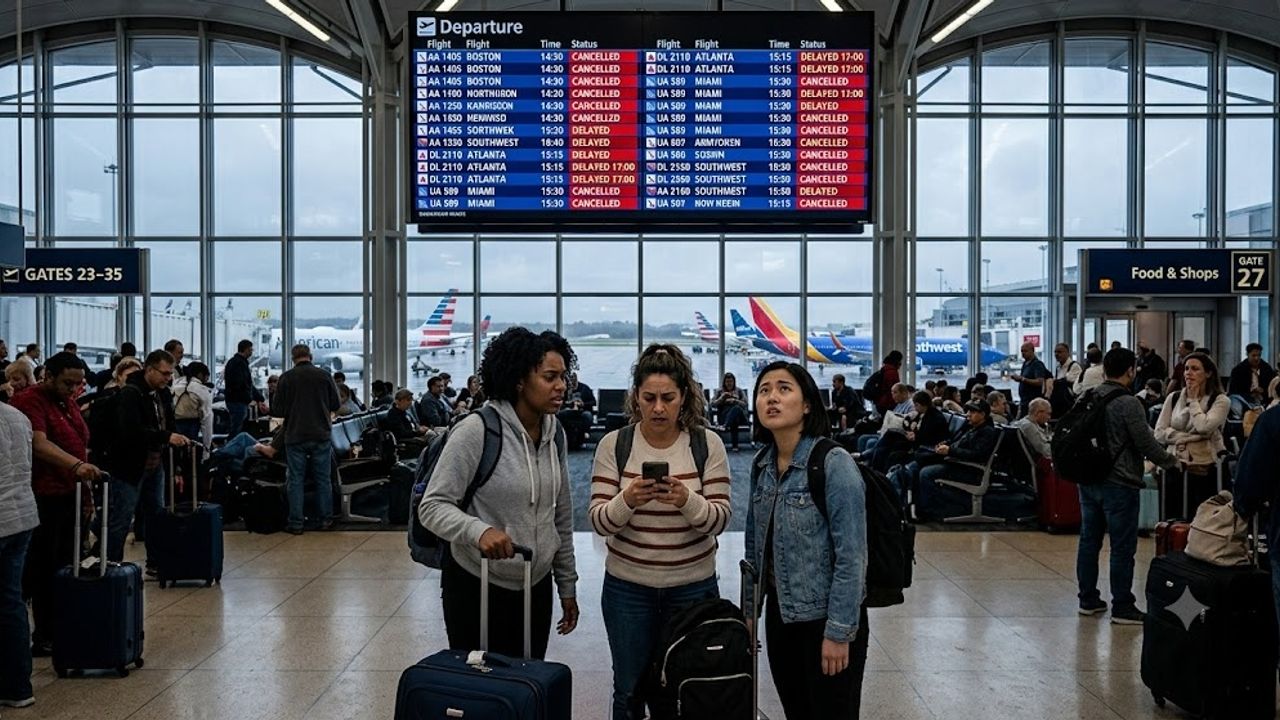
Image generated by AI
[Washington D.C., June 24, 2026] — Massive operational failures at Ronald Reagan Washington National Airport (DCA) have left hundreds of travelers stranded after a sudden surge in flight friction led to 49 cancellations and 171 delays. The disruption has severely crippled travel corridors connecting the U.S. capital to major North American hubs, including Toronto, Montreal, Nashville, Houston, and Portland.
Operational Gridlock at Reagan National Airport
Ronald Reagan Washington National Airport (DCA) serves as a critical gateway for both the federal government and the regional tourism sector. Situated along the Potomac River, the facility is prized for its proximity to the heart of Washington D.C., making it a primary choice for millions of visitors annually. However, the airport's limited physical footprint and stringent slot-control mandates make it particularly susceptible to systemic failures.
Industry observers note that even minor disruptions at this specific hub can trigger a cascading effect across the regional aviation network. The current crisis has derailed carefully planned itineraries, leaving thousands of passengers trapped at terminal gates and disrupting the flow of both corporate and leisure travel.
Regional Carriers and Major Airlines Face Severe Disruptions
The scale of the logistical breakdown has affected a broad spectrum of aviation providers, with regional carriers bearing the brunt of the instability. Data from terminal flight logs indicates that PSA Airlines, a regional subsidiary of the American Airlines Group, experienced the most significant impact, which subsequently degraded the reliability of mainline American Airlines operations.
International connectivity was also severed as Jazz Aviation, operating on behalf of Air Canada, faced substantial cuts to its flight schedules, effectively halting the travel pipeline between Washington and Canada. Similarly, Republic Airways suffered from equipment shortages, while other major operators such as JetBlue, Southwest Airlines, and Envoy Air struggled to maintain their fleet rotations. Legacy carriers, including Delta Air Lines and United Airlines, along with regional partners like GoJet Airlines and Endeavor Air, were forced to eliminate midday flights to prevent a total terminal standstill.
The following table provides a detailed breakdown of the impact on the most affected carriers:
| Airline | Cancelled Flights | Delayed Flights |
|---|---|---|
| PSA Airlines | 42 | 44 |
| American Airlines | 3 | 20 |
| Jazz | 2 | 5 |
| Republic | 1 | 39 |
| JetBlue | 1 | 16 |
Geographic Reach of Flight Cancellations Across US and Canada
The ripple effects of the DCA bottleneck have extended far beyond the Mid-Atlantic region, creating significant travel barriers in both the United States and Canada. Flight tracking data confirms that core transportation links to Canada's largest cities were severed, specifically affecting arrivals and departures at Pearson International Airport (YYZ) in Toronto and Trudeau International Airport (YUL) in Montreal.
Within the United States, the scheduling freeze impacted high-volume leisure routes. Major tourism magnets in the South, including Nashville (BNA), Orlando (MCO), Savannah (SAV), and Raleigh-Durham (RDU), saw a sharp decline in arriving passengers. Furthermore, critical nodes in the Midwest and Northeast—such as Houston (IAH), Boston (BOS), Portland (PWM), Syracuse (SYR), Bangor (BGR), and Manchester (MHT)—experienced sweeping cancellations, leaving travelers isolated from their final destinations.
Primary Drivers of the Aviation Crisis
According to reports, the current chaos is the result of a "perfect storm" of regulatory, environmental, and internal industry vulnerabilities. A primary factor is the chronic shortage of air traffic control staffing in congested coastal sectors. This labor deficit has forced aviation authorities to implement strict ground delay programs, which artificially limit the number of aircraft that can take off or land, turning minor morning delays into massive afternoon backlogs.
These staffing issues were exacerbated by severe seasonal thunderstorms moving across the Atlantic coastline, which obstructed primary flight corridors. When these weather events coincided with mechanical maintenance issues and strict flight crew duty-time limitations, airlines were left with no alternative but to cancel flights to maintain the integrity of the rest of their networks.
Passenger Rights and Rebooking Protocols
For travelers affected by the current disruptions at DCA, several consumer protections are in place. Industry guidelines and Department of Transportation (DOT) rules provide a framework for resolution:
Rebooking Options: When a carrier cancels a flight, they are required to rebook the passenger on the next available flight to their destination at no additional cost. If the airline's own flights are full, passengers may request that agents search for available seats on competing airlines or alliance partners via interline agreements.
Refund Eligibility: Under federal consumer protection mandates, passengers are entitled to a full monetary refund if their flight is cancelled by the carrier and they choose not to accept the offered alternative arrangements. This refund applies to the full unused ticket balance and associated baggage fees, regardless of whether the ticket was a non-refundable economy fare.
Accommodations and Vouchers: If a cancellation is caused by factors within the airline's direct control—such as mechanical failure or crew scheduling errors—most major carriers will provide hotel vouchers and meal coupons. However, if the disruption is deemed a "force majeure" event, such as severe weather or air traffic control mandates, airlines are generally not obligated to provide free lodging.
Economic Consequences for International and Domestic Tourism
The operational failure at Reagan National Airport has an economic footprint that extends beyond the terminal. Systemic scheduling failures at a capital hub create a financial vacuum for destination markets that rely on a steady stream of visitors.
In Canada, the sudden drop in passenger volume from the U.S. capital translates to immediate losses for boutique hotels, regional tour operators, and local dining establishments. This underscores the fragility of modern tourism economies and their heavy reliance on airline reliability.
Domestically, the impact is equally severe. When family vacations to destinations like Orlando or Nashville are cancelled, travelers incur non-refundable costs and miss planned experiences. Such volatility can erode long-term consumer confidence in the aviation system, potentially driving travelers toward local, drive-market destinations and depriving major cultural centers of vital tourism revenue.
The Strategic Importance of DCA Infrastructure
As a primary engine for tourism in the Washington metropolitan area, Ronald Reagan Washington National Airport is essential for the region's economic health. Its modern facilities serve as the first point of contact for millions of visitors exploring the Smithsonian museums and national monuments.
Because the local hospitality industry is inextricably linked to predictable flight schedules, persistent delays pose a direct threat to the regional economy. When the flight pipeline remains stable, DCA acts as an economic multiplier, funneling high-spending visitors into hotels and convention centers. Maintaining the operational stability of this hub is therefore critical for the continued growth of the regional tourism sector.
The current crisis highlights the urgent need for increased air traffic control staffing and improved infrastructure resilience to prevent future systemic collapses in the U.S. aviation network.
Related Travel Guides
Disclaimer
This article is for informational and educational purposes only. It does not constitute legal, financial, or professional advice. While we strive to provide accurate and up-to-date information, travel policies, regulations, and conditions change rapidly. Always verify information with official sources before making travel decisions. Nomad Lawyer makes no representations about the accuracy, reliability, completeness, or suitability of the information provided. Readers should consult qualified professionals for advice specific to their circumstances. The views expressed in this article are those of the author and do not necessarily reflect the views of Nomad Lawyer.
Kunal K Choudhary
Co-Founder & Contributor
A passionate traveller and tech enthusiast. Kunal contributes to the vision and growth of Nomad Lawyer, bringing fresh perspectives and driving the community forward.
Learn more about our team →