
Water and Wine: The Ultimate 350-Mile New York Road Trip Guide
Explore 350 miles of New York scenery. This multi-day loop links Hudson Valley art hubs with the 215-foot Taughannock Falls and Watkins Glen.

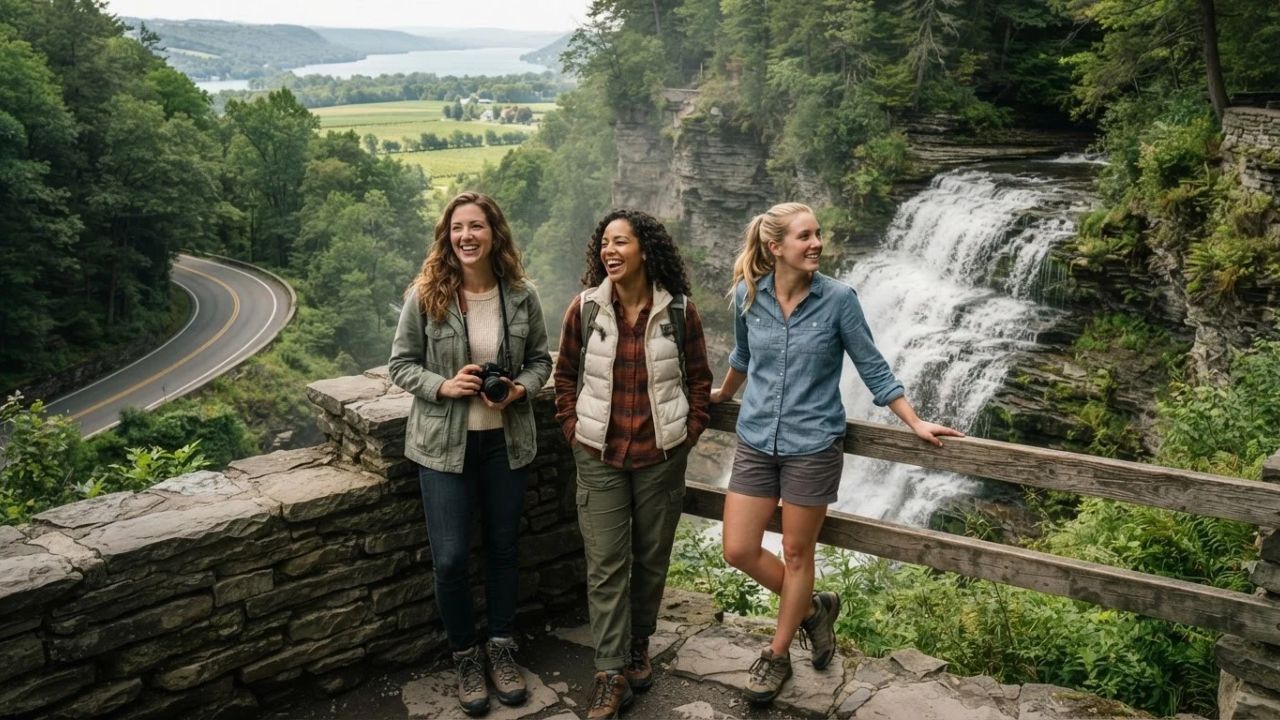
Image generated by AI
Connecting historic Hudson River towns with the Finger Lakes wine country, a new 350-mile road trip corridor offers access to the 215-foot Taughannock Falls and Watkins Glen's 19 cascading waterfalls. The multi-day loop takes roughly 7 to 8 hours of driving time and is best explored over 4 to 6 days.
The Expansion of Regional Driving Corridors
A significant trend in modern tourism is the development of regional driving corridors that connect distinct geographic zones. Rather than flying to single vacation sites, travelers are designing multi-day road trips to combine historic river towns with agricultural regions, state parks, and vineyard districts.
This slow-travel model encourages visitors to extend their vacations, dispersing tourism revenue to local bed-and-breakfasts, farm-to-table restaurants, and independent wineries during the spring and autumn shoulder seasons.
Hudson Valley Art and River Town Sights
The initial segment of the cross-state route travels north from Westchester and New York City along the Hudson River:
- Storm King Art Center: Located in Mountainville, this 500-acre open-air museum features large-scale sculptures set within rural hills.
- Walkway Over the Hudson: Provides elevated views of the river before visitors reach the town center of Hudson.
- Warren Street Commerce: The historic street in Hudson features antique markets and local dining spots, serving as an overnight stop for road trippers.
- Olana State Historic Site: Located nearby, this site features Persian-inspired architecture and views of the river valley.
This corridor balances open-air art installations with historical river preservation.
Subterranean Caves and Sports History in Cooperstown
Traveling west from the Hudson River leads visitors into Otsego County:
- Cooperstown village: Sits beside Otsego Lake and features the National Baseball Hall of Fame and Museum, celebrating sports history.
- Howe Caverns: Located along the route, this geological site offers subterranean boat tours along limestone pathways, providing families with a view of deep rock formations.
The transition from the Hudson Valley to the central hills highlights the region's agricultural history.
Ithaca's Waterfalls and Watkins Glen's Gorges
The final phases of the route navigate the Finger Lakes region, focusing on deep valleys and limestone gorges:
- Ithaca Trails: Sits at the southern tip of Cayuga Lake and features the Cornell Botanic Gardens and the Ithaca Commons walking mall.
- Taughannock Falls State Park: Located north of the city, it features a plunge waterfall that cascades 215 feet down carved cliffs, standing taller than Niagara Falls.
- Watkins Glen State Park: Celebrated for its Gorge Trail, which features 19 cascading waterfalls along a 2-mile stone pathway.
- Seneca Lake Wine Trail: Features over 30 award-winning wineries offering dry Riesling tastings overlooking the lake.
These state parks and trails offer hiking opportunities alongside local agricultural experiences.
Highway Routing and Transit Logistics
Executing a 350-mile road trip through Upstate New York requires proper highway planning:
- Major Highway Arteries: The route uses Route 9W, Interstate 88, Route 79, and Interstate 90 (New York State Thruway).
- Toll Access: Motorists should equip vehicles with an active E-ZPass transponder for tolling across major thruways and bridges.
- Time Requirements: Expect roughly 7 to 8 hours of total wheel time. Safety coordinators recommend allocating 4 to 6 full days to complete the loop comfortably.
- State Park Savings: Regular visitors can purchase the New York State Empire Pass to save on vehicle entry fees across multiple state parks.
New York 350-Mile Road Trip Parameters
The table below breaks down the key destinations, driving times, and waterfall metrics for the Hudson Valley and Finger Lakes route:
| Travel Segment | Primary Destinations | Total Driving Distance | Hiking / Trail Highlights | Key Tourist Infrastructure |
|---|---|---|---|---|
| Segment 1 | Hudson & Mountainville | Walkable river town | 500-acre Storm King Art Center | Walkway Over the Hudson |
| Segment 2 | Cooperstown & Howes | Inland transit corridors | Subterranean boat routes | National Baseball Hall of Fame |
| Segment 3 | Ithaca & Taughannock | Southern Cayuga Lake | 215-foot plunge waterfall | Cornell Botanic Gardens |
| Segment 4 | Watkins Glen & Seneca | 350 miles total loop | 19 waterfalls along a 2-mile trail | Over 30 wineries (Seneca Trail) |
These metrics summarize the coordinates, driving distances, and park features of the cross-state route.
Resource Stewardship and Regional Agritourism
For the traveler, the real impact of purchasing the Empire Pass is the direct funding of public trail systems and gorge path restorations. Arriving at Watkins Glen State Park by 8:00 AM helps manage foot-traffic density, protecting the fragile limestone walls from excessive wear.
Additionally, visiting the Seneca Lake Wine Trail supports the preservation of agricultural land. Supporting over 30 local wineries helps prevent corporate development of the lakeshores, keeping the agricultural heritage of the Finger Lakes intact.
For example, you can explore the changing dynamics of Appalachian Escape: Vinton County Eco Tourism Spotlights Natural Wonders to see how other states manage public forests. For budget-conscious travelers, aligning slow city travel with municipal transit options mirrors similar regional initiatives, such as the Free Admission at Select US State Parks programs. This trend is similar to the tourism growth seen in other destinations, as detailed in our guide on how Utica, New York Emerges as an Affordable Northeast Tourism Hub.
Visitor Insider Tips: Upstate New York Road Trip
If you are planning to drive the 350-mile loop, keep these practical tips in mind:
- Arrive Early at Watkins Glen: Park rangers advise arriving by 8:00 AM to secure parking and experience the Gorge Trail before tour buses arrive.
- Obtain the Empire Pass: If visiting multiple parks, purchase the state park pass in advance to bypass separate vehicle entry payments.
- Pack Water-Resistant Footwear: The 2-mile stone pathway at Watkins Glen is mist-shrouded and damp. Wear shoes with good grip.
- Pre-Book Seneca Wine Tastings: Reach out to Seneca Lake wineries in advance, especially during the mid-September through late October harvest season.
- Keep E-ZPass Active: Ensure your transponder is funded to navigate the NYS Thruway gates without experiencing billing delays.
Long-Term Outlook for New York Tourism
The long-term outlook for the Hudson Valley and Finger Lakes tourism sector is focused on upgrading electric vehicle charging networks along highways, expanding multi-use rail-trails, and promoting farm-to-table culinary loops. As more travelers opt for regional road trips, the state will rely on automated tolling and park pass systems to coordinate visitor flows.
By preserving its limestone gorges and supporting regional agriculture, the state aims to maintain a stable outdoor tourism market.
FAQ
What is the total distance of the New York road trip loop?
The route connecting the Hudson Valley with the Finger Lakes spans approximately 350 miles.
How tall is Taughannock Falls compared to Niagara Falls?
Taughannock Falls cascades 215 feet down carved limestone cliffs, standing taller than Niagara Falls.
What is the recommended driving duration for the loop?
The total driving time is roughly 7 to 8 hours, which safety coordinators recommend splitting over 4 to 6 days.
When is the best time of year to visit for fall foliage?
Peak autumn foliage and grape harvest celebrations generally run from mid-September through late October.
Stay updated on the trail conditions and highway advisories shaping New York road trips.
Related Travel Guides
Disclaimer
This article is for informational and educational purposes only. It does not constitute legal, financial, or professional advice. While we strive to provide accurate and up-to-date information, travel policies, regulations, and conditions change rapidly. Always verify information with official sources before making travel decisions. Nomad Lawyer makes no representations about the accuracy, reliability, completeness, or suitability of the information provided. Readers should consult qualified professionals for advice specific to their circumstances. The views expressed in this article are those of the author and do not necessarily reflect the views of Nomad Lawyer.
Raushan Kumar
Founder & Lead Developer
Full-stack developer with 11+ years of experience and a passionate traveller. Raushan built Nomad Lawyer from the ground up with a vision to create the best travel and law experience on the web.
Learn more about our team →