
Hudson Tunnel Major $1.29B Contract Awarded to Joint Venture
Gateway Development Commission awards $1.29 billion tunnelling contract in 2026 for Hudson River rail crossing. Traylor, Walsh, and Skanska joint venture to build twin-bore tunnel connecting New York and New Jersey.

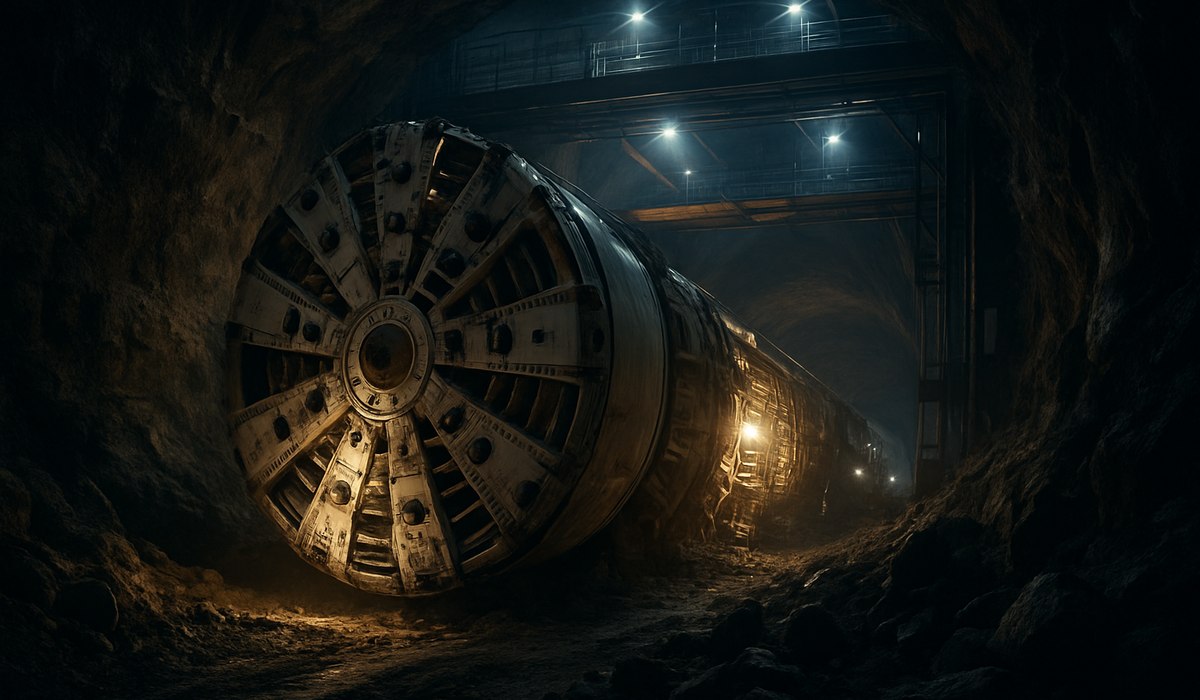
Image generated by AI
Major Hudson Tunnel Contract Signals Acceleration of NY-NJ Rail Link
The Gateway Development Commission (GDC) has awarded a $1.29 billion tunnelling contract to a joint venture of Traylor, Walsh, and Skanska for the Hudson Tunnel Project's most critical phase. This landmark award represents substantial progress on connecting New York and New Jersey through an essential new rail corridor. Construction on Package 1C begins in coming months, marking the transition from planning to active execution on the Hudson River's submerged twin-bore tunnel section.
$1.29bn Contract Award for Twin-Bore Rail Tunnel
The Hudson Tunnel Major project milestone involves constructing two parallel tunnels, each measuring 2.2 kilometers in length beneath the Hudson River. The tubes will connect Hudson County's access shaft in Weehawken, New Jersey, with Manhattan's 12th Avenue access shaft on the West Side. This configuration allows trains to operate in both directions simultaneously, doubling capacity compared to the aging single-tube PATH system currently serving the region.
The Traylor, Walsh, and Skanska partnership brings combined expertise in major metropolitan tunnelling projects. The joint venture was selected through competitive bidding, ensuring cost efficiency and technical excellence. This Hudson Tunnel Major award consolidates what many observers consider the most technically demanding and geographically sensitive portion of the entire project. The contract's magnitude reflects genuine engineering complexity beneath one of North America's busiest waterfronts.
For context on U.S. rail infrastructure modernization, the American Society of Civil Engineers regularly documents similar megaprojects and their national transportation implications.
Technical Scope: TBM Deployment and Cross-Passages
Package 1C specifications include deployment of two state-of-the-art tunnel boring machines (TBMs) engineered for mixed ground conditions. These machines will navigate through rock formations, soft soil layers, and stabilized earth blocks previously created beneath the Hudson River specifically to facilitate tunnelling. This Hudson Tunnel Major technical approach represents cutting-edge underground engineering adapted to riverine geology.
Nine cross-passages will connect the twin bores at strategic intervals, enabling emergency evacuations and operational flexibility. These linking tunnels serve dual purposes: immediate safety during construction and long-term maintenance accessibility once the tunnel enters service. Additionally, the contract encompasses ground stabilization work beneath the Hudson-Bergen Light Rail Line in New Jersey, protecting existing infrastructure from tunnelling vibrations and settlement.
A permanent underground support system will strengthen the Willow Avenue road bridge between Weehawken and Hoboken. This protective measure addresses pre-existing structural concerns while accommodating new underground excavation nearby. The comprehensive scope demonstrates how Hudson Tunnel Major planning integrates protective measures for surrounding transportation networks.
Project Timeline and Momentum Across All Packages
The Gateway Development Commission reports that six of ten total construction packages are currently in progress or completed. All major civil engineering contracts have now been awarded, indicating the project has transitioned decisively into execution phase. Package 1A addresses the connecting Palisades Tunnel in New Jersey, while Package 1B focuses on the Manhattan Tunnel, with both advancing concurrently with the Hudson River crossing work.
GDC CEO Tom Prendergast emphasized project momentum, stating construction sites on both sides of the river demonstrate tangible progress. This coordinated approach across multiple fronts suggests completion is advancing toward mid-2030s timeframes, though official completion dates remain subject to engineering contingencies. The Hudson Tunnel Major award accelerates the overall schedule considerably, as the cross-river section represented the most complex remaining contract.
Maintaining momentum depends on securing additional federal and state funding beyond current appropriations. The Gateway Development Commission continues pursuing infrastructure investment from both public and private sources. Transportation analysts view this project as essential for Northeast Corridor reliability over the next four decades.
Impact on Regional Rail Connectivity
The Hudson Tunnel Major project fundamentally transforms Northeast Corridor capacity and reliability. Current PATH infrastructure, built in the 1960s-1980s, operates near maximum capacity during peak commute periods. The new tunnel doubles single-direction capacity, accommodating 60 percent more trains hourly between New Jersey and Manhattan.
For regional travelers, improved connectivity means reduced delays, shorter wait times, and enhanced schedule reliability. Business commuters and leisure travelers benefit equally from expanded service capacity. The project supports population growth in both New York and New Jersey while reducing automobile dependency across the metropolitan area.
Economic implications extend beyond daily commuting. Enhanced rail connectivity attracts corporate relocations, supports housing development in transit-accessible areas, and strengthens supply chain efficiency for regional businesses. Tourism also benefits indirectly, as reliable rail transportation enables easier visitor access to employment centers and entertainment destinations throughout the metropolitan region.
For detailed updates on Northeast Corridor development, the Northeast Corridor Commission tracks all major infrastructure projects affecting regional transportation.
What This Means for Travelers
The Hudson Tunnel Major project improvements will reshape how millions navigate the New York-New Jersey region:
-
Reduced commute unpredictability: Doubled capacity means fewer service suspensions and delays during peak travel periods, particularly critical for business travelers and daily commuters relying on schedule certainty.
-
Enhanced weekend and evening service: Expanded tunnel capacity allows additional service frequency during off-peak hours, improving accessibility for leisure travelers and weekend visitors exploring both metropolitan areas.
-
Improved air quality and emissions: Increased rail ridership reduces automobile congestion around the Hudson River crossings, lowering regional air pollution and supporting sustainability goals for environmental-conscious travelers.
-
Future service expansion: Additional capacity enables future service additions, potentially extending service hours and introducing express routes currently impossible with single-tunnel constraints.
-
Construction period planning: Through 2030s, travelers should anticipate periodic service adjustments and alternative routing during active construction phases, requiring flexibility in travel planning.
-
Long-term cost stability: Improved infrastructure reduces operating costs per passenger, potentially moderating future fare increases compared to maintenance-intensive aging systems.
FAQ
When will the Hudson Tunnel Major project complete construction? Current projections suggest the cross-river tunnel section (Package 1C) will reach completion in the early 2030s, though the entire multi-package project extends beyond that timeframe. Final timelines depend on funding availability, environmental permitting, and unforeseen geological conditions encountered during excavation.
How will Hudson Tunnel Major construction affect existing train service? The Gateway Development Commission plans phased construction designed to minimize disruptions to current PATH and NJ Transit rail service. Some temporary service modifications are expected, but planners coordinate construction schedules to maintain essential connectivity throughout the project duration.
What makes this Hudson Tunnel Major contract significant for travelers? Awarding the tunnelling contract represents transition from planning to active construction, bringing new service capacity closer to reality. Travelers benefit from confirmed project momentum and accelerated timelines that improve infrastructure reliability decades ahead.
Will Hudson Tunnel Major service accommodate future population growth? Yes, the doubled tunnel capacity and expanded service footprint support Northeast Corridor population growth projected through 2050. The new infrastructure enables regional economic development while supporting sustainable transportation patterns that reduce automobile dependency.
Related Travel Guides
- Qantas Airlines Cuts U.S. and Domestic Routes Amid Fuel Crisis
- Delta Premium Flyers Remain Insulated From Economic Turmoil, CEO Says
- Dublin, Reykjavik, Amsterdam Pricing Out Digital Nomads: Europe's Most Expensive Cities Create Travel Disruption Crisis
Disclaimer
This article references publicly available information from Gateway Development Commission announcements and Northeast Corridor infrastructure documentation as of May 2026. Project timelines, funding, and specifications remain subject to change pending federal approvals, environmental assessments, and engineering developments. Nomad Lawyer does not provide investment or financial advice regarding infrastructure projects. For official project updates, travelers should consult the [Gateway Development Commission's official website](https://www.gatewaycommission.
Disclaimer
This article is for informational and educational purposes only. It does not constitute legal, financial, or professional advice. While we strive to provide accurate and up-to-date information, travel policies, regulations, and conditions change rapidly. Always verify information with official sources before making travel decisions. Nomad Lawyer makes no representations about the accuracy, reliability, completeness, or suitability of the information provided. Readers should consult qualified professionals for advice specific to their circumstances. The views expressed in this article are those of the author and do not necessarily reflect the views of Nomad Lawyer.
Raushan Kumar
Founder & Lead Developer
Full-stack developer with 11+ years of experience and a passionate traveller. Raushan built Nomad Lawyer from the ground up with a vision to create the best travel and law experience on the web.
Learn more about our team →