
How to Get to Dugi Otok from Zadar in 2026: Ferries, Catamarans, Ports, Tickets and Timing Guide
A practical 2026 guide to reaching Dugi Otok from Zadar, comparing the Jadrolinija car ferry from Gaženica to Brbinj with fast passenger catamarans to Sali, Zaglav and Božava — covering port logistics, ticket strategy, luggage and bike rules, and EU sea passenger rights.

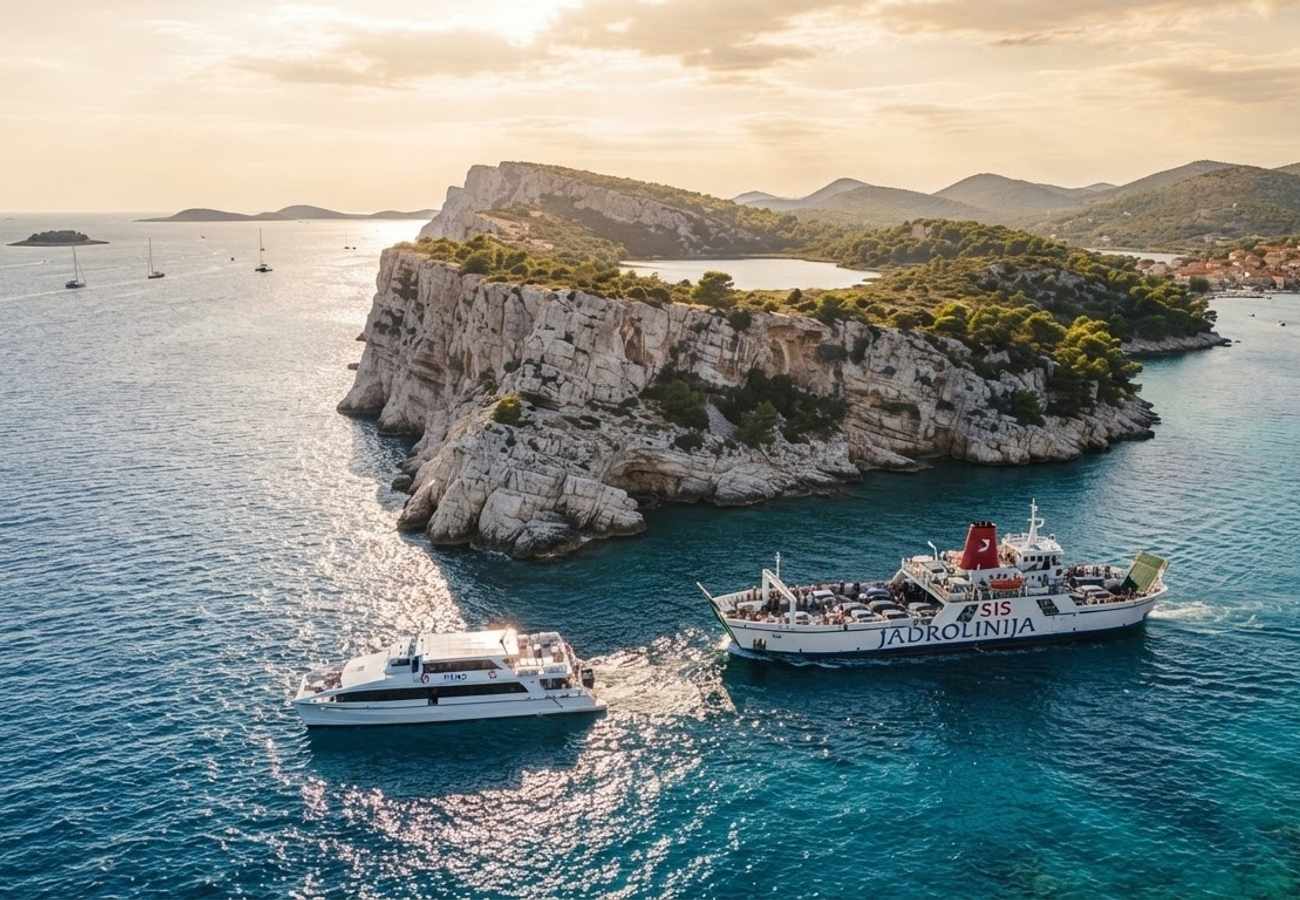
Image generated by AI
Dugi Otok may feel wonderfully remote when you are walking the cliffs of Telašćica or floating in the turquoise shallows at Sakarun, but the island is closely tied to Zadar by several daily ferries and fast catamarans. The real challenge is not whether you can get there — it is choosing the right route, port and ticket for your itinerary, budget and luggage.
Understanding Your Options: Car Ferry vs Passenger Catamaran
From Zadar to Dugi Otok you essentially choose between two types of boat. The classic car ferry links Zadar's Gaženica ferry terminal with Brbinj and is the backbone of island life, used daily by locals moving cars, vans and delivery trucks. Passenger catamarans are foot-passenger only, docking at Sali, Zaglav, Božava and sometimes Brbinj.
In practice, the decision comes down to whether you need a car on the island. A couple with backpacks staying in Sali and booking boat trips locally will almost always find the catamaran easier and faster. A family of four with a rental car, paddleboards and a week booked in a house near Sakarun should take the Gaženica to Brbinj car ferry, even though the crossing is slower.
The car ferry is also more forgiving on luggage and bikes. Cyclists routinely roll loaded touring bikes aboard at Gaženica and ride off at Brbinj to explore the full length of the island. Catamarans typically require bikes to be booked or agreed in advance, and they may be refused on busy summer sailings.
Different companies operate the lines. The main car ferry to Brbinj is run by state-owned Jadrolinija, while fast passenger services are shared between Jadrolinija and private operators TP Line and G&V Line Iadera. Schedules, booking systems and the on-board experience differ slightly, so confirm which company serves your chosen port before planning connections.
Choosing the Right Port in Zadar: Gaženica vs the Old Town
The first logistical decision is which Zadar port you actually need. Car ferries to Dugi Otok use the modern Gaženica ferry terminal, about a ten-minute drive from Zadar Old Town, while most passenger catamarans depart from the central port by the historic peninsula, a short walk from the Roman Forum and main promenade. Turning up at the wrong port is one of the most common mistakes first-time visitors make.
With a rental car, you will almost certainly use Gaženica. The terminal is clearly signposted as you drive into Zadar from the A1 motorway; local renters often tell guests to "follow signs for Gaženica and then Dugi Otok / Brbinj." At the terminal you join the queue marked for the Brbinj line, where staff check your ticket and direct you into the correct lane for cars, campervans or larger vehicles.
Without a car, and staying in or near the Old Town, you will most likely walk to the city-centre port for a catamaran. The fast line to Sali and Zaglav typically leaves from a quay a few minutes on foot from the Land Gate and Five Wells Square, and boarding usually begins about 30 minutes before departure.
If you are switching ports the same day — for example, arriving by long-distance bus at Zadar bus station and then catching a sailing — allow extra time. A taxi from the bus station to Gaženica usually takes 10 to 15 minutes depending on traffic, and the ride into the Old Town port is slightly shorter. In peak summer afternoons, queues at Gaženica security and ticket windows grow longer, so avoid planning tight 15-minute transfers.
Car Ferry to Brbinj: Route, Timing and Taking a Vehicle
The workhorse route for reaching Dugi Otok with a car is the Jadrolinija ferry between Zadar Gaženica and Brbinj. Crossing time is usually around one hour and 20 to 30 minutes, depending on the specific vessel and sea conditions. In summer there are typically three sailings per day in each direction, while spring and autumn may see two daily departures; mid-morning, early afternoon and evening departures are common high-season patterns.
Taking a car on this ferry works much like any other Croatian island route:
- Book the vehicle space early. In July and August, buy a dated vehicle ticket through Jadrolinija's online system as soon as your accommodation dates are fixed. It reserves a place for your license plate on that sailing, which matters when demand is high.
- Arrive early. Local advice for peak summer is at least 60 to 90 minutes before departure on sailings popular with tourists.
- Build in a buffer. A family driving a compact rental car from Zadar city centre for the 11:00 ferry in late July might leave their apartment at 9:15, reach Gaženica by 9:30, check in and wait in the Brbinj lane — leaving room for traffic, terminal queues and a relaxed coffee before boarding.
- Foot passengers are welcome too. Some travellers prefer the car ferry for its open decks and generous luggage space, which works well if friends or accommodation hosts are collecting you at Brbinj. Many guesthouses near Sakarun offer a transfer that meets the main morning ferry, though buying tickets in advance for popular crossings is still wise in high season.
Passenger Catamarans: Sali, Zaglav, Božava and the Outer Islands
Travelling without a car, the fast catamarans are often the most efficient choice. The long-established line between Zadar and Sali, continuing to Zaglav, is the main artery for southeastern Dugi Otok and for visitors heading to Telašćica Nature Park. Travel times are significantly shorter than the car ferry to Brbinj, and you step off directly in the heart of the village.
For the northwestern side of the island, including Sakarun beach, catamaran routes to Božava — and sometimes Brbinj or smaller islands — are the useful option. Many summer visitors combine routes: a catamaran from Zadar to Božava, then a local taxi boat or shuttle to Sakarun. Some lines also stop at intermediate islands such as Zverinac or Rivanj, making for a particularly scenic approach through the archipelago.
Catamaran schedules vary more through the year than the car ferry:
- Shoulder season may bring only one or two daily departures to Sali and fewer options to Božava.
- Late July and August often add afternoon or evening sailings.
- Weekday and Sunday timetables can differ significantly — some travellers planning a Sakarun day trip have found the only workable morning-out, evening-back combination in a given season falls on a Sunday.
- Popular mid-morning summer sailings can sell out, since capacity is limited and many passengers are tourists rather than locals. Visitors increasingly buy tickets online a few days in advance once the weather forecast looks stable, or visit the Old Town ticket office the day before to avoid queuing with luggage on the morning of travel.
Passenger Rights and Advisory: What EU Sea Travel Rules Mean for You
For the affected passenger, Croatia's EU membership matters. Regulation (EU) No 1177/2010 on the rights of passengers travelling by sea and inland waterway covers these domestic Croatian sailings, whether you are on the Jadrolinija car ferry or a fast catamaran.
Our analysis of the policy suggests the following practical takeaways:
- Cancellation or delay over 90 minutes: you are entitled to choose between re-routing to your destination under comparable conditions at no extra cost, or a refund of your ticket price.
- Assistance during long waits: for delays exceeding 90 minutes, carriers must provide snacks, meals or refreshments in reasonable relation to the waiting time, where these are available on board or at the port.
- Overnight disruption: if a cancellation or delay forces an overnight stay, the carrier must generally offer adequate accommodation on board or ashore, typically capped at around €80 per passenger per night for up to three nights — with exemptions where weather endangers safe operation.
- Compensation: because these crossings are scheduled at well under four hours, an arrival delay of at least one hour can trigger compensation of 25% of the ticket price, rising to 50% for delays of two hours or more, unless the disruption was caused by weather conditions endangering the safe operation of the ship.
- Claims: keep your dated ticket, note the actual departure and arrival times, and submit complaints to the carrier first, with national enforcement bodies as backup.
For the affected passenger, this means a sold-out sailing is a different problem from a delayed one. Advance online booking protects you from the first; EU rules protect you from the second. Our advice is to screenshot your booking confirmation and the published timetable on travel day so any claim is easy to evidence.
Industry Analyst View
Croatia's island ferry network is a seasonal system under growing pressure. State-owned Jadrolinija operates the Gaženica–Brbinj car ferry as a lifeline route, while private operators such as TP Line and G&V Line Iadera compete on the faster passenger segments — a split that keeps prices competitive but fragments booking channels and timetables.
Our analysis indicates the real pinch point is not capacity at sea but the last mile on land: the ten-minute gap between Gaženica and the Old Town port, and the 10-to-15-minute taxi hop from the bus station. Travellers who treat port selection as part of the booking decision — matching Sali, Zaglav, Božava or Brbinj to their accommodation before buying tickets — consistently report smoother trips than those who fix their dates first and their route second.
Looking ahead, expect peak-season vehicle space on the Brbinj line to remain the scarcest resource in this corridor. Booking a dated vehicle ticket the moment accommodation is confirmed remains the single most effective stress-reducer on this route.
On Dugi Otok, the cliffs of Telašćica and the shallows of Sakarun reward those who plan the crossing — the island is only complicated until you pick the right boat.
Related Travel Guides
Disclaimer
This article is for informational and educational purposes only. It does not constitute legal, financial, or professional advice. While we strive to provide accurate and up-to-date information, travel policies, regulations, and conditions change rapidly. Always verify information with official sources before making travel decisions. Nomad Lawyer makes no representations about the accuracy, reliability, completeness, or suitability of the information provided. Readers should consult qualified professionals for advice specific to their circumstances. The views expressed in this article are those of the author and do not necessarily reflect the views of Nomad Lawyer.
Preeti Gunjan
Contributor & Community Manager
A passionate traveller and community builder. Preeti helps grow the Nomad Lawyer community, fostering engagement and bringing the reader experience to life.
Learn more about our team →