
F-16 Fly-By-Wire Revolution: How One Fighter Jet Transformed Modern Aviation Design
Breaking airline news and aviation industry updates for 2026.

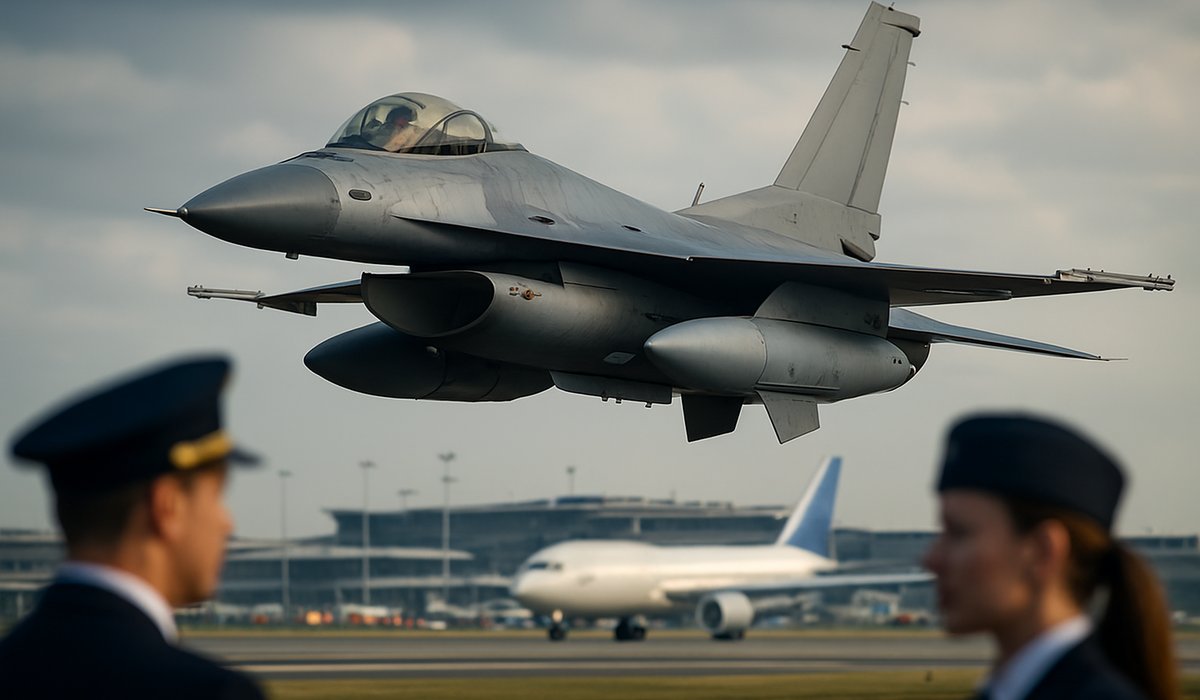
Image generated by AI
F-16 Fly-By-Wire Revolution: How One Fighter Jet Transformed Modern Aviation Design
The General Dynamics innovation that reshaped global military aircraft development
A Breakthrough That Redefined Fighter Jet Engineering
When General Dynamics' F-16 Fighting Falcon took to the skies in 1974, it introduced a technological paradigm shift that would fundamentally alter how modern military aircraft are designed and operated. By integrating fly-by-wire control systems—technology originally developed by NASA for space exploration—the aircraft transcended conventional fighter jet architecture and established itself as the blueprint for generations of combat aircraft to follow.
The F-16's emergence was driven by a convergence of political pressure and technological innovation. Washington's defense establishment, increasingly skeptical of the expense and complexity of premium fighters like the F-15 Eagle, sought a more agile and cost-effective alternative. General Dynamics seized this opportunity, leveraging NASA's advanced fly-by-wire expertise to create an aircraft that would prove transformative not only for the Pentagon but for allied air forces worldwide.
Breaking the Conventional Design Model
The integration of fly-by-wire systems marked a decisive departure from traditional mechanical control linkages. Rather than relying on hydraulic and mechanical systems to translate pilot inputs directly to control surfaces, the F-16 employed computer-mediated flight control architecture. This innovation delivered unprecedented maneuverability, reduced pilot workload, and enhanced aircraft stability—capabilities that competitors simply could not match.
The technological foundation provided by NASA's space program research proved instrumental. What had been validated in orbital operations became refined for supersonic combat scenarios, creating a dual-use technology triumph that accelerated aviation progress across both military and civilian sectors.
The Dominance That Followed
The F-16's design philosophy proved so effective that it claimed the distinction of becoming the most widely adopted fourth-generation fighter jet globally. Dozens of nations integrated the platform into their air forces, establishing it as the international standard for lightweight, multi-role combat aviation. Its success spawned numerous derivatives, upgrades, and competing designs that all drew inspiration from its foundational principles.
Beyond raw technical specifications, the F-16 demonstrated that fighter jet effectiveness was not exclusively dependent on maximum performance. Instead, the aircraft proved that intelligent design—combining advanced control systems with practical engineering—could deliver superior operational outcomes at significantly lower procurement and maintenance costs.
Lasting Legacy in Modern Aviation
Nearly five decades after its maiden flight, the F-16 remains operationally deployed across multiple continents. Its fly-by-wire architecture has become standard across modern military aviation, influencing everything from contemporary fighters to advanced transport and commercial aircraft systems. The technology transfer from NASA to General Dynamics exemplifies how cross-sector innovation accelerates advancement across the entire aviation industry.
FAQ: F-16 Fly-By-Wire Technology and Modern Fighter Design
What is fly-by-wire technology and how does it differ from traditional aircraft controls? Fly-by-wire systems replace mechanical control linkages with computer-mediated electronic controls. Instead of hydraulic cables directly connecting pilot inputs to control surfaces, sensors detect pilot movements and computers calculate optimal control surface positions, offering superior precision and stability compared to conventional mechanical systems.
Why was the F-16 more cost-effective than competitors like the F-15 Eagle? The F-16's lightweight, single-engine design and simplified construction reduced procurement and operational expenses while maintaining exceptional combat capability through advanced avionics and fly-by-wire efficiency.
How many countries currently operate F-16 fighter jets? Over 30 nations operate F-16s, making it the most widely distributed fourth-generation fighter jet in aviation history.
Did the F-16's technology influence civilian aircraft design? Yes. The success of fly-by-wire systems in military aviation accelerated their adoption in commercial aviation, with modern airliners like the Boeing 777 and Airbus A320 family incorporating similar computer-mediated control principles.
What makes fly-by-wire systems more advantageous for fighter jets? Fly-by-wire enables enhanced maneuverability, reduced pilot fatigue, automatic stability management, and the ability to program optimal control responses for various flight conditions—capabilities mechanical systems cannot replicate.
Related Travel Guides
Disclaimer
This article is for informational and educational purposes only. It does not constitute legal, financial, or professional advice. While we strive to provide accurate and up-to-date information, travel policies, regulations, and conditions change rapidly. Always verify information with official sources before making travel decisions. Nomad Lawyer makes no representations about the accuracy, reliability, completeness, or suitability of the information provided. Readers should consult qualified professionals for advice specific to their circumstances. The views expressed in this article are those of the author and do not necessarily reflect the views of Nomad Lawyer.
Preeti Gunjan
Contributor & Community Manager
A passionate traveller and community builder. Preeti helps grow the Nomad Lawyer community, fostering engagement and bringing the reader experience to life.
Learn more about our team →