
Pentagon Commits $3.9 Billion Annually to Retire Cold War-Era Refueling Fleet as US Military Confronts Aging Infrastructure Crisis
Breaking airline news and aviation industry updates for 2026.

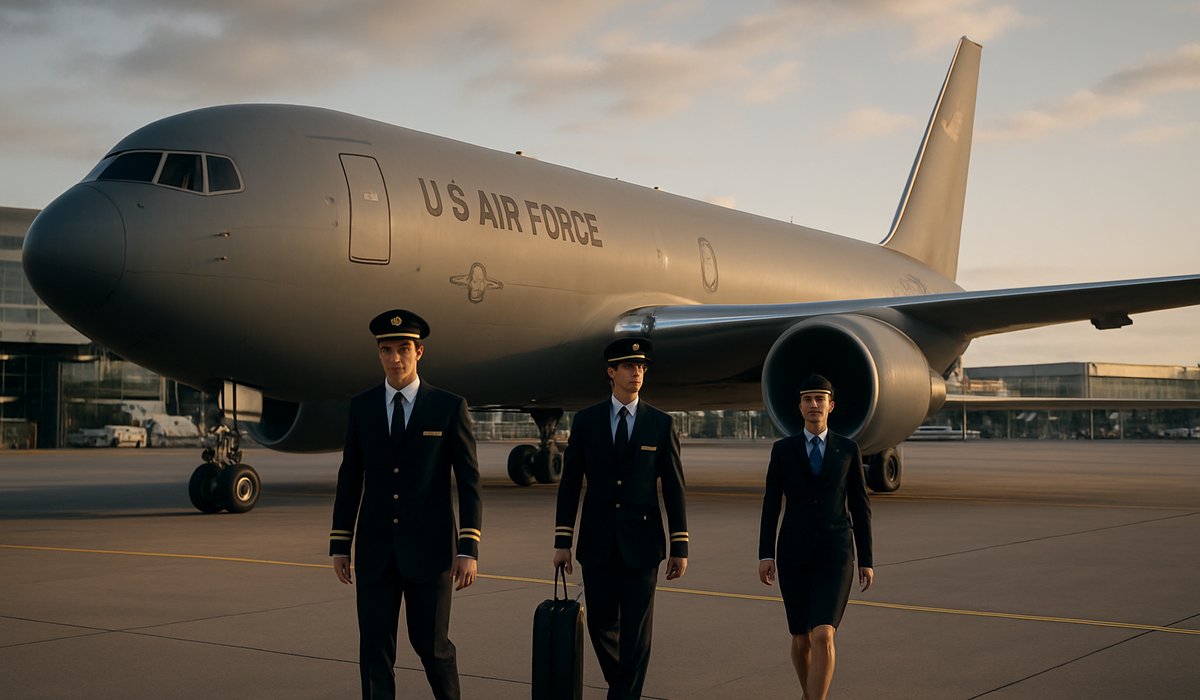
Image generated by AI
Pentagon Commits $3.9 Billion Annually to Retire Cold War-Era Refueling Fleet as US Military Confronts Aging Infrastructure Crisis
The U.S. Air Force's massive investment in a new tanker program exposes critical vulnerabilities in America's airpower logistics as global tensions escalate
A Seven-Decade Relic Reaches Its Limits
The Boeing KC-135 Stratotanker—a refueling aircraft that first took to the skies during the height of Cold War tensions—remains one of the most critical assets in modern American military operations. Yet as geopolitical instability intensifies across multiple global theaters, the U.S. Air Force faces an undeniable reality: the 70-year-old airframe is no longer adequate for 21st-century defense demands.
To address this strategic vulnerability, the Pentagon is dedicating $3.9 billion annually toward a comprehensive modernization program aimed at replacing the aging tanker fleet. The commitment underscores a broader infrastructure crisis within the U.S. military, where decades-old equipment continues to shoulder responsibilities far beyond their original design parameters.
The Operational Squeeze: Why Replacement Cannot Wait
Every extended-range military operation—from sustained bombing campaigns in the Middle East to NATO support missions across Eastern Europe—depends on aerial refueling infrastructure. The KC-135, despite regular maintenance upgrades, faces mounting pressure as operational demands expand.
Recent geopolitical crises, including heightened tensions in 2026, have exposed critical gaps in refueling capacity. Long-range bomber sorties, fighter escort missions, and reconnaissance operations all hinge on reliable tanker support. With the existing fleet stretched across multiple simultaneous commitments, the Air Force confronts a genuine readiness challenge that affects force projection capabilities globally.
An Extraordinary Financial Commitment
The $3.9 billion annual expenditure reflects the scale of this modernization effort—a figure that underscores how critical aerial refueling remains to American military strategy. This investment will fund development, procurement, and eventual deployment of next-generation tanker aircraft designed to replace the KC-135 across operational squadrons.
The financial commitment also reflects broader trends in defense spending, where legacy systems require disproportionate resources to maintain relevance in contemporary conflicts. As aging aircraft approach their operational limits, replacement becomes not merely an upgrade but a strategic imperative.
Implications for Global Military Operations
The KC-135 replacement program carries ramifications beyond Pentagon budgets. Improved tanker capabilities will enhance U.S. military reach across contested regions, support NATO commitments in Europe, and maintain American power projection amid intensifying great-power competition.
For allied nations depending on U.S. military logistics, the modernization program signals long-term commitment to sustained presence and rapid response capabilities. Conversely, it demonstrates how Cold War-era equipment, however well-maintained, ultimately becomes inadequate against evolving operational demands.
FAQ: Understanding Military Tanker Modernization
Why is the U.S. Air Force spending $3.9 billion annually on tanker replacement? The 70-year-old KC-135 fleet cannot sustain modern operational demands across multiple global theaters. Replacement ensures adequate aerial refueling capacity for long-range military operations.
How does the KC-135 affect global military operations? Every extended-range American military sortie depends on tanker support. As commitments expand worldwide, tanker capacity directly constrains force projection capabilities.
What makes the new tanker program strategically important? Modern tanker aircraft improve fuel transfer efficiency, extend mission range, and enhance support for NATO and allied operations, particularly in contested regions.
When will the KC-135 be fully retired? The transition will occur gradually as new tankers enter service, with legacy aircraft likely remaining operational during the transition period.
How does this program affect defense spending priorities? The investment reflects how legacy systems consume disproportionate resources, forcing difficult choices between maintaining aging fleets and developing next-generation capabilities.
Related Travel Guides
Disclaimer
This article is for informational and educational purposes only. It does not constitute legal, financial, or professional advice. While we strive to provide accurate and up-to-date information, travel policies, regulations, and conditions change rapidly. Always verify information with official sources before making travel decisions. Nomad Lawyer makes no representations about the accuracy, reliability, completeness, or suitability of the information provided. Readers should consult qualified professionals for advice specific to their circumstances. The views expressed in this article are those of the author and do not necessarily reflect the views of Nomad Lawyer.
Raushan Kumar
Founder & Lead Developer
Full-stack developer with 11+ years of experience and a passionate traveller. Raushan built Nomad Lawyer from the ground up with a vision to create the best travel and law experience on the web.
Learn more about our team →