
Dassault Rafale vs F-16 Fighting Falcon: Which Fourth-Generation Fighter Dominates Modern Aerial Combat?
Breaking airline news and aviation industry updates for 2026.

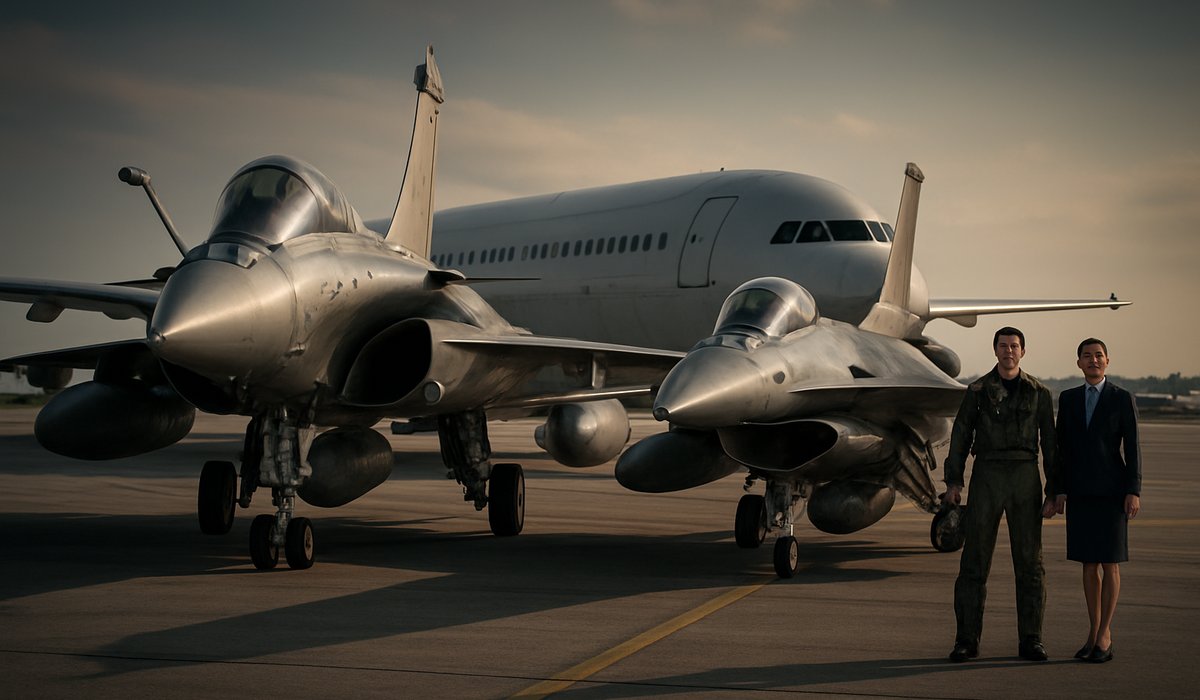
Image generated by AI
Dassault Rafale vs F-16 Fighting Falcon: Which Fourth-Generation Fighter Dominates Modern Aerial Combat?
As 2026 ushers in a new era of data-driven warfare, two legacy jets prove their staying power against cutting-edge competition
The Fourth-Generation Fighter Paradox
Despite the aviation industry's rapid shift toward fifth-generation stealth aircraft and autonomous combat systems, two formidable fourth-generation fighters continue to command strategic relevance on the world stage. The Lockheed Martin F-16 Fighting Falcon and the Dassault Rafale—neither designed as all-aspect stealth platforms—are proving that proven engineering, adaptability, and advanced sensor integration can hold their own alongside modern competitors.
As militaries worldwide grapple with aging fleets and budget constraints, both aircraft represent a crucial middle ground: platforms capable of evolution without the astronomical costs of fifth-generation acquisition and maintenance.
Performance and Operational Capabilities
The F-16, a workhorse deployed across NATO and allied nations since the 1980s, brings unmatched operational maturity. Its streamlined avionics, proven track record, and extensive supply chain make it the global standard for mid-tier air forces. The aircraft's single-engine design offers fuel efficiency and lower operating costs—critical factors for nations managing tight defense budgets.
The Rafale, France's homegrown omnirole fighter, counters with superior maneuverability and an integrated avionics suite specifically designed for multi-mission flexibility. Its canard-delta wing configuration delivers exceptional sustained turn rates, while its advanced networking capabilities enable it to operate seamlessly within coalition environments.
Strategic Implications in Modern Warfare
Both platforms have already seen extensive combat across multiple theaters, from the Middle East to Eastern Europe. Their continued deployment signals that fourth-generation fighters will remain tactically viable through the 2030s, particularly for air-to-air superiority and ground support missions.
The key differentiator lies in data integration. Modern air combat prioritizes network-centric warfare—the ability to share real-time intelligence across platforms. Both aircraft have undergone extensive modernization programs to support this paradigm, with upgraded radar systems, sensor fusion, and improved electronic warfare packages.
The Cost-Effectiveness Factor
For defense planners evaluating acquisition costs, the F-16 remains significantly cheaper to procure and operate, while the Rafale commands premium pricing justified by indigenous production and technological sophistication. Nations choosing between the two must weigh long-term support ecosystems against immediate capability gaps.
As global security tensions persist and fifth-generation procurement timelines stretch, these fourth-generation fighters are securing their relevance for years to come—a testament to sound engineering principles that transcend generational classifications.
FAQ: F-16 vs Rafale Fighter Jet Comparison
1. Which fighter jet is faster: the F-16 or the Rafale? Both aircraft achieve similar maximum speeds (Mach 2+), though the Rafale demonstrates superior sustained turn performance due to its canard-delta design, making it more agile in close-range engagements.
2. How much does an F-16 cost compared to a Dassault Rafale? The F-16 typically costs between $30-40 million per unit, while the Rafale commands $65-85 million, reflecting differences in production scale, indigenous technology, and operational complexity.
3. Is the F-16 or Rafale better for modern air combat in 2026? Both remain relevant; the F-16 excels in cost-effective operations and NATO interoperability, while the Rafale offers superior maneuverability and independent technological sovereignty.
4. Which countries operate the Rafale and F-16 fighter jets? The F-16 serves 32 nations including the US, Poland, and South Korea. The Rafale is operated by France, India, Egypt, Qatar, Greece, and Croatia, with ongoing export discussions.
5. Can the F-16 and Rafale compete with fifth-generation stealth fighters? Through modernization programs and network-centric warfare integration, both remain operationally competitive, though stealth platforms maintain significant advantages in detection avoidance.
Related Travel Guides
Disclaimer
This article is for informational and educational purposes only. It does not constitute legal, financial, or professional advice. While we strive to provide accurate and up-to-date information, travel policies, regulations, and conditions change rapidly. Always verify information with official sources before making travel decisions. Nomad Lawyer makes no representations about the accuracy, reliability, completeness, or suitability of the information provided. Readers should consult qualified professionals for advice specific to their circumstances. The views expressed in this article are those of the author and do not necessarily reflect the views of Nomad Lawyer.
Preeti Gunjan
Contributor & Community Manager
A passionate traveller and community builder. Preeti helps grow the Nomad Lawyer community, fostering engagement and bringing the reader experience to life.
Learn more about our team →