
Transport Victoria Expands Melbourne Bus Network: 2,751 Additional Weekly Services in 2026
Transport Victoria has launched the 'Love, The Bus' campaign alongside a massive expansion of Melbourne's suburban bus network, adding over 2,700 weekly services to the northern and western corridors.

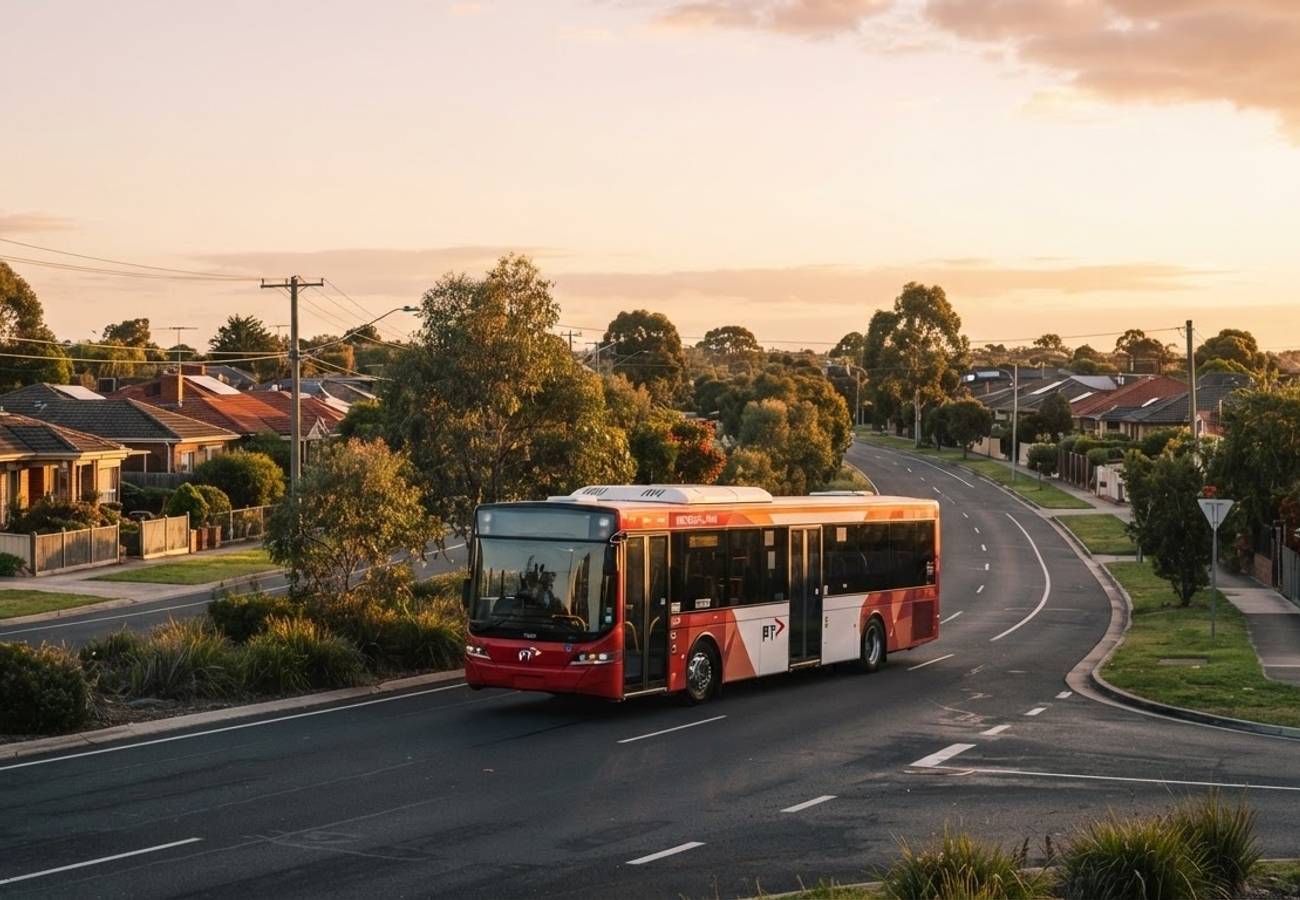
Image generated by AI
Melbourne's suburban transit capacity has increased by 2,751 weekly services in a single expansion phase—a strategic pivot designed to decentralize tourist movement away from the Central Business District (CBD). This aggressive scaling of the bus network, paired with the "Love, The Bus" psychological branding campaign, signals a shift in how the Victorian government intends to manage urban sprawl and visitor distribution across the metropolitan region.
The Transit Expansion in Numbers
The current expansion is not a uniform increase across the city but a targeted injection of capacity into high-growth corridors. The data reveals a heavy emphasis on the outer western suburbs, which are seeing the most significant leap in frequency.
In the outer west, Transport Victoria has integrated more than 1,970 additional weekly services. This deployment spans eight specific routes and includes the introduction of an entirely new bus service to fill existing gaps in the grid. Meanwhile, the northern suburbs have seen a combined increase of 781 weekly services distributed across nine different routes.
This total increase of 2,751 weekly trips represents a concerted effort to reduce "transit deserts" in the periphery of the city. By increasing frequency, the Department of Transport and Planning is attempting to lower the barrier to entry for non-residents who typically rely on the iconic tram network or the rail system to navigate the city.
Comparative Transit Context: Suburban vs. Central Mobility
Historically, Melbourne's tourism infrastructure has been heavily skewed toward the CBD and the inner-city tram zones. While the trams provide high visibility and ease of use, they offer limited reach into the expanding residential and commercial hubs of the north and west.
The 2026 expansion shifts the balance of power toward suburban mobility. By adding nearly 2,000 services to the west alone, the city is acknowledging that the growth of "satellite" attractions—local dining hubs, community events, and suburban shopping districts—now requires a professionalized, high-frequency bus backbone.
The following table breaks down the specific capacity increases by region:
| Region | Routes Impacted | Additional Weekly Services | Primary Objective |
|---|---|---|---|
| Northern Suburbs | 9 Routes | 781 | Enhanced connectivity to transport hubs |
| Outer Western Suburbs | 8 Routes | 1,970+ | New route creation & frequency boosts |
| Total Network Gain | 17 Routes | 2,751+ | Decentralization of urban mobility |
This shift mirrors global trends seen in other major metropolitan areas where "polycentric" city models are replacing the single-core hub. According to data patterns often tracked by UITP (International Association of Public Transport), increasing suburban frequency is the primary driver in reducing private vehicle dependency in expanding cities.
What This Means for Travelers
For the individual traveler or digital nomad staying in Melbourne, this data translates into a significant reduction in "last-mile" friction. If you are booking accommodation in the outer suburbs to avoid CBD price premiums, your dependency on ride-sharing apps or rental cars has just decreased.
Actionable Booking and Travel Advice:
- Expand Your Radius: With 2,751 more weekly services, you can now realistically book stays in the northern or western suburbs and maintain reliable access to the city center and other suburban attractions.
- Verify Route Specifics: Because the expansion is concentrated on 17 specific routes, do not assume all bus lines have increased frequency. Use the official Transport Victoria journey planner to confirm if your specific destination is one of the upgraded routes.
- Timing Your Trips: The increase in "weekly services" suggests better off-peak and weekend availability. This makes visiting suburban community events or local markets more viable on Saturdays and Sundays.
- Integration Planning: Use the bus network as a feeder. The most efficient way to navigate the city now involves taking a train to a major hub and switching to one of the expanded bus routes to reach your final destination.
Projecting the Future of Victorian Mobility
The "Love, The Bus" campaign, developed by Taboo with partners like Snack Drawer, Ethnolink, and OMD, is more than a marketing exercise; it is a behavioral intervention. By using digital destination displays to give buses a "personality," Transport Victoria is attempting to solve a perception problem.
The trajectory suggests that Victoria will continue to move toward a "hub-and-spoke" model. We can expect further expansions in the eastern and southern corridors to match the current gains in the north and west. As the city grows, the reliance on the tram network will likely plateau, while the bus network will become the primary tool for flexible, rapid deployment of transit to new growth zones.
If the "Love, The Bus" campaign successfully shifts public sentiment, we will likely see a corresponding increase in "slow tourism"—where visitors spend more time in residential neighborhoods and less time in the overcrowded CBD. This would lead to a more sustainable distribution of tourism revenue across the wider metropolitan area.
FAQ: Melbourne Bus Expansion 2026
Will bus fares increase due to the added services? There is no data indicating a fare increase tied specifically to this expansion. Travelers should check the current Public Transport Victoria (PTV) fare tables for the most accurate pricing.
Which area saw the biggest improvement in service? The outer western suburbs received the most significant boost, with over 1,970 additional weekly services across eight routes, including the launch of a brand-new service.
Is the "Love, The Bus" campaign affecting route numbers? No. The campaign focuses on the branding and "personality" of the buses via digital displays; it does not change the existing route numbering or the fundamental way the network is mapped.
How do I know if my route is part of the expansion? The expansion affects 17 specific routes across the north and west. The most reliable method to verify is through the official Transport Victoria journey planning tools and real-time update platforms.
The shift from CBD-centric transit to a robust suburban grid marks the beginning of a more accessible, decentralized Melbourne.
Related Travel Guides
Disclaimer
This article is for informational and educational purposes only. It does not constitute legal, financial, or professional advice. While we strive to provide accurate and up-to-date information, travel policies, regulations, and conditions change rapidly. Always verify information with official sources before making travel decisions. Nomad Lawyer makes no representations about the accuracy, reliability, completeness, or suitability of the information provided. Readers should consult qualified professionals for advice specific to their circumstances. The views expressed in this article are those of the author and do not necessarily reflect the views of Nomad Lawyer.
Naina Thakur
Contributor & Travel Specialist
Travel enthusiast and legal writer covering visa regulations, responsible tourism, and cultural journeys across global destinations.
Learn more about our team →