
Inside the Airbus A350-1000: How Modern Ultra-Long-Haul Aircraft Keep Cabin Crew Alert and Safe
Breaking airline news and aviation industry updates for 2026.

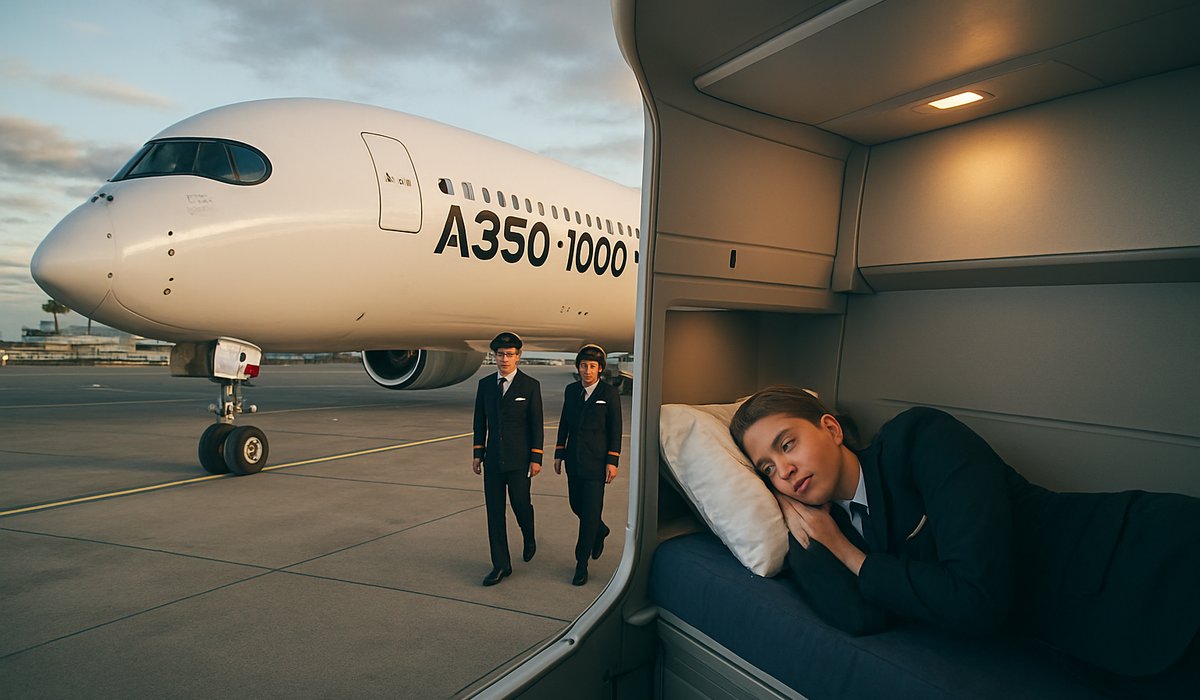
Image generated by AI
Inside the Airbus A350-1000: How Modern Ultra-Long-Haul Aircraft Keep Cabin Crew Alert and Safe
Advanced rest facilities and crew rotation systems are reshaping fatigue management at 43,000 feet
A New Standard for Crew Welfare on Extended Routes
The aviation industry is witnessing a fundamental shift in how airlines manage crew fatigue on marathon flights spanning 15+ hours. The Airbus A350-1000, one of the most advanced widebody aircraft in commercial service, represents a critical turning point in this evolution, featuring integrated rest facilities that allow flight attendants to rotate through scheduled breaks rather than collapsing into empty seats between service runs.
Unlike previous generations of long-range aircraft, modern ultra-long-haul operations demand a more sophisticated approach to crew management. The A350-1000's architecture reflects this reality, with dedicated rest spaces built directly into the aircraft's design—a feature that fundamentally changes how airlines operate extended routes and maintain service quality throughout 16-hour-plus flights.
Structural Design Meets Operational Reality
The aircraft's configuration enables airlines to staff flights with additional crew members who systematically cycle through rest periods during cruise phases. This rotation model addresses a critical aviation challenge: maintaining alertness among team members responsible for passenger safety and emergency response.
"The ability to keep crew members genuinely rested throughout ultra-long-haul operations enhances both service consistency and safety protocols," explains the operational logic behind such design choices. Rather than relying on improvised rest arrangements, the A350-1000 treats fatigue management as a core design principle.
Industry-Wide Implications
This approach reflects broader industry recognition that crew wellbeing directly impacts flight safety. Regulatory bodies including the FAA and EASA have increasingly scrutinized fatigue-related incidents, prompting manufacturers and operators to invest in solutions that balance operational efficiency with human performance limitations.
Airlines operating A350-1000 aircraft on routes like London-Singapore or Los Angeles-Sydney report measurable improvements in crew morale and reduced fatigue-related medical incidents. The aircraft's rest facilities allow for genuine sleep cycles rather than brief rest periods, fundamentally changing how long-haul operations function.
Looking Forward
As airlines expand ultra-long-haul networks and push aircraft capabilities to their limits, the integration of crew rest facilities into aircraft design will likely become standard rather than exceptional. The A350-1000 demonstrates that modern aviation recognizes crew fatigue as both a safety and operational priority worthy of structural investment.
FAQ: Cabin Crew Rest on Long-Haul Aircraft
Q: What makes the Airbus A350-1000 different from previous widebody aircraft regarding crew rest? A: The A350-1000 features purpose-built rest facilities integrated into the aircraft structure, allowing scheduled crew rotation rather than improvised rest arrangements.
Q: How does crew rotation improve flight safety on ultra-long-haul routes? A: Systematic rest cycles keep crew members mentally sharp for both passenger service and emergency response, reducing fatigue-related errors.
Q: Which airlines currently operate A350-1000 aircraft on extended routes? A: Major carriers including Emirates, Qatar Airways, and Singapore Airlines use this aircraft on their longest routes, leveraging advanced crew management systems.
Q: Are crew rest facilities mandatory on all new widebody aircraft? A: While not universally mandatory, modern long-range aircraft increasingly incorporate dedicated rest spaces as airlines recognize fatigue management's operational value.
Q: How many extra crew members are typically carried on A350-1000 ultra-long-haul flights? A: Airlines vary configurations, but most carry additional cabin crew specifically to enable rotation schedules, typically exceeding minimum safety requirements.
Related Travel Guides
External Resources
Disclaimer
This article is for informational and educational purposes only. It does not constitute legal, financial, or professional advice. While we strive to provide accurate and up-to-date information, travel policies, regulations, and conditions change rapidly. Always verify information with official sources before making travel decisions. Nomad Lawyer makes no representations about the accuracy, reliability, completeness, or suitability of the information provided. Readers should consult qualified professionals for advice specific to their circumstances. The views expressed in this article are those of the author and do not necessarily reflect the views of Nomad Lawyer.
Preeti Gunjan
Contributor & Community Manager
A passionate traveller and community builder. Preeti helps grow the Nomad Lawyer community, fostering engagement and bringing the reader experience to life.
Learn more about our team →