
British Airways' Retired 747 Fleet: Could Soaring Demand and Fuel Economics Trigger an Unlikely Comeback?
Breaking airline news and aviation industry updates for 2026.

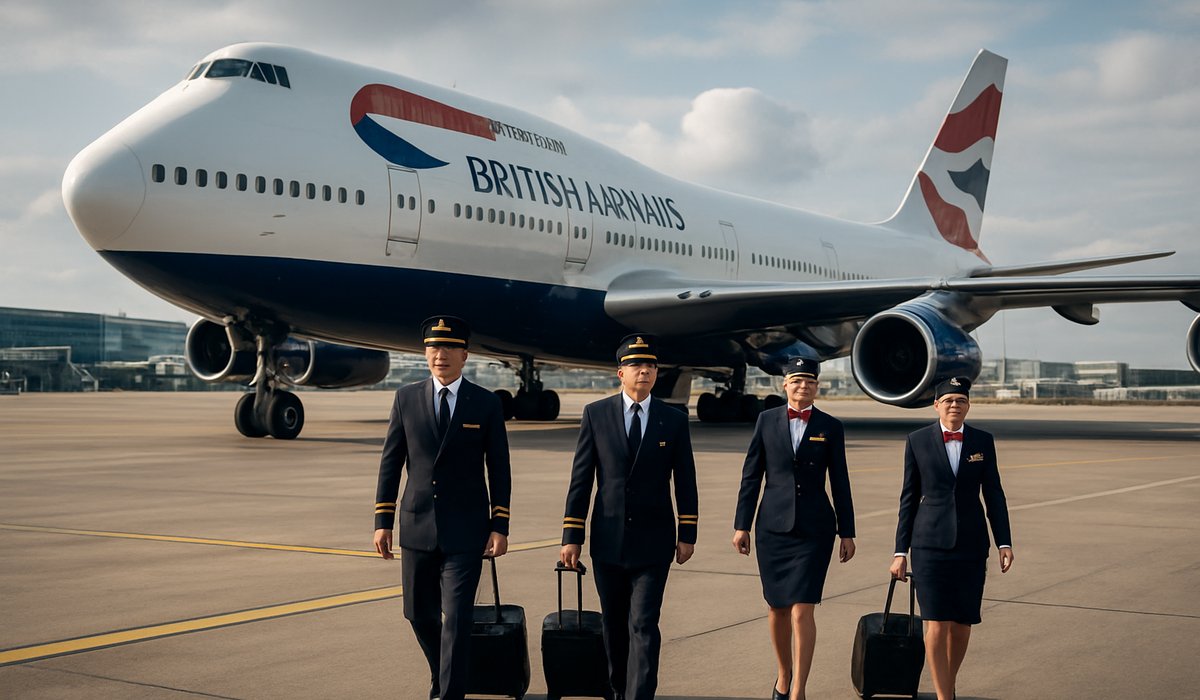
Image generated by AI
British Airways' Retired 747 Fleet: Could Soaring Demand and Fuel Economics Trigger an Unlikely Comeback?
As aviation capacity crunch intensifies across transatlantic routes, the financial case for resurrecting grounded widebody aircraft deserves fresh scrutiny
The Grounding That Changed Everything
British Airways retired its final fleet of 31 Boeing 747-400 aircraft in 2020, marking the definitive end of an iconic chapter in commercial aviation history. The decision sent the aging quadjets to long-term storage facilities scattered across desert regions—Victorville, California, and Teruel, Spain chief among them—where they languished as expensive reminders of a fuel-inefficient past.
The retirement appeared strategically sound. Twin-engine aircraft including the Boeing 787 Dreamliner and Airbus A350 offered a decisive advantage: approximately 25% superior fuel efficiency per available seat compared to the four-engine 747. In an industry where operating costs directly correlate with profitability, this efficiency gap justified BA's pivot toward next-generation wide-body platforms.
Economic Headwinds Reshape the Calculation
Yet emerging market conditions have fundamentally altered the financial calculus. Post-pandemic demand for long-haul travel has rebounded with unexpected force, while aircraft delivery delays—stemming from manufacturing bottlenecks at both Boeing and Airbus—have created acute capacity shortages on premium international routes. Simultaneously, advances in fuel efficiency technologies and shifting global fuel markets have narrowed the economic disadvantage once attributed to four-engine aircraft.
These converging pressures raise an unconventional question: could the operational mathematics now justify reactivating BA's dormant 747 fleet, at least on a temporary or selective basis?
The Numbers Behind Potential Revival
Bringing retired 747-400s back into service would require substantial capital investment—including comprehensive maintenance cycles, avionics updates, and crew retraining. However, the revenue potential from premium transatlantic routes, where business-class demand remains robust and seat-mile yield remains elevated, could theoretically offset reactivation costs over a 24-36 month window.
The calculation hinges on several variables: current jet fuel prices, availability of qualified engineering personnel, regulatory approval timelines, and sustained demand forecasts. Under specific market conditions, particularly if twin-engine aircraft delivery delays extend further into 2025, the dormant 747s represent latent capacity assets with measurable financial recovery potential.
Industry Implications
Whether BA pursues this path remains uncertain. However, the theoretical feasibility of 747 reactivation underscores a broader aviation industry reality: extreme supply-demand imbalances can override conventional efficiency paradigms. Other carriers with parked widebody fleets face similar strategic recalculations.
The Queen of the Skies may yet prove that retirement in the aerospace industry is seldom permanent.
FAQ: Jet Fuel Costs, Airline Capacity, and the Future of Retired Aircraft
Could British Airways actually bring back the 747-400 aircraft it retired in 2020? While theoretically possible, reactivation would require extensive maintenance, regulatory approvals, and crew certification—processes taking several months and substantial capital. Market conditions would need to justify these costs against alternative capacity solutions.
How much more fuel do Boeing 747s consume compared to modern twin-engine aircraft? The 747-400 consumes approximately 25% more jet fuel per available seat than the Boeing 787 or Airbus A350. However, this disadvantage narrows under specific operational scenarios involving high load factors and premium pricing.
What impact do jet fuel prices have on the decision to reactivate retired aircraft? Elevated fuel costs typically make older, less efficient aircraft economically unviable. Conversely, if fuel prices stabilize or decline while aircraft delivery delays persist, the cost-benefit analysis shifts favorably toward utilizing stored inventory.
Why are aircraft delivery delays creating capacity pressures for airlines? Manufacturing bottlenecks at Boeing and Airbus have extended delivery timelines for new aircraft by 18-36 months. This supply shortage forces carriers to maximize utilization of existing fleets and consider alternative solutions, including reactivation of stored aircraft.
Are other airlines considering similar strategies with their parked widebody fleets? Multiple global carriers operate stored Boeing 777, 787, and Airbus A350 aircraft. Reactivation decisions depend on individual route profitability, fuel economics, and demand forecasts rather than industry-wide trends.
Related Travel Guides
External Resources
Disclaimer
This article is for informational and educational purposes only. It does not constitute legal, financial, or professional advice. While we strive to provide accurate and up-to-date information, travel policies, regulations, and conditions change rapidly. Always verify information with official sources before making travel decisions. Nomad Lawyer makes no representations about the accuracy, reliability, completeness, or suitability of the information provided. Readers should consult qualified professionals for advice specific to their circumstances. The views expressed in this article are those of the author and do not necessarily reflect the views of Nomad Lawyer.
Kunal K Choudhary
Co-Founder & Contributor
A passionate traveller and tech enthusiast. Kunal contributes to the vision and growth of Nomad Lawyer, bringing fresh perspectives and driving the community forward.
Learn more about our team →