American Airlines' Redesigned Premium Economy Takes on Delta's Established Offering as US Carriers Intensify Mid-Cabin Competition


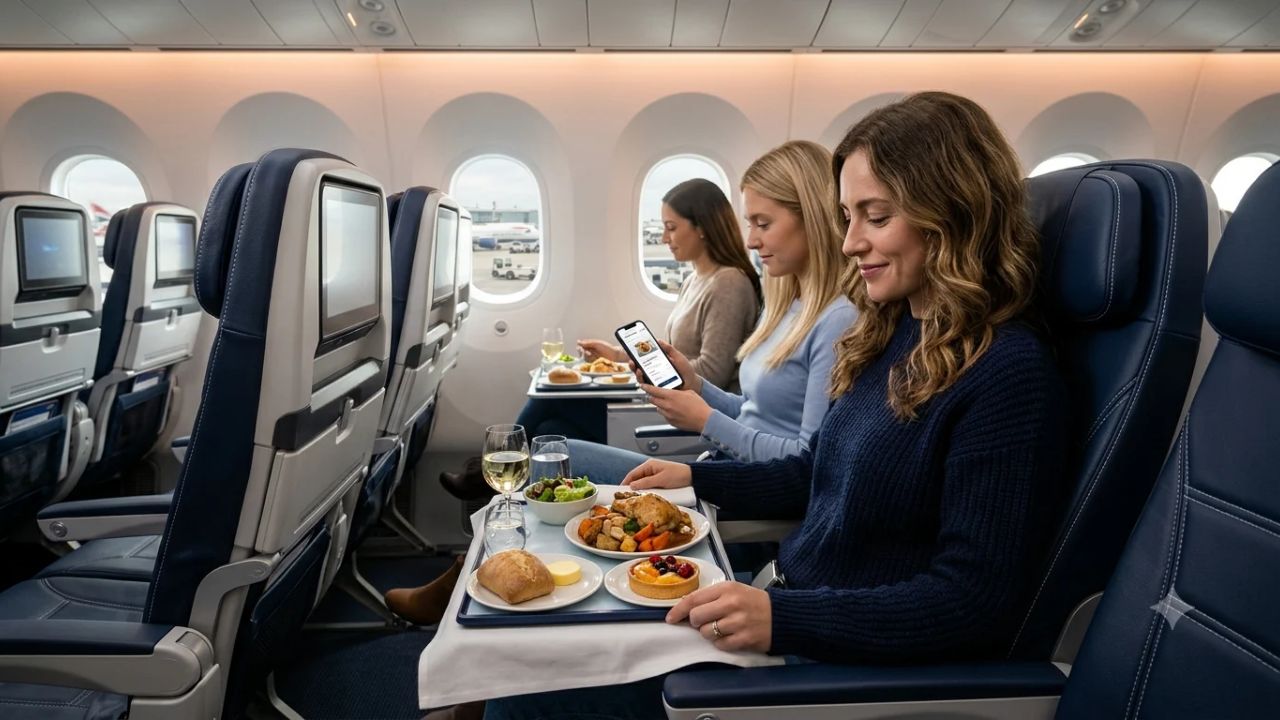
Image generated by AI
The battle for premium economy supremacy heats up in 2026 as major US carriers deploy sophisticated cabin strategies to capture high-margin leisure and business travel
Premium Economy Becomes the Battleground for US Aviation Revenue
American Airlines and Delta Air Lines are locked in an escalating competition over premium economy seating—a cabin category that has emerged as the critical profit center for North American carriers navigating volatile jet fuel prices and shifting passenger demand patterns. As both airlines roll out competing products designed to capture middle-market travelers unwilling to pay full business-class fares, the 2026 aviation landscape reveals how carriers are strategically repositioning their fleet architectures to maximize revenue from long-haul routes without triggering customer sticker shock.
The premium economy segment represents the sweet spot for modern airline economics: it commands significantly higher fares than standard economy while remaining accessible to business travelers on corporate budgets and affluent leisure passengers seeking comfort without premium-cabin premiums. Industry analysts view this cabin category as increasingly central to how carriers will offset inflationary pressures on operating costs—from labor expenses to fuel surcharges—while maintaining competitiveness in an environment where airline fees for baggage, seat selection, and ancillary services face growing consumer scrutiny.
American Airlines' New Product Strategy
American Airlines is introducing a redesigned premium economy experience specifically engineered to directly challenge Delta's established Premium Select cabin. The carrier's approach emphasizes enhanced seat pitch, improved bedding, and expanded amenity packages that position the product as a meaningful step above standard economy while undercutting business-class pricing by a substantial margin.
Frequent flyers boarding American's long-haul aircraft in 2026 will immediately notice the cabin positioning as a strategic response to evolving passenger expectations. The redesigned seating, wider personal space allocations, and reconfigured service protocols reflect American's understanding that premium economy represents where customer decision-making increasingly occurs—the inflection point where passengers evaluate whether to upgrade based on perceived value rather than traditional class-of-service hierarchies.
Delta's Premium Select: The Incumbent Advantage
Delta's Premium Select cabin, already established across much of the carrier's long-haul fleet, maintains first-mover advantage in this segment. The product's maturation means Delta has accumulated operational experience, customer feedback data, and refined service protocols that give the Atlanta-based carrier a structural competitive advantage as American enters the arena with its redesigned offering.
Industry-Wide Implications for Travelers and the Market
This premium economy arms race reflects broader structural shifts in commercial aviation: as fuel prices remain elevated and labor costs continue rising, carriers must extract higher yields from existing seat counts rather than expanding capacity. Premium economy provides the mechanism for that yield extraction without requiring the substantial capital investment of new aircraft or cabin retrofits.
For travelers, the competition should theoretically drive product improvements and potentially moderate pricing—though historically, airline fee structures and ancillary service charges have insulated premium cabin pricing from competitive pressure.
FAQ: Premium Economy and Airline Cabin Strategy
What is premium economy and how does it differ from business class? Premium economy offers enhanced economy seating with superior legroom, better meals, and elevated service standards at fares typically 2-3x standard economy pricing but substantially below business-class costs.
Why are US airlines prioritizing premium economy expansion? Premium economy generates high revenue per available seat while requiring minimal capital investment compared to business-class retrofits, making it ideal for margin improvement amid volatile jet fuel prices.
How do airline baggage fees and ancillary charges affect premium economy pricing? Premium economy passengers typically receive baggage allowances and lounge access included, reducing per-ticket ancillary fee dependency compared to economy passengers.
Which airlines offer premium economy on US domestic routes? Currently, premium economy remains primarily a long-haul international product, though some carriers test domestic premium cabin deployment.
What should frequent flyers expect from premium economy competition in 2026? Expect enhanced amenities, improved seating specifications, and potentially more competitive pricing as American Airlines and Delta battle for premium economy market share.
Related Travel Guides
External Resources
This article is for informational purposes. Flight routes, passenger regulations, visa rules, and transit advisories are subject to change by airlines and aviation authorities. Readers are advised to verify schedules and travel documentation with relevant carriers and border agencies before departure.
Related Stories

easyJet Launches Direct Liverpool to Reykjavik Flights: Inside the North West's New Winter Gateway to Iceland
British Airways Revives Long-Haul Meal Pre-Orders on Las Vegas Flights: Inside the World Traveller Plus Dining Trial