
Airbus A350 Family Represents Pivotal Shift in Long-Haul Aviation Economics
Breaking airline news and aviation industry updates for 2026.

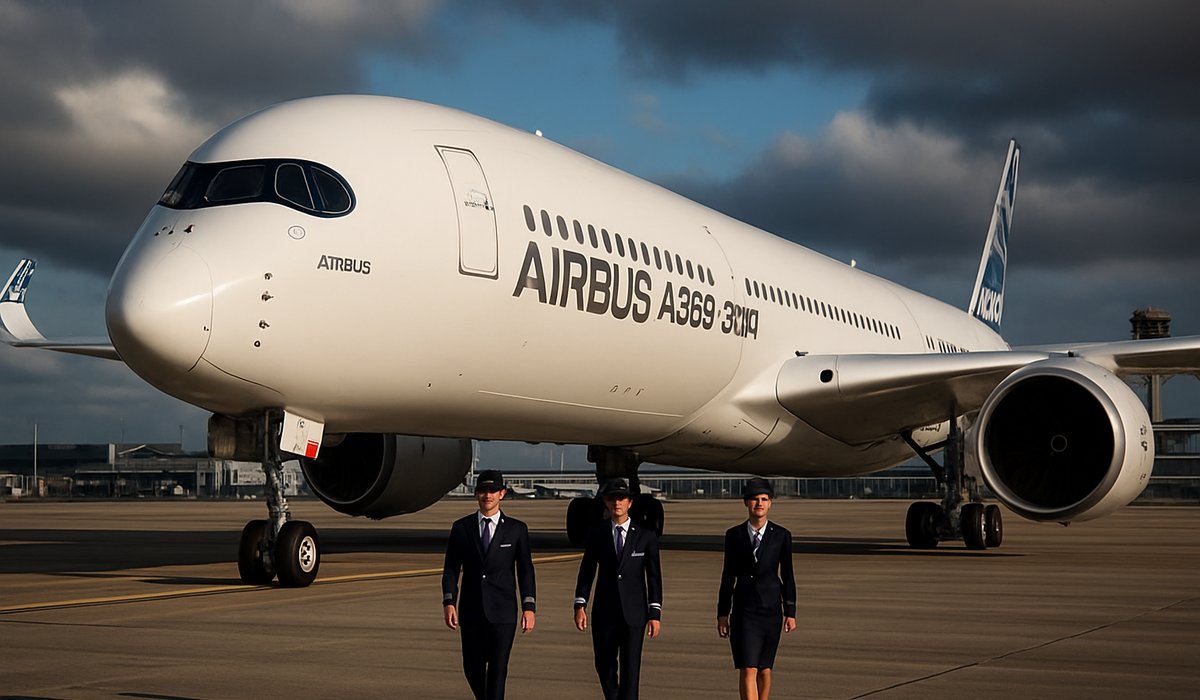
Image generated by AI
Airbus A350 Family Represents Pivotal Shift in Long-Haul Aviation Economics
How two variants of the European manufacturer's flagship widebody are reshaping fuel efficiency and airline profitability
The New Generation of Efficient Long-Haul Travel
The aviation industry is experiencing a fundamental transformation in how airlines approach intercontinental routes, with modern twin-engine widebody aircraft increasingly displacing their four-engine predecessors. At the forefront of this technological realignment sits Airbus's A350 family, a suite of aircraft engineered with composite materials, advanced powerplants, and sophisticated aerodynamic design to reduce fuel consumption while maximizing payload capacity.
Understanding the A350 Lineup
The A350 program encompasses two primary variants designed to serve distinct market segments within long-haul operations. The A350-900 and A350-1000 represent different points on the capacity spectrum, each optimized for specific route networks and airline business models.
The A350-900 serves as the foundational model, configured to accommodate approximately 280 to 350 passengers depending on cabin layout. The stretched A350-1000, meanwhile, extends both fuselage length and maximum structural capacity, enabling carriers to deploy additional seating while maintaining the efficiency advantages that define the A350 family.
How These Variants Impact Operating Economics
The dimensional differences between the two models directly influence airline profitability metrics. The larger A350-1000 carries additional revenue-generating seats without proportionally increasing fuel burn, a critical advantage in volatile energy markets. This efficiency advantage becomes pronounced on competitive long-haul routes where fuel costs represent a significant portion of operational expenses.
Both variants incorporate revolutionary composite construction that reduces structural weight compared to conventional aluminum airframes. Combined with next-generation engines and refined aerodynamics, these aircraft consume approximately 25% less fuel than comparable widebody aircraft from previous generations.
Strategic Implications for the Aviation Sector
Airlines evaluating fleet modernization face critical decisions between the two A350 variants. Carriers serving dense long-haul markets with strong demand favor the A350-1000's increased capacity, while operators on thinner routes or with existing network constraints prefer the A350-900's operational flexibility.
This bifurcated approach reflects broader industry trends toward aircraft optimized for specific operational niches rather than universal platforms. The A350 family's engineering sophistication demonstrates how manufacturers are responding to sustained pressure on airline margins driven by volatile jet fuel prices and rising labor costs.
FAQ: A350 Aircraft Specifications and Airline Operations
Q: What are the main differences between the A350-900 and A350-1000? A: The A350-1000 features an extended fuselage accommodating additional seating capacity while maintaining similar fuel efficiency, making it ideal for high-density long-haul routes.
Q: How do A350 aircraft reduce airline operating costs? A: Advanced composite construction, efficient engines, and aerodynamic design reduce fuel consumption by approximately 25% compared to older widebody aircraft, directly lowering per-seat operating expenses.
Q: Why is fuel efficiency crucial for airline profitability? A: Jet fuel represents a substantial operational cost. More efficient aircraft reduce fuel expenses, enabling carriers to maintain competitiveness and absorb volatile energy market fluctuations.
Q: Which airlines operate the A350 variants? A: Major carriers including Air France, Qatar Airways, Cathay Pacific, and Singapore Airlines have deployed A350 aircraft across their long-haul networks.
Q: What advantages does composite construction provide? A: Composite materials reduce airframe weight, improving fuel efficiency and increasing payload capacity without structural compromises.
Related Travel Guides
External Resources
Disclaimer
This article is for informational and educational purposes only. It does not constitute legal, financial, or professional advice. While we strive to provide accurate and up-to-date information, travel policies, regulations, and conditions change rapidly. Always verify information with official sources before making travel decisions. Nomad Lawyer makes no representations about the accuracy, reliability, completeness, or suitability of the information provided. Readers should consult qualified professionals for advice specific to their circumstances. The views expressed in this article are those of the author and do not necessarily reflect the views of Nomad Lawyer.
Preeti Gunjan
Contributor & Community Manager
A passionate traveller and community builder. Preeti helps grow the Nomad Lawyer community, fostering engagement and bringing the reader experience to life.
Learn more about our team →