
Houthi Missile Attack on Abha Airport Triggers Aviation Alert Across Saudi Arabia, UAE, and Iran in 2026
A Houthi missile strike targeting Abha Airport has placed Saudi Arabia, the UAE, and Iran on high aviation alert, raising security concerns for Saudia, Emirates, and Qatar Airways passengers.

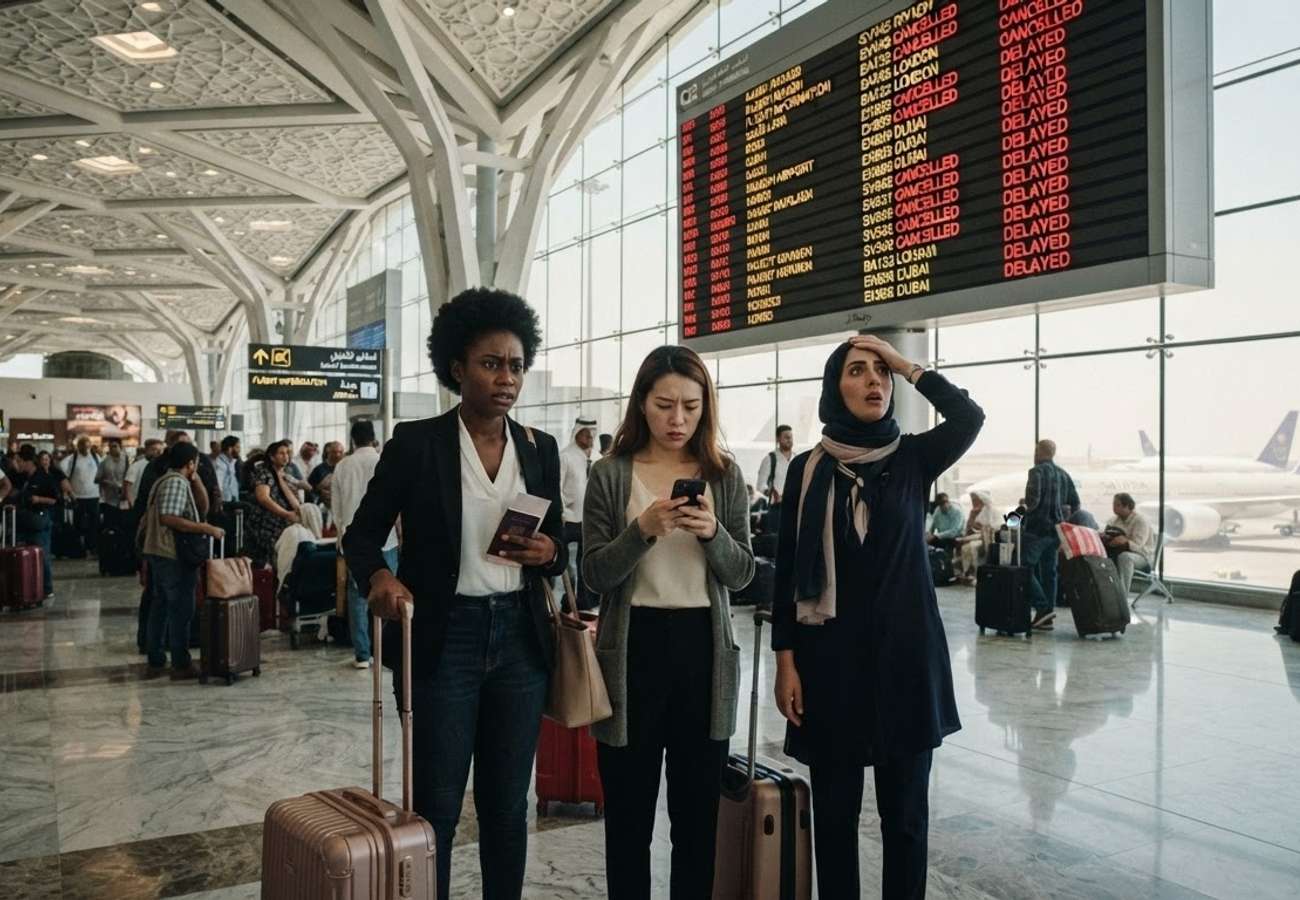
Image generated by AI
[Sanaa, July 14, 2026] — The Houthi movement in Yemen has claimed responsibility for launching a missile toward a region south of Abha Airport on July 13, 2026, triggering an immediate increase in aviation security alerts across Saudi Arabia, the UAE, and Iran. This escalation follows allegations of Saudi Arabian strikes on Sanaa International Airport, ending a period of relative stability that had largely persisted since 2022.
The incident has placed international travelers, global airline operators, and Gulf-based business interests on high alert. Specifically, passengers utilizing major carriers such as Saudia, Emirates, and Qatar Airways are closely monitoring official updates as regional security fears resurface.
Missile Strike Targets Abha International Airport Amid Escalating Tensions
The current aviation alert in Saudi Arabia was prompted by a series of retaliatory claims. Houthi forces asserted that their missile launch was a direct response to Saudi support for attacks targeting Sanaa International Airport in Yemen. The group characterized these events as a significant escalation in hostilities.
In response, the Saudi Arabian military coalition confirmed that it successfully intercepted missiles aimed at the southern territories of the kingdom. The primary target identified in these reports was Abha International Airport, a critical aviation gateway located in the Asir region near the Yemeni border.
Abha serves as a vital hub for domestic travel, providing access to the mountainous Asir region, which is a primary destination for nature-based and cultural tourism due to its temperate summer climate. The timing of this security breach is particularly sensitive as Saudi Arabia continues to aggressively pursue its Vision 2030 goals. The kingdom is currently investing billions to attract millions of international tourists through luxury resort developments, Red Sea projects, and expanded religious and cultural tourism.
Geopolitical Shift Ends Four Years of Saudi-Houthi Calm
This recent exchange of missile fire represents a sharp departure from the geopolitical climate of the last few years. A truce between Saudi Arabia and the Houthis, established in 2022, had significantly curtailed cross-border violence and provided a stable environment for the growth of regional trade and air travel.
The underlying conflict remains deeply rooted; the Houthis seized control of Sanaa in 2014, which prompted a Saudi-led military intervention in 2015. This conflict resulted in one of the most severe humanitarian crises globally. According to industry observers, the current breakdown in calm was triggered by a combination of disputes over Sanaa International Airport operations, alleged Iranian aircraft movements, and military actions by the Saudi-backed Yemeni government.
Regional Security Impact Analysis for Gulf Nations
The ripple effects of the Abha Airport threat extend beyond Saudi borders, influencing the security posture of several neighboring states.
| Country | Current Situation | Travel Importance |
|---|---|---|
| Saudi Arabia | Missile threats reported toward southern regions; Abha Airport identified as a claimed target | Major Gulf aviation hub with millions of annual visitors |
| Yemen | Houthi-controlled areas involved in airport dispute and missile escalation | Conflict zone affecting regional airspace confidence |
| Iran | Linked to dispute involving aircraft movement into Yemen | Wider regional security factor |
| United Arab Emirates | Mentioned due to its involvement in Yemen’s political dynamics | Important Gulf aviation and tourism market |
| Israel | Part of wider Middle East security environment mentioned in regional context | Indirect influence on regional travel sentiment |
Evaluating Risks to Gulf Flight Routes and Airspace
While there have been no confirmed reports of widespread commercial flight suspensions or mass cancellations, the potential for future disruption remains a primary concern for aviation analysts. Abha International Airport's strategic position makes it a focal point for domestic connectivity in southern Saudi Arabia.
If tensions continue to escalate, the industry may face several operational challenges:
- Route Planning: Airlines may be forced to divert flights to avoid contested airspace.
- Insurance Costs: Aviation insurance premiums for carriers operating in the Gulf could rise.
- Passenger Sentiment: A decline in traveler confidence may impact bookings for regional destinations.
- Airspace Monitoring: Increased reliance on military coordination for civilian flight paths.
Airline Response and Monitoring Protocols
Major carriers operating within the Arabian Peninsula are currently in a state of heightened monitoring. To date, no airline has announced a formal change to its network or timetable specifically due to the July 13 incident.
The following airlines are maintaining close watch on the situation:
- Saudia (Saudi Arabian Airlines): The national carrier managing both domestic and international Saudi routes.
- Emirates: The UAE-based global giant connecting international markets.
- Qatar Airways: The primary hub carrier operating through Doha.
- Etihad Airways: The UAE's other major international carrier with extensive regional connections.
- Flynas: A Saudi low-cost carrier focusing on domestic and regional short-haul routes.
Industry reports indicate that these airlines are reviewing government aviation notices, airspace conditions, and airport security updates to mitigate operational risks.
Psychological Impact on International Traveler Decisions
Geopolitical instability often creates a psychological barrier for travelers even when flights remain operational. Passengers planning trips to the Gulf are increasingly questioning the safety of Saudi Arabia and the stability of regional airspace.
For the majority of travelers, official government advisories and direct airline communications remain the most reliable sources of information. While Saudi Arabia continues to operate its major international airports, passengers are urged to remain vigilant and aware of rapidly changing conditions.
Strategic Implications for the Global Aviation Corridor
The Gulf region serves as one of the world's most critical aviation corridors, acting as the primary bridge between Europe, Asia, and Africa. Because Saudi Arabia is one of the fastest-growing tourism markets globally—driven by Umrah pilgrimages, business travel, and international events—any prolonged security instability could create significant uncertainty for travel agencies, airport operators, and international visitors.
If the conflict expands, aviation experts anticipate the following potential risks:
| Possible Risk | Potential Traveller Impact |
|---|---|
| Airspace restrictions | Longer flight durations and schedule adjustments |
| Security reviews | Implementation of additional airport screening procedures |
| Operational changes | Possible modifications to flight timetables |
| Regional uncertainty | Decrease in overall passenger confidence |
| Insurance concerns | Increased operating costs for airlines |
Recommended Safety Measures for Passengers
Travelers currently booked on flights through Saudi Arabia or connecting via Gulf hubs are advised to take the following practical steps:
- Verify flight status immediately before departing for the airport.
- Monitor all notifications from airlines and official airport announcements.
- Allow extra time for travel to accommodate potential additional security screenings.
- Maintain flexibility in travel itineraries.
- Review the specific rebooking and refund policies of their chosen airline.
- Rely on official government travel advisories rather than unverified social media reports.
Regional aviation stability remains critical as the Gulf continues to function as a global transit powerhouse despite rising geopolitical frictions.
Related Travel Guides
Disclaimer
This article is for informational and educational purposes only. It does not constitute legal, financial, or professional advice. While we strive to provide accurate and up-to-date information, travel policies, regulations, and conditions change rapidly. Always verify information with official sources before making travel decisions. Nomad Lawyer makes no representations about the accuracy, reliability, completeness, or suitability of the information provided. Readers should consult qualified professionals for advice specific to their circumstances. The views expressed in this article are those of the author and do not necessarily reflect the views of Nomad Lawyer.
Kunal K Choudhary
Co-Founder & Contributor
A passionate traveller and tech enthusiast. Kunal contributes to the vision and growth of Nomad Lawyer, bringing fresh perspectives and driving the community forward.
Learn more about our team →