
Honolulu Food Safety Alert: Golden Coin Bake Shop Closed by Hawaii DOH in October 2026
Hawaii Department of Health issues red placard to Golden Coin Bake Shop following critical refrigeration and sanitation failures, triggering immediate closure to protect tourists and residents.

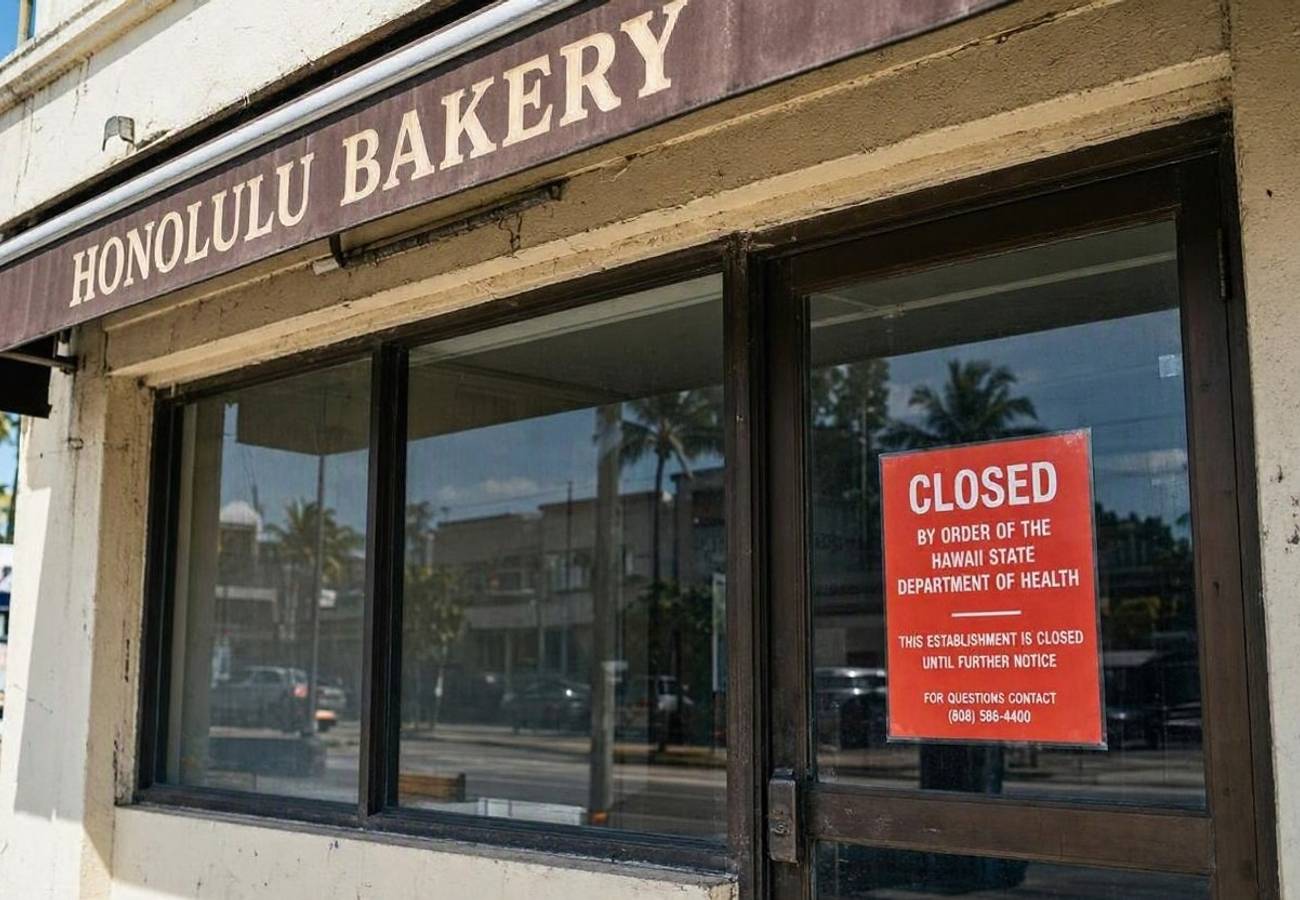
Image generated by AI
A tourist visiting Honolulu for the first time might have walked into the Golden Coin Bake Shop expecting a local treat, only to find a red placard bolted to the door. This immediate shutdown, ordered by the Hawaii Department of Health (DOH) on 7 October 2026, serves as a stark reminder that food safety enforcement in the islands applies equally to hidden gems and high-traffic tourist hubs.
Immediate Shutdown of Golden Coin Bake Shop
The Hawaii Department of Health’s Food Safety Branch (FSB) took decisive action on 7 October 2026, issuing a red placard to the Golden Coin Bake Shop, located at 1814 Colburn Street. Operated by GU Industrial & Business Corporation, the establishment was forced to cease all operations immediately.
Under Hawaii health protocols, a red placard signifies that an establishment poses an imminent health hazard to the public. The bakery was prohibited from reopening until every violation identified during the inspection was corrected and verified by a follow-up visit. While a re-inspection was scheduled for 9 October 2026, official confirmation of the shop's current operating status remains pending.
Critical Health Violations Identified
The FSB's inspection revealed a systemic failure in basic food safety infrastructure. The closure was not triggered by a single mistake but by a combination of failures in temperature control, sanitation, and equipment maintenance.
Temperature and Storage Failures
Inspectors found that Time/Temperature Control for Safety (TCS) foods were not being held at the mandatory temperature of 41°F or below. When refrigeration fails to maintain this threshold, bacteria can multiply rapidly, increasing the risk of foodborne illness.
Packaging and Contamination Risks
The DOH recorded instances of damaged food packaging. In a professional kitchen, packaging must act as a barrier against environmental contaminants. The bakery was ordered to discard all compromised packaging and implement stricter storage standards.
Sanitation and Utility Breaches
Two critical hygiene failures were noted:
- Equipment Cleanliness: Food-contact surfaces and equipment were not cleaned or sanitized at the required frequency.
- Hot Water Shortage: The facility lacked a sufficient supply of hot water for warewashing. Hawaii regulations require water temperatures to exceed 110°F for proper cleaning of utensils and equipment.
Summary of Compliance Requirements
The following table outlines the specific failures and the mandatory corrective actions required for the Golden Coin Bake Shop to regain its operating license.
| Violation Category | Finding | Mandatory Corrective Action |
|---|---|---|
| Refrigeration | TCS foods above 41°F | Maintain all safety foods at $\le$ 41°F |
| Packaging | Damaged/Compromised containers | Remove and replace all damaged packaging |
| Sanitation | Dirty food-contact equipment | Implement prescribed cleaning/sanitizing frequency |
| Utilities | Hot water below 110°F | Restore water temperature to $> 110$°F for washing |
Your Rights as a Consumer
When a food establishment is closed by a health department, consumers who may have been affected have specific avenues for recourse. While there have been no reported illnesses linked to this specific closure, travelers should know how to handle similar situations.
If you consumed food from an establishment that was subsequently closed for health violations and you became ill, you should:
- Document Everything: Save receipts, take photos of the food if possible, and keep a log of symptoms.
- Report to Authorities: File a formal complaint with the Hawaii Department of Health to ensure the incident is linked to the facility's record.
- Medical Evidence: Seek medical attention immediately. A laboratory-confirmed diagnosis of food poisoning is essential for any legal claim.
- Consumer Protection: In the US, food safety is regulated at the state level, but general consumer protections are overseen by the Federal Trade Commission (FTC).
Dining Safety Strategy for Travelers
To avoid establishments with poor hygiene standards while exploring Honolulu, follow these professional guidelines:
- Check for Placards: In Hawaii, look for the health department's grading or placards. A red placard is an absolute "no-go."
- Observe the "Three-Point Check": Look at the cleanliness of the condiment station, the restrooms, and the staff's hand-washing habits. If the public areas are neglected, the kitchen often is too.
- Verify Online Reviews: While not a legal substitute for an inspection, recent reviews mentioning "stomach issues" or "unclean facilities" are red flags.
- Use Official Trackers: Check local government health portals for recent inspection reports before visiting lesser-known eateries.
FAQ: Honolulu Food Safety 2026
Was anyone reported sick at Golden Coin Bake Shop? No. The Department of Health's action was preventative based on inspection findings; no specific reports of customer illness were cited in the closure notice.
Can the bakery reopen immediately? No. The establishment must correct all refrigeration, packaging, and water temperature violations and pass a follow-up inspection by the FSB before the red placard is removed.
What should I do if I ate there recently? If you feel well, no action is needed. If you experience symptoms of foodborne illness, contact a healthcare provider and report the incident to the Hawaii DOH.
How can I check if other Honolulu restaurants are safe? You can search for inspection records through the Hawaii Department of Health’s official website or look for the physical health rating placards displayed at the premises.
Stay vigilant and prioritize verified hygiene over convenience when dining in new cities.
Related Travel Guides
Disclaimer
This article is for informational and educational purposes only. It does not constitute legal, financial, or professional advice. While we strive to provide accurate and up-to-date information, travel policies, regulations, and conditions change rapidly. Always verify information with official sources before making travel decisions. Nomad Lawyer makes no representations about the accuracy, reliability, completeness, or suitability of the information provided. Readers should consult qualified professionals for advice specific to their circumstances. The views expressed in this article are those of the author and do not necessarily reflect the views of Nomad Lawyer.
Naina Thakur
Contributor & Travel Specialist
Travel enthusiast and legal writer covering visa regulations, responsible tourism, and cultural journeys across global destinations.
Learn more about our team →