
Honolulu Flight Chaos Disrupts Mainland Routes in April 2026
Spring travelers face widespread delays and cancellations as Honolulu airport construction and Pacific weather create cascading disruptions across mainland U.S. routes in April 2026, affecting thousands of passengers.

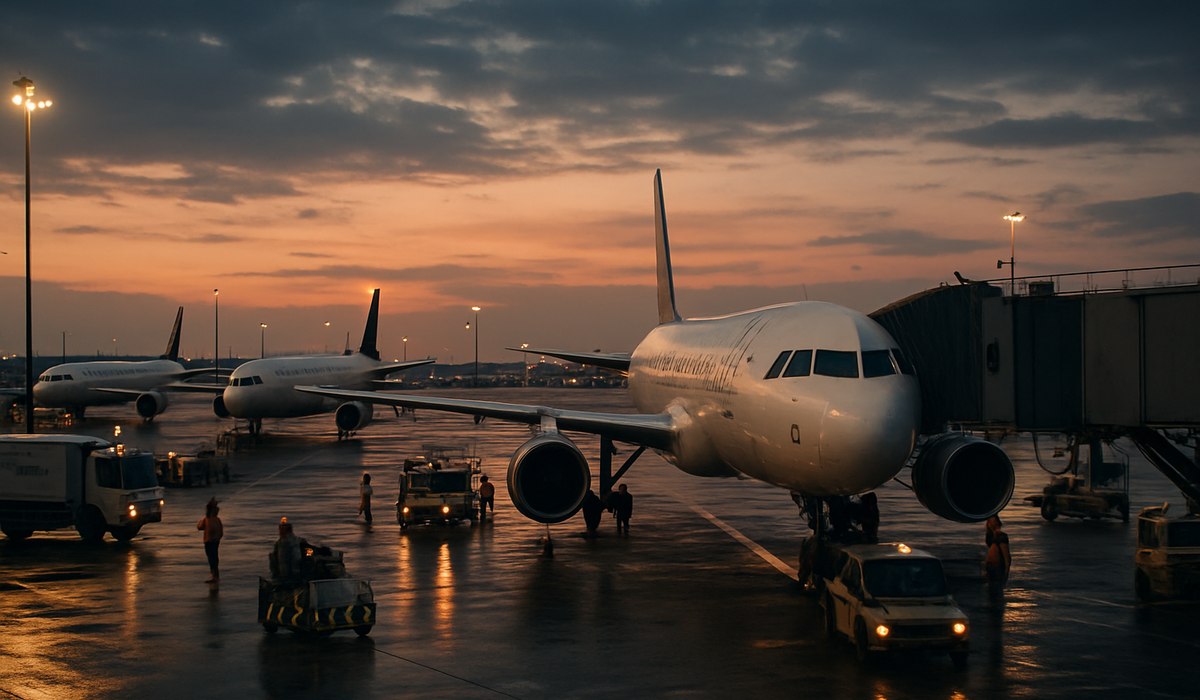
Image generated by AI
Honolulu Flight Chaos Triggers Cascade of Mainland Delays
Daniel K. Inouye International Airport experienced severe operational disruptions throughout April 2026, creating a domino effect of cancellations and delays across U.S. mainland routes. Thousands of travelers faced unexpected disruptions as infrastructure maintenance work combined with adverse Pacific weather patterns overwhelmed Honolulu's capacity during peak spring travel season. The disruptions primarily affected major carriers operating transpacific services, with ripple effects reaching Seattle, Los Angeles, San Francisco, and other West Coast hubs that depend on Honolulu as a critical connection point.
Taxiway Construction Constrains Honolulu Capacity
Modernization work at Daniel K. Inouye International Airport significantly reduced operational flexibility during April 2026. The airport initiated taxiway repaving and gate reconfiguration projects designed to improve long-term efficiency, but the construction schedule coincided with spring break and Easter holiday travel demands. Planning documents revealed that even off-peak construction windows created afternoon and evening bottlenecks when aircraft rotations typically accelerate.
The taxiway closures forced ground crews to reroute aircraft through alternate paths, extending pushback times and reducing the number of simultaneous departures. This constraint proved especially problematic for wide-body aircraft requiring specific gate assignments and ground service infrastructure. Airport officials acknowledged that the combination of infrastructure work and increased passenger volume created a compressed operating environment that limited flexibility when weather or mechanical issues arose. For real-time construction updates, travelers can reference FAA advisories and airport authority notices.
Pacific Weather Patterns Compound Operational Stress
Early April 2026 brought unsettled weather conditions across the North Pacific and U.S. West Coast, amplifying challenges at Hawaii's primary airport. Multiple low-pressure systems generated crosswinds exceeding operational preferences and prompted temporary runway configuration changes, further reducing departure capacity when demand peaked. Commercial flight tracking data showed elevated delay counts on April 6-8 and April 11-13 across Honolulu-bound and mainland-departure operations.
These weather-driven delays compounded the effects of construction-related constraints. When Pacific storms delayed inbound aircraft from the mainland, connecting passengers missed their onward flights to neighbor islands including Kauai, Maui, and the Big Island. Crew rest violations and aircraft rotation disruptions cascaded through subsequent days, creating a snowball effect that persisted through mid-April. Meteorological patterns typical of spring transition months meant that these conditions were likely to persist, leaving airlines with limited relief. Travelers can monitor real-time weather impacts through FlightAware delay tracking.
Ripple Effects Hit Mainland Hubs
West Coast airports experienced noticeable secondary disruptions as Honolulu flight chaos propagated inland. Seattle-Tacoma International, Los Angeles International, and San Francisco International all registered spike in delayed arrivals from Hawaii during the April 2026 disruption window. These delays extended average gate turnaround times and forced subsequent flights to depart late, affecting connections to destinations across the mainland and beyond.
The cascading effect proved especially acute for passengers attempting to make tight connections through mainland hubs. A delayed arrival from Honolulu in Los Angeles could force a missed connection to Denver, Dallas, or Chicago. Airlines faced difficult rebooking decisions, with limited available seats on subsequent flights as demand remained strong throughout spring. Ground crews at mainland hubs worked extended hours attempting to recover operations, but the mathematical reality of aircraft rotation schedules meant that single-day recovery proved impossible once delays exceeded two to three hours.
Strong Travel Demand Amplifies Impact
April 2026 marked one of the strongest booking periods for Hawaii travel in recent years, leaving carriers with minimal spare capacity to absorb disruptions. Travel demand tracking indicated that transpacific and mainland-Hawaii routes operated at load factors exceeding 85%, leaving few empty seats for rebooking displaced passengers. The convergence of spring break, Easter holidays, and pleasant weather forecasting in Hawaii created perfect conditions for high demand.
Airline revenue management systems struggled with rebooking decisions when facing thousands of displaced passengers across multiple days. First and business class seats typically reserved for premium passengers were deployed for economy rebooking, compressing future revenue potential. By April 12, some carriers reported stand-by lists exceeding 500 passengers waiting for seats on Honolulu routes. This supply-demand mismatch transformed routine delays into multi-day travel disruptions, with some passengers unable to depart Honolulu until April 14 or later. Consult US DOT guidelines regarding passenger compensation eligibility.
Impact Summary Table
| Metric | Details |
|---|---|
| Primary Hub | Daniel K. Inouye International Airport, Honolulu |
| Primary Cause | Taxiway construction + Pacific weather + high demand |
| Peak Disruption Dates | April 6-8, 11-14, 2026 |
| Affected Mainland Hubs | Seattle (SEA), Los Angeles (LAX), San Francisco (SFO), Phoenix (PHX) |
| Average Delay | 2-4 hours on affected flights |
| Estimated Passengers Impacted | 15,000+ across disruption window |
| Cancellation Rate Spike | 8-12% on Honolulu-mainland routes |
| Recovery Timeline | Mid-April, weather dependent |
| Primary Carriers | Hawaiian Airlines, Alaska Airlines, United, American |
| Construction Duration | Ongoing through May 2026 |
What This Means for Travelers
Passengers navigating Hawaii travel during April 2026 and beyond should implement proactive strategies to minimize disruption exposure:
-
Book early morning flights from Honolulu to mainland destinations, avoiding afternoon and evening operations when weather impacts and construction scheduling create maximum stress.
-
Build in 3+ hour mainland connection buffers when booking itineraries that require changing planes in Los Angeles, San Francisco, or Seattle after arriving from Hawaii.
-
Monitor construction schedules through Daniel K. Inouye International Airport's official website before booking travel dates, as future phases may create additional capacity constraints.
-
Select nonstop options whenever possible to avoid dependency on Honolulu hub connections, which face elevated disruption risk throughout spring 2026.
-
Check real-time weather patterns using FlightAware tracking tools before departure, as Pacific weather systems often develop rapidly during spring months.
-
Purchase travel insurance covering weather-related cancellations and trip delays, given the elevated operational stress evident in April 2026 conditions.
-
Arrive at airport three hours early for international arrivals, allowing time for processing without rushing toward tight connections.
Frequently Asked Questions
What are my rights if my Hawaii flight gets canceled or significantly delayed?
Under U.S. Department of Transportation regulations, passengers are entitled to compensation ranging from $260-$685 for flights delayed more than three hours, depending on flight distance. Airlines must also provide rebooking on the next available flight or full refund at passenger choice. Weather-related cancellations may exempt carriers from compensation, but construction-related disruptions typically qualify for passenger recovery benefits.
How long are construction work impacts expected to continue at Daniel K. Inouye International?
The airport authority's modernization project extends through May 2026, with taxiway work intensifying in late April. Travelers should anticipate capacity constraints and potential delays through the end of May. Summer 2026 operations are expected to return to normal once construction completion and aircraft rotation patterns stabilize following the Hawaiian Airlines-Alaska Airlines integration completion.
Which mainland airports are most affected by Honolulu disruptions?
Seattle-Tac
Disclaimer
This article is for informational and educational purposes only. It does not constitute legal, financial, or professional advice. While we strive to provide accurate and up-to-date information, travel policies, regulations, and conditions change rapidly. Always verify information with official sources before making travel decisions. Nomad Lawyer makes no representations about the accuracy, reliability, completeness, or suitability of the information provided. Readers should consult qualified professionals for advice specific to their circumstances. The views expressed in this article are those of the author and do not necessarily reflect the views of Nomad Lawyer.
Raushan Kumar
Founder & Lead Developer
Full-stack developer with 11+ years of experience and a passionate traveller. Raushan built Nomad Lawyer from the ground up with a vision to create the best travel and law experience on the web.
Learn more about our team →