
System Shock Flight Chaos Sweeps 27 US Airports, Stranding 70,000
A system shock flight event has crippled 27 major US airports in 2026, with 114 cancellations and 3,400+ delays stranding 50,000-70,000 passengers. Cascading disruptions spread nationwide.

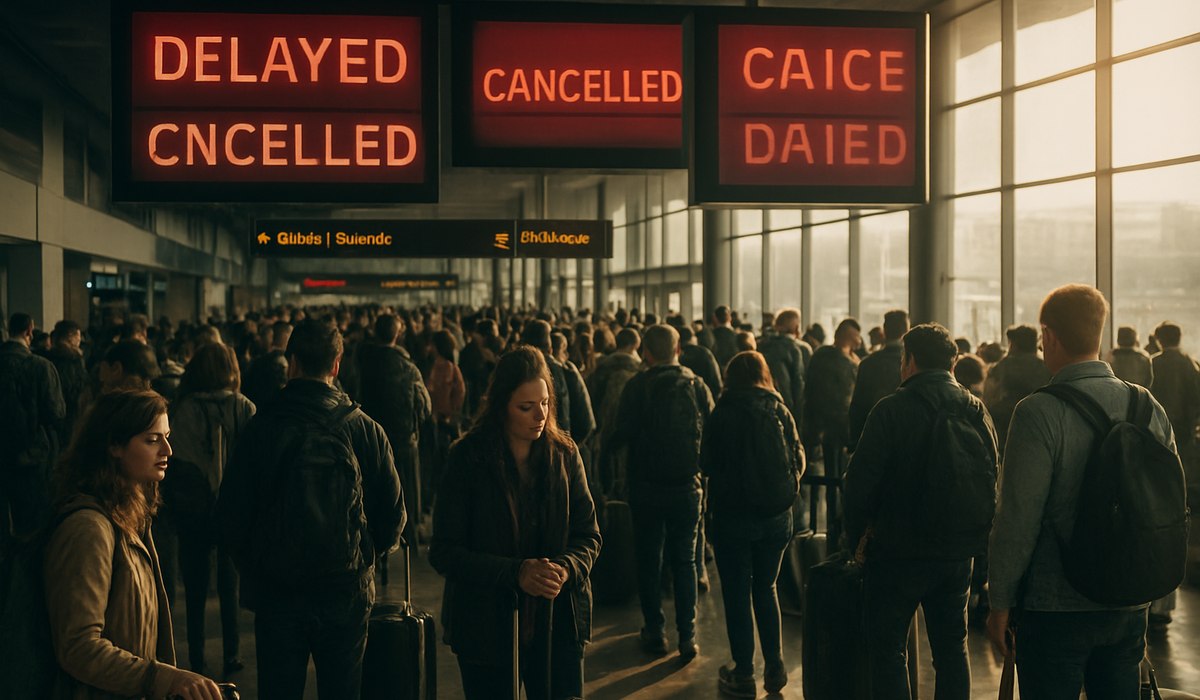
Image generated by AI
Breaking News: Massive Flight Disruptions Engulf Nation's Aviation Network
A system shock flight event has paralyzed America's aviation infrastructure, with 27 major US airports experiencing simultaneous operational chaos on April 8, 2026. Across the nation, 114 flight cancellations and more than 3,400 delays have stranded between 50,000 and 70,000 passengers, triggering cascading disruptions that ripple across every major US route network. The scale of this system shock flight crisis—affecting hub airports from New York to Los Angeles—demonstrates how quickly America's tightly scheduled airline ecosystem can collapse when multiple operational failures occur simultaneously.
Disruptions Concentrated at Nation's Busiest Hubs
The system shock flight event has struck hardest at the country's largest connectivity centers. New York area airports (LaGuardia and Newark), Atlanta, Miami, Orlando, Los Angeles, and Seattle are reporting the highest concentration of delays and cancellations. Flight-tracking data from FlightAware confirms that these seven mega-hubs alone account for roughly 60% of all nationwide disruptions.
The Northeast Corridor has proven particularly vulnerable. Recent ground stops at LaGuardia and Newark have cascaded southward, disrupting connections to Florida, the Midwest, and transcontinental routes. Miami and Orlando—critical gateways for Caribbean and Latin American service—are experiencing triple-digit delay counts during peak hours. On the West Coast, Los Angeles and Seattle are simultaneously managing departure queues that compress available slots for cross-country flights.
This multi-hub simultaneous strain represents a textbook example of system shock flight vulnerability: when major hubs fail in parallel, the entire network loses flexibility. Aircraft cannot reposition efficiently, crews exceed duty limits, and the cascading effect multiplies initial disruptions across secondary cities within hours.
Northeast Corridor Cascades Trigger Cross-Country Delays
New York's network disruption has created a domino effect extending 2,000+ miles. Flights scheduled to originate from secondary Northeast airports depend on aircraft arriving from LaGuardia and Newark; when those arrivals are delayed 4-8 hours, downstream morning departures cannot operate.
The system shock flight impact accelerates when connecting passengers are involved. A delayed arrival at Atlanta means missed connections to Miami, Memphis, and Dallas. Those missed connections force rebooking on already full flights, creating secondary delays that persist for 24-48 hours.
The Northeast Corridor's density—handling 15% of all US commercial flights—means disruptions here affect the entire national schedule. The FAA has implemented ground delay programs (GDPs) to manage capacity, but these measures simply postpone rather than prevent eventual cascading chaos.
Southeast Florida Gateways Struggle Under Pressure
Miami and Orlando are experiencing their most severe system shock flight episode of 2026. Both airports depend heavily on originating traffic from the Northeast; when that feeder traffic is disrupted, local departure banks collapse.
Miami handles 2,600+ daily flights, making it America's third-busiest international gateway. Triple-digit delays at Miami automatically disrupt Caribbean routes, Latin American service, and connections throughout South Florida's population centers. Orlando similarly serves high-volume leisure traffic; its disruptions particularly impact spring break recovery periods and summer vacation bookings.
Ground handling delays, depleted ground crew rosters, and limited runway capacity—Orlando has just two main parallel runways—create structural vulnerabilities during system shock flight events.
West Coast Airports Squeezed by Transcontinental Bottlenecks
Los Angeles and Seattle are simultaneously managing east-bound delays while processing arriving aircraft from the Northeast. This dual squeeze compresses available departure slots for westbound flights, creating a bidirectional capacity crunch.
Los Angeles processes 2,700+ daily flights; Seattle handles 900+. When both experience system shock flight conditions simultaneously, transcontinental schedules—which already operate with minimal slack—cannot recover. Aircraft that should arrive from the East Coast and depart westbound instead sit idle, consuming gate capacity needed for other aircraft.
The West Coast system shock flight situation typically persists 18-36 hours after Northeast disruptions begin, as aircraft gradually cycle through and crews gradually recover from extended duty days.
Understanding Why 114 Cancellations Create Nationwide Chaos
A system shock flight event involving "only" 114 cancellations appears modest when considering that US airlines operate 45,000+ daily flights. However, network mathematics reveal the multiplication effect.
Each cancellation displaces 150-350 passengers and removes one aircraft plus its crew from service for an entire operating day. A single widebody aircraft cancellation (international long-haul) can displace 400+ passengers; a regional jet cancellation affects 50-70 passengers. Across 114 cancellations, the direct passenger impact exceeds 30,000 individuals.
Secondary disruptions multiply that figure. Aircraft failing to arrive at their next scheduled airport forces cancellation of downstream flights. A single canceled early-morning flight from New York can trigger five downstream cancellations by midday. Airlines respond to accumulating delays by selectively canceling entire route banks to free aircraft for higher-demand corridors, forcing system shock flight passengers onto alternate flights that are already 95%+ booked.
The system shock flight cascading effect means passengers experience not just their original flight's cancellation, but 48-72 hour waits for available rebooked seats.
Critical Data: System Shock Flight Impact Summary
| Metric | Value | Impact |
|---|---|---|
| Airports Affected | 27 major US hubs | Nationwide network paralysis |
| Cancellations | 114 flights | 30,000+ direct passenger displacements |
| Delays | 3,400+ flights | 70,000 passengers delayed 2+ hours |
| Stranded Passengers | 50,000-70,000 total | Overnight stays, missed connections, rebooking chaos |
| Hardest-Hit Cities | New York, Atlanta, Miami, Orlando, LA | Cascading failures in all regions |
| Typical Resolution | 36-48 hours | Assumes no new disruptions occur |
| Passenger Compensation | Eligible under DOT rules | $400-$750 per passenger for 3+ hour delays |
What This Means for Travelers: Action Checklist
If you're traveling during a system shock flight event, immediate action is critical. Here's your roadmap:
-
Check flight status immediately on FlightAware or your airline's website—don't wait for notification; airlines are overwhelmed and notifications lag reality by 30+ minutes.
-
Contact your airline directly via phone (not chat, not app) within two hours of learning of a cancellation or 3+ hour delay; available rebooking seats evaporate within 120 minutes.
-
Document all expenses—meals, hotels, ground transportation—as you incur them; the US DOT requires airlines to reimburse documented expenses for cancellations within their control.
-
Request cash compensation (not airline vouchers) for cancellations when eligible; DOT rules mandate $200-$750 depending on delay length, but you must claim within 60 days.
-
Consider alternative transportation if rebooking exceeds 12 hours—rental car, bus, or rail may deliver you to your destination faster than waiting for your airline's next available flight.
-
Reconfirm your rebooked flight 24 hours before departure; secondary disruptions often create additional cancellations on originally safe alternative flights.
Disclaimer
This article is for informational and educational purposes only. It does not constitute legal, financial, or professional advice. While we strive to provide accurate and up-to-date information, travel policies, regulations, and conditions change rapidly. Always verify information with official sources before making travel decisions. Nomad Lawyer makes no representations about the accuracy, reliability, completeness, or suitability of the information provided. Readers should consult qualified professionals for advice specific to their circumstances. The views expressed in this article are those of the author and do not necessarily reflect the views of Nomad Lawyer.
Kunal K Choudhary
Co-Founder & Contributor
A passionate traveller and tech enthusiast. Kunal contributes to the vision and growth of Nomad Lawyer, bringing fresh perspectives and driving the community forward.
Learn more about our team →