
Hong Kong Launches Southbound Yacht Travel Scheme Across 1,180km Shoreline from October 2026

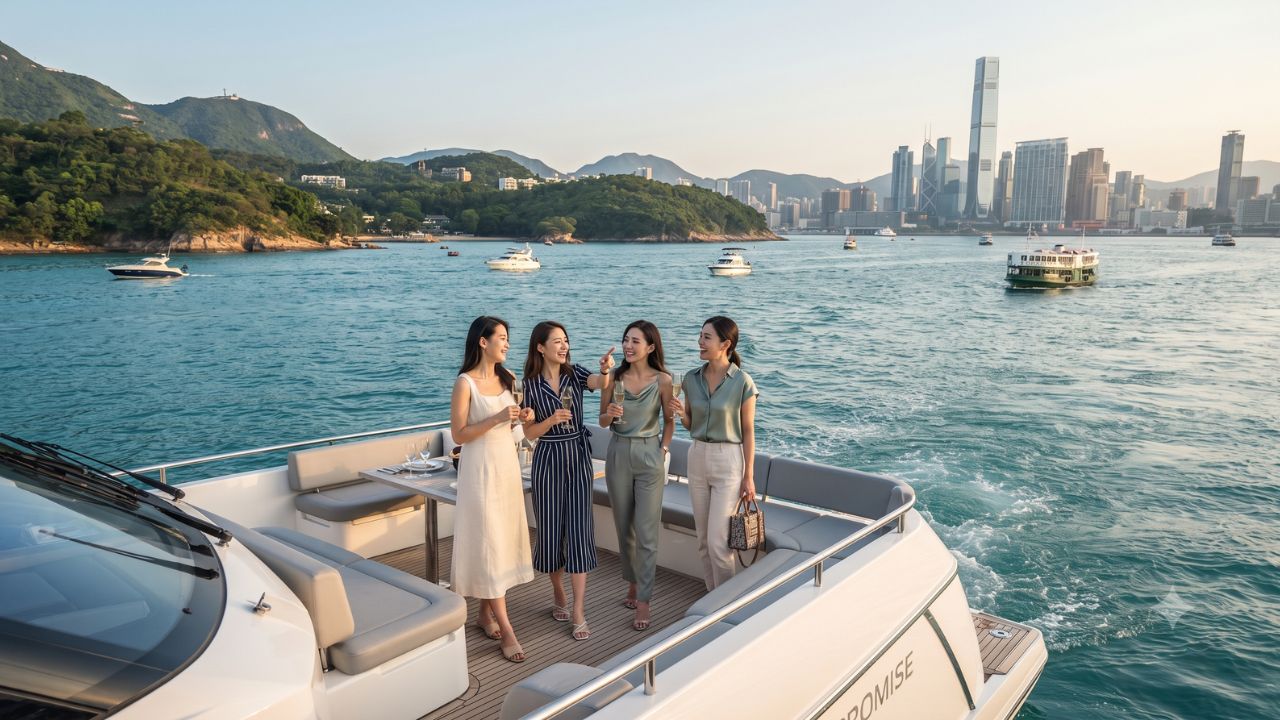
Spanning 1,180 kilometers of rugged coastline and 263 outlying islands, Hong Kong is opening its maritime borders to mainland recreational vessels on Friday, 16 October 2026, under the newly enacted Southbound Yacht Travel Scheme. Formalized on 28 September 2026 through a bilateral agreement between the Hong Kong Marine Department and the Guangdong Maritime Safety Administration, the reciprocal initiative enables eligible private yachts to navigate directly between the nine mainland cities of the Guangdong-Hong Kong-Macao Greater Bay Area and designated anchorages in Hong Kong waters.
The cross-border maritime framework arrives as Hong Kong experiences substantial tourism growth. According to data from the 2026 Policy Address, the territory recorded 49.9 million visitor arrivals in 2025 (a 12 percent year-on-year increase), with total inbound visitor expenditure projected to hit HK$238.1 billion in 2026 (up 10 percent). By introducing paperless digital clearance and five public anchorage zones, the territory is expanding beyond urban skyline tourism into luxury coastal exploration and island hopping.
Digital Maritime Clearance and Infrastructure Expansion
The southbound rollout builds upon the Northbound Yacht Travel Scheme introduced in June 2026, which streamlined clearance for Hong Kong vessels cruising northward. To support incoming Guangdong mariners without requiring private agency retainers, the Hong Kong Marine Department launched an upgraded Electronic Business System on 29 June 2026.
The digital platform allows yacht skippers to lodge advance crew manifests, apply for navigation permits, coordinate port health clearance, and secure anchorage slots with a minimum 24-hour pre-arrival notification window. On-water safety is regulated via the Dynamic Yacht Monitoring System, which tracks vessel dimensions and draft against real-time anchorage occupancy. All participating vessels must maintain an operational Automatic Identification System (AIS) and marine VHF radio, while skippers must hold local water navigation certificates verified through seven recognized maritime academies.
Long-term capacity will expand significantly under government infrastructure plans. Over 1,100 new recreational berths are currently in development, including 600 berths split between the former Lamma Quarry site, the expanded Aberdeen Typhoon Shelter, and the Hung Hom Station waterfront, alongside 500 berths at the new Airport City yacht basin designed to dock superyachts exceeding 80 meters in length.
Five Designated Anchorages for Visiting Coastal Vessels
Rather than requiring mandatory berths at private yacht clubs, visiting yachts can anchor across five ecologically and culturally distinct coastal locations.
| Anchorage Location | Geographic Zone | Nautical & Scenic Characteristics | Cultural & Leisure Highlights |
|---|---|---|---|
| Stanley Bay | Southern Hong Kong Island | Protected southern harbor with moderate draft depth | Stanley Market shopping, colonial Murray House, waterfront promenade dining |
| Tai Tam Bay | Southeastern Hong Kong Island | Sheltered inlet flanked by lush country park hillsides | Coastal nature trails, historic Tai Tam Tuk stone masonry reservoirs |
| Repulse Bay | Southern Hong Kong Island | Broad sandy bay with gentle swells and resort amenities | Iconic crescent beach, The Pulse shopping complex, Tin Hau shrine |
| Three Fathoms Cove | Sai Kung (Eastern New Territories) | Deep sheltered sound surrounded by volcanic peaks | Access to hiking circuits in the Hong Kong UNESCO Geopark, seafood villages |
| Tai O | Western Lantau Island | Shallow western bay near historic fishing estuary | Traditional stilt house waterways, dried seafood markets, pink dolphin waters |
Exploring Hong Kong's Wild Coastal Periphery
For maritime travelers, accessing Hong Kong by water reveals a dramatically different side of the territory far removed from central commercial districts. Guided by resources from Discover Hong Kong, yachting itineraries connect pristine marine parks with historic coastal settlements.
- Volcanic Geology in Sai Kung: Dropping anchor near Three Fathoms Cove provides a gateway to eastern Sai Kung's geological formations. The nearby High Island area contains monumental hexagonal volcanic rock columns formed 140 million years ago, best explored by dinghy or coastal kayak.
- Lantau Island’s Maritime Heritage: Anchoring off Tai O immerses visitors in the centuries-old culture of the Tanka fishing community. Wooden stilt houses (pang uk) built directly over tidal creeks preserve traditional seafood salting methods and boatbuilding traditions.
- Southern Peninsula Dining: Vessels mooring at Stanley Bay or Repulse Bay offer direct access to open-air seaside bistros. Mariners can step ashore at Stanley Public Pier to explore historic Murray House—a Victorian military barracks dismantled in Central and reassembled brick-by-brick along the southern waterfront.
Visitor Insider Tips for Navigating Hong Kong Waters
Cruising Hong Kong's subtropical waters requires specialized operational awareness, tidal planning, and local etiquette.
- Managing Typhoon Shelters and Monsoon Swells: Autumn (October to December) brings the best sailing conditions with northeast monsoons providing consistent 15–20 knot breezes and clear skies. However, keep a continuous radio watch on VHF Channel 16 for Hong Kong Observatory tropical cyclone warnings; if a Strong Monsoon Signal or Typhoon Signal No. 3 is hoisted, immediately transit to certified typhoon shelters at Aberdeen or Causeway Bay.
- Dinghy Landing Protocols at Public Piers: When coming ashore from designated anchorages like Stanley or Repulse Bay, use designated public landing steps (Kaito piers). Never tie up dinghies on the active outer berthing face, which must remain clear for scheduled ferry services and Marine Police patrols.
- Octopus Card and Digital Payments: Cash is rarely needed in Hong Kong. Ensure you purchase an on-loan Octopus Card or load the digital Octopus app onto your mobile device before stepping ashore. It is accepted instantly across all public piers, MTR trains, taxis, 7-Eleven stores, and casual dining spots.
- Marine Park Ecological Regulations: If navigating near protected waters such as Hoi Ha Wan Marine Park or the Tung Ping Chau Marine Park, anchor only on designated sandy seabeds. Dropping anchor onto fragile coral beds carries severe financial penalties under the Marine Parks Ordinance.
Cultural and Environmental Context: Sustaining Marine Ecosystems
The expansion of cross-border yacht tourism highlights the delicate balance between high-end leisure development and environmental conservation. Hong Kong’s coastal waters host rich marine biodiversity, including endangered Chinese white dolphins around western Lantau Island and extensive hard coral communities in northeastern Mirs Bay.
To mitigate environmental impact, the Agriculture, Fisheries and Conservation Department (AFCD) and Marine Department enforce strict anti-pollution protocols. Visiting vessels are prohibited from discharging untreated bilge or holding tanks in coastal waters, with pump-out stations established at designated municipal typhoon shelters.
Furthermore, coastal tourism initiatives actively support rural island communities. In Sai Kung and Tai O, local fishing families have transitioned into eco-tourism operators, offering sustainable dinghy transfers, guided mangrove kayaking tours, and heritage seafood tastings. This localized economy ensures that visiting maritime spending directly benefits coastal preservation and indigenous fishing heritage.
FAQ: Visiting Hong Kong by Yacht in 2026
When does the Southbound Yacht Travel Scheme officially begin?
The scheme launches on Friday, 16 October 2026, following formal cross-border agreements signed on 28 September 2026.
Which five anchorages are open to visiting recreational yachts?
The approved areas are Stanley Bay, Tai Tam Bay, and Repulse Bay on Hong Kong Island, Three Fathoms Cove in Sai Kung, and Tai O on Lantau Island.
What digital clearance system is required for entry?
Yacht operators must submit vessel and passenger manifests at least 24 hours in advance via the Marine Department’s Electronic Business System.
Are foreign yacht masters required to hold local navigation credentials?
Skippers must meet approved navigation standards, complete recognized local knowledge training through seven certified institutions, and operate AIS and VHF radio equipment.
Related Travel Guides
- Peru Expands Visa-Free Travel to 101 Countries: Tourism and Heritage Guide 2026
- Dominican Republic and Argentina Lift Americas Tourism: Arrivals Grow in H1 2026
- Greater Bay Area Coastal Itineraries: Yachting, Island Reserves, and Maritime Heritage
From ancient volcanic sea cliffs to historic fishing waterways, Hong Kong’s coastlines offer an unparalleled frontier for luxury maritime exploration.
Disclaimer
This article is for informational and educational purposes only. It does not constitute legal, financial, or professional advice. While we strive to provide accurate and up-to-date information, travel policies, regulations, and conditions change rapidly. Always verify information with official sources before making travel decisions. Nomad Lawyer makes no representations about the accuracy, reliability, completeness, or suitability of the information provided. Readers should consult qualified professionals for advice specific to their circumstances. The views expressed in this article are those of the author and do not necessarily reflect the views of Nomad Lawyer.
Raushan Kumar
Founder & Lead Developer
Full-stack developer with 11+ years of experience and a passionate traveller. Raushan built Nomad Lawyer from the ground up with a vision to create the best travel and law experience on the web.
Learn more about our team →