Honduras Launches CM Airlines Flights to Copán's Río Amarillo Aerodrome: Maya Ruins Travel Guide and Western Route Network

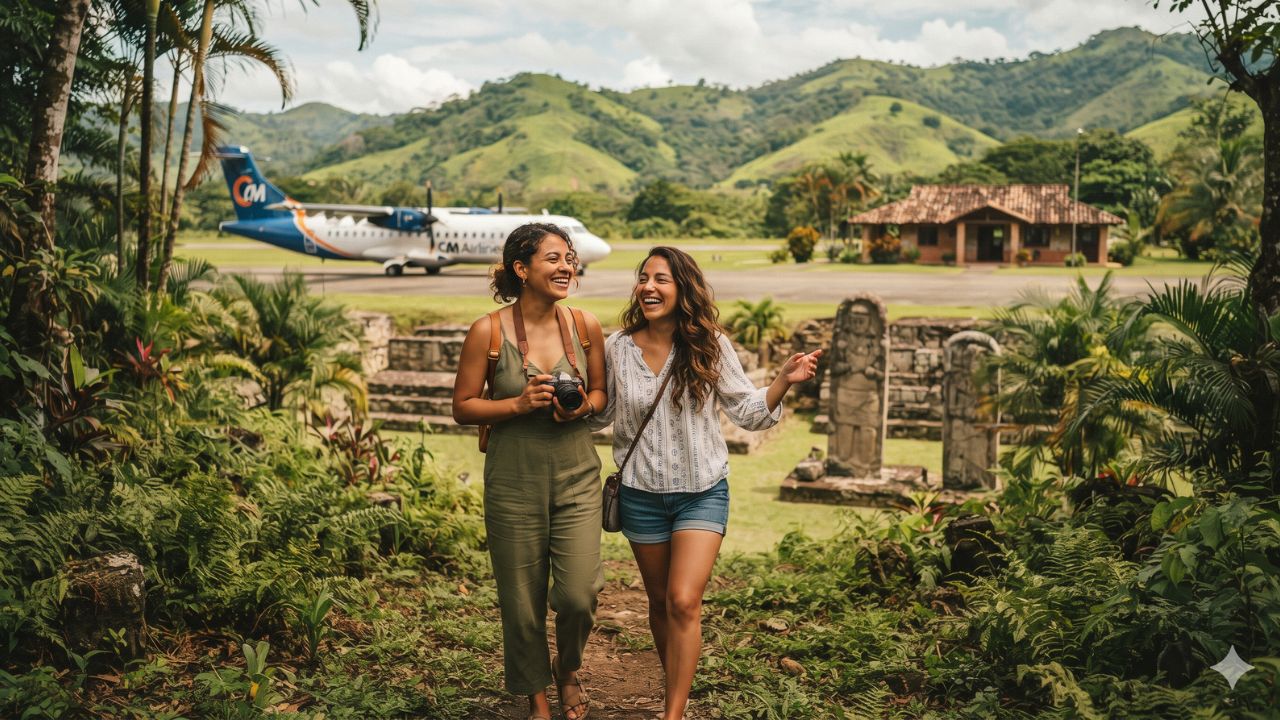
For decades, reaching the ancient stone acropolis of Copán meant enduring a grueling four- to five-hour overland transit across twisting mountain switchbacks from San Pedro Sula or negotiating complicated land border crossings from Guatemala. Starting 4 December 2026, that journey shrinks to a 15-minute road connection as CM Airlines prepares to inaugurate scheduled commercial flights directly into western Honduras at the newly upgraded Río Amarillo Aerodrome in Santa Rita. The regulatory green light came on 29 October 2026 when the Honduran Civil Aviation Agency (AHAC) confirmed that rehabilitation of the regional airfield had reached 90 percent completion. Positioned in the green hills of Copán department, this long-awaited air bridge connects the country's economic and coastal hubs directly to the threshold of Central America's most artistically intricate Maya kingdom.
CM Airlines Restores Western Wings as Río Amarillo Completes Rehabilitation
The commercial flight debut marks an operational revival for the airfield in Santa Rita, situated roughly 15 minutes by road from the entrance gates of Copán Archaeological Park. According to Agencia Hondureña de Aeronáutica Civil (AHAC), the facility's extensive refurbishment encompasses complete runway resurfacing, aircraft apron reinforcement, operational perimeter clearing, and high-visibility airfield ground markings. The remaining 10 percent of preparatory work is scheduled for completion ahead of the December launch deadline.
To guarantee high safety standards in the mountain terrain of western Honduras, aviation officials have deployed Required Navigation Performance (RNP) satellite procedures. These advanced navigation pathways allow approaching aircraft to trace precise, computer-guided approach corridors through the valley without relying solely on terrestrial radio transmitters. Complementing the satellite framework, the aerodrome features automated meteorological observation stations alongside conventional weather monitoring systems, backed by certified air traffic controllers and specialized ground personnel.
The restoration represents a coordinated inter-agency effort uniting AHAC, the Secretariat of Infrastructure and Transport (SIT), the Honduran Airport Infrastructure and Services Company, and the Secretariat of Tourism. While the official rollout confirms CM Airlines, the destination, and the 4 December 2026 launch date, specific flight schedules, ticket tariffs, and operating aircraft variants remain under final evaluation by the carrier and civil aviation regulators.
| Project Parameter | Official Status / Metric | Responsible Institution | Strategic Travel & Aviation Significance |
|---|---|---|---|
| Operating Carrier | CM Airlines | Private Commercial Airline | Inaugurates scheduled passenger air service to western Honduras. |
| Target Facility | Río Amarillo Aerodrome | AHAC & SIT Oversight | Regional airfield located in Santa Rita, Copán department. |
| Launch Date | 4 December 2026 | Confirmed by AHAC (29 October) | Establishes direct air connectivity ahead of peak winter travel season. |
| Rehabilitation Progress | 90% complete as of 29 October 2026 | Secretariat of Infrastructure and Transport | Final 10% covers apron finishing and operational certifications. |
| Proximity to Ruins | ~15 minutes by road | Copán Archaeological Park | Eliminates 4- to 5-hour highway drives from San Pedro Sula. |
| Aviation Navigation | Required Navigation Performance (RNP) | AHAC Flight Safety Directorate | Satellite-guided approaches tailored for mountainous terrain. |
| Meteorological Support | Automatic stations & conventional equipment | Honduran National Weather Services | Delivers real-time wind and visibility tracking for valley flights. |
| Commercial Details | Frequencies, fares, and fleet unannounced | CM Airlines & AHAC | Detailed timetables and ticket pricing pending final regulatory release. |
The Río Amarillo initiative forms one part of a comprehensive government programme upgrading regional aviation facilities across island, coastal, and remote destinations in Honduras:
| Aerodrome Location | Department / Region | Government Development Scope | Regional Travel Focus |
|---|---|---|---|
| Río Amarillo | Santa Rita, Copán | Rehabilitation and commercial flight preparations | Maya archaeological travel & western highlands. |
| Útila | Bay Islands | Runway resurfacing and infrastructure improvements | World-class scuba diving & Caribbean reef exploration. |
| Guanaja | Bay Islands | Runway resurfacing and infrastructure improvements | Quiet eco-adventures, fly fishing, and marine reserves. |
| Tela | Atlántida | Aerodrome rehabilitation | Caribbean coastal resorts, Garífuna culture, and national parks. |
| Puerto Lempira | Gracias a Dios | Infrastructure rehabilitation and investment | Mosquitia rainforest conservation and remote community access. |
What Makes Copán Ruinas Experientially Unique
Revered by early explorers as the "Athens of the Maya World," Copán preserves an extraordinary density of three-dimensional stone sculpture unmatched by any other pre-Columbian city. Inscribed as a UNESCO World Heritage site in 1980, the ancient ceremonial center flourished along the Copán River between the 5th and 9th centuries AD under the rule of 16 successive dynastic kings. Unlike the flat limestone architecture of the northern Yucatán peninsula, Copán’s sculptors carved volcanic green and yellow tuff stone with chisels of harder stone, creating high-relief portraits of rulers wrapped in intricate feather headdresses, serpent masks, and cosmic emblems.
The centerpiece of the archaeological park is the legendary Hieroglyphic Stairway on Structure 26. Spanning 63 stone steps and carved with more than 2,000 individual glyphs, it forms the longest known pre-Columbian written inscription in the Americas, chronicling the dynastic triumphs, rituals, and royal lineages of Copán’s rulers. Deep underneath the towering Acropolis platforms lie more than four kilometers of subterranean archaeological tunnels. Visitors walking through the dimly lit passages can gaze directly upon the Rosalila Temple—an exceptionally preserved 6th-century ceremonial structure entombed intact with its original red, yellow, and green stucco reliefs when later Maya builders constructed higher pyramids above it.
Beyond the stone stelae and ball courts, the experience of Copán is sensory and alive. Flocks of brilliant scarlet, yellow, and blue macaws (Ara macao)—revered by ancient Maya royalty as solar messengers—wheel freely across the ancient ceiba trees, their loud calls echoing against the sandstone plazas. Just two kilometers west, the colonial town of Copán Ruinas presents steep cobblestone streets, red-tile roofs, and friendly family-run coffee houses serving beans grown on the surrounding cloud-forest ridges.
Visitor Insider Tips: Tunnels, Mountain Roasts, and Local Etiquette
- Arrive at the Archaeological Gates at 8:00 AM: The archaeological park opens early, allowing visitors to walk the Great Plaza before midday heat and regional tour buses arrive. Early mornings offer soft morning light filtering through moss-draped ceiba branches, perfect for photographing the intricate carvings of Stela A, B, and C without crowds.
- Secure Separate Tunnel Admission Early: General admission to the ruins does not automatically include the subterranean tunnels. Obtain tunnel access tickets at the park entrance booth upon arrival, as daily entry numbers are strictly regulated to protect the delicate humidity balance around the Rosalila and Los Jaguares archaeological remains.
- Sample Traditional Ch'orti' and Copaneco Flavors: Walk past tourist cafes near the central square and find a local comedor serving regional delicacies. Order ticucos—steamed corn tamales enriched with whole black beans and the aromatic herb chipilín or loroco, wrapped neatly in wild bijao leaves. Pair them with grilled chorizo copaneco (artisan spiced pork sausages) and local aged cheese from Santa Rita.
- Support the Scarlet Macaw Conservation Flight: Visit Macaw Mountain Bird Park and Nature Reserve, situated ten minutes north of town in a forested river gorge. The facility rehabilitates rescued birds and coordinates their reintroduction into the archaeological park, allowing visitors to observe toucans, kingfishers, and parrots while funding habitat restoration across the Copán valley.
- Leverage Regional Transit Hubs for Flight Connections: Travelers connecting via Instituto Hondureño de Turismo itineraries should monitor CM Airlines flight pairings out of San Pedro Sula’s Ramón Villeda Morales International Airport (SAP) or Comayagua’s Palmerola International Airport (XPL). Flying into Río Amarillo saves over eight hours of round-trip winding mountain driving, creating an effortless weekend connection between the Caribbean coral reefs of Roatán and the ancient highlands.
Cultural and Environmental Context: Maya Heritage Conservation and Regional Dispersal
Introducing scheduled commercial aviation to Río Amarillo marks a turning point for the local economy of Santa Rita and the wider Copán Valley. Historically, tourism revenue in Honduras has concentrated along the Caribbean coast and the Bay Islands, leaving inland indigenous and agricultural communities reliant on fluctuating global coffee prices. Direct air access allows high-value cultural travelers to visit western Honduras without dedicating entire travel days to highway transfers, directly benefiting family-owned guesthouses, artisan weaver collectives, and certified local guides.
At the same time, expanding regional air travel places heightened focus on environmental stewardship. The Copán River basin forms part of the Mesoamerican Biological Corridor, sustaining pine-oak forests, migratory bird flyways, and ancient shade-grown coffee plantations. Managing aircraft noise contours and surface runoff around Río Amarillo helps safeguard nesting habitats for native fauna while preserving the tranquil atmosphere that defines the archaeological sanctuary.
Preserving the ancient monuments themselves requires meticulous environmental control. The volcanic tuff stone carved by Maya artisans is naturally soft and vulnerable to acid rain, humidity fluctuations, and physical touch. International conservation teams from the Honduran Institute of Anthropology and History (IHAH) continuously monitor stone decay along the Hieroglyphic Stairway. By dispersing passenger arrivals across year-round scheduled flights rather than concentrated high-volume bus convoys, regional authorities aim to balance economic growth with the enduring protection of one of humanity's greatest archaeological legacies.
FAQ: Visiting Copán and Río Amarillo Aerodrome 2026
When do commercial flights start at Río Amarillo Aerodrome?
CM Airlines is scheduled to commence commercial passenger flights to Río Amarillo on 4 December 2026, following the 90 percent completion milestone announced by aviation authorities.
How far is Río Amarillo Aerodrome from the Copán Maya ruins?
The aerodrome in Santa Rita is located approximately 15 minutes by road from the main entrance of Copán Archaeological Park, replacing lengthy overland drives from northern cities.
What navigation systems will guide flights into Río Amarillo?
The aerodrome utilizes Required Navigation Performance (RNP) satellite-guided procedures alongside automated and conventional weather monitoring stations to ensure safe aircraft operations through the western mountain valleys.
Which other regional Honduran airports are undergoing upgrades?
Honduras is rehabilitating regional aerodromes in Útila and Guanaja (Bay Islands), Tela (Atlántida), and Puerto Lempira (Gracias a Dios) to improve domestic and eco-tourism connectivity.
[As scarlet macaws glide over ancient stone pyramids, the opening of Río Amarillo unlocks western Honduras for travelers seeking the living soul of the Maya world.]
Related Travel Guides
The Insider Guide to Copán Ruinas, Río Amarillo Air Transit, and Hidden Mayan Tunnels, According To Reddit (Coming Soon)
This article is for informational purposes. Flight routes, passenger regulations, visa rules, and transit advisories are subject to change by airlines and aviation authorities. Readers are advised to verify schedules and travel documentation with relevant carriers and border agencies before departure.
Related Stories

United Airlines Launches Nonstop Newark to St. Croix Flights: US Virgin Islands Travel Guide and Crucian Heritage

Delta Launches Daily Austin to Northwest Arkansas Nonstop Flights: Ozarks Art and Texas Travel Guide 2027