Hol Chan Marine Reserve Snorkeling Guide 2026: Caye Caulker Tours, Costs, and Logistics

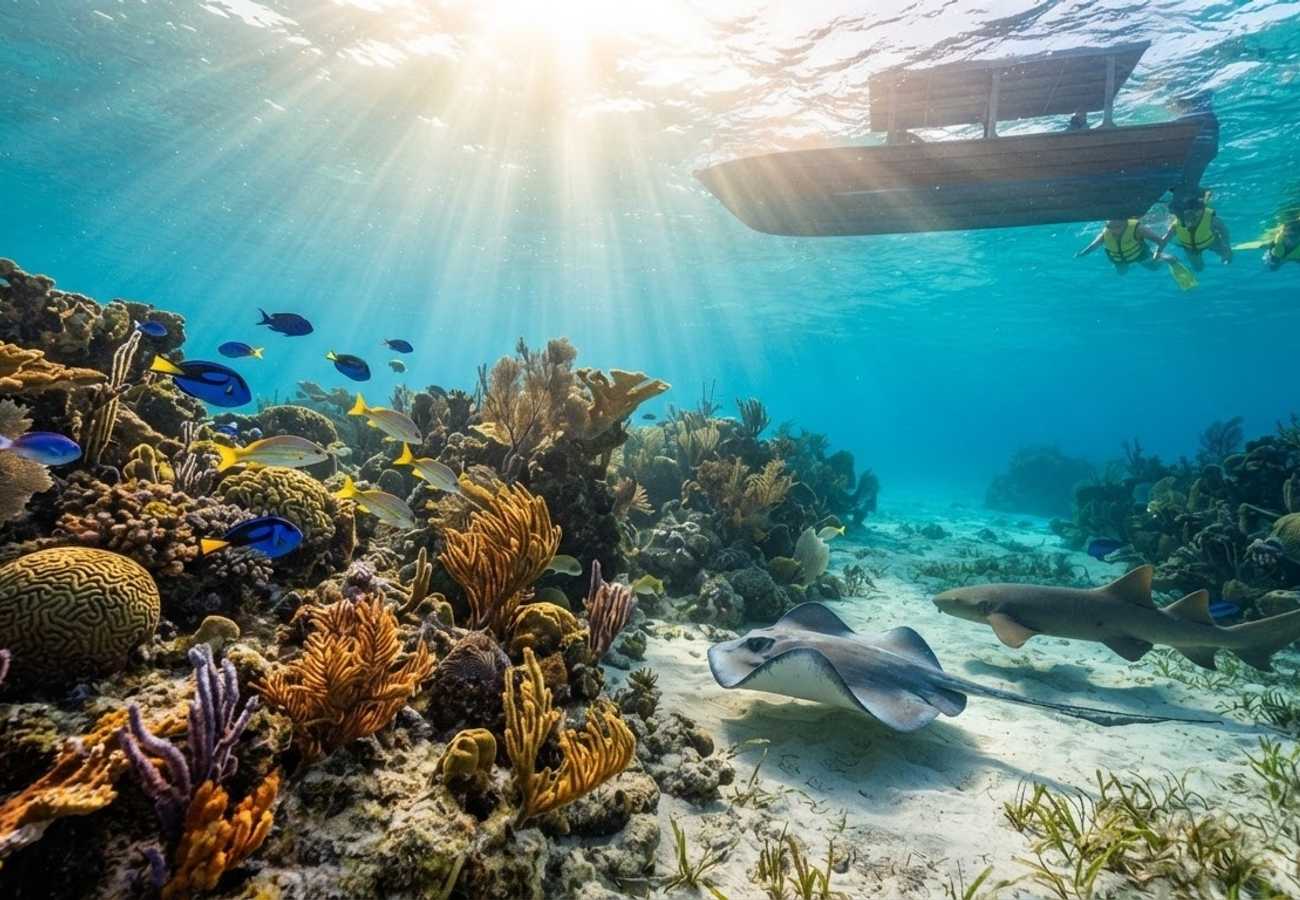
Image generated by AI
Snorkeling the Hol Chan Marine Reserve from Caye Caulker requires navigating specific licensing laws and transit times that differ significantly from departures in San Pedro. Most 2026 operators have shifted to high-value, multi-stop full-day circuits to justify the longer boat transfers.
Transit Logistics: Caye Caulker vs. San Pedro
The Hol Chan Marine Reserve is positioned between Ambergris Caye and Caye Caulker. While the reserve is geographically closer to San Pedro, it remains a primary excursion for those based on Caye Caulker. However, the transit duration impacts the structure of the tours.
From San Pedro, boats typically reach the reserve in approximately 15 minutes. In contrast, speedboats departing from Caye Caulker require 30 to 40 minutes to reach the main Hol Chan channel, depending on the departure dock and sea conditions. Because of this increased transit time, Caye Caulker operators rarely offer "sprint" tours. Instead, they bundle the reserve into expansive circuits that last six to seven hours.
2026 Tour Specifications and Pricing
Current market trends on Caye Caulker show a preference for comprehensive reef days. These itineraries often include five to seven distinct stops, integrating the Hol Chan channel with other ecological zones.
Typical Full-Day Itinerary and Costs
| Parameter | Specification |
|---|---|
| Average Duration | 6 to 7 Hours (typically 09:00 to 16:00) |
| Primary Stops | Hol Chan, Shark Ray Alley, Coral Gardens |
| Secondary Stops | Manatee areas (near Swallow Caye), Tarpon feeding, Seagrass snorkels |
| Price Range (Adult) | $90 – $120 USD (excluding marine reserve fees) |
| Guest Capacity | Typically capped at ~12 guests per boat |
| Check-in Time | 08:30 or 09:00 |
| Departure Time | 09:00 or 09:30 |
Traveler Logistics Guide: Navigating the Reef
From a ground-level perspective, the best way to navigate these excursions is to prioritize the "Full Day" circuit if you are basing yourself on Caye Caulker. Because of the fuel and time investment required to reach the reserve, half-day options are less common and often exclude the actual Hol Chan channel, focusing instead on the local Caye Caulker Marine Reserve.
Connection and Entry Policies
It is critical to note that Hol Chan is a strictly protected area. You cannot enter the reserve via independent kayak or private paddleboard. National regulations require all visitors to be accompanied by a licensed tour guide.
Operational Flow
- Gear Fitting: Most tours begin with a safety briefing and gear fitting near the Split.
- The Warm-up: To ensure mask seals are tight and swimmers are comfortable, boats usually stop at a shallow reef on the Caye Caulker side before entering the deeper Hol Chan channel.
- The Circuit: In Hol Chan, guides divide guests into small pods. The drift snorkel typically lasts 35 to 45 minutes.
- Shark Ray Alley: This is a shallow-water stop (waist to chest deep) lasting 20 to 30 minutes, focusing on nurse sharks and southern stingrays.
- Return Leg: Unlike San Pedro tours that may end at a beach bar, Caye Caulker boats often search for manatees in the North Channel or stop at Coral Gardens before returning to the island.
Equipment Recommendations
While operators provide masks, snorkels, and fins, the most common point of failure for beginners is a leaking or fogging mask. If you have a prescription mask or a well-fitting personal set, bring it. This reduces anxiety when the depth drops from a few feet to over ten meters in the main channel.
Infrastructure and Regional Impact
The shift toward multi-stop, slower-paced tours reflects Caye Caulker's positioning as a "low-key" alternative to the more commercialized San Pedro. By limiting boat capacity to roughly a dozen guests and integrating educational stops (such as mangrove and seagrass zones), operators are moving away from high-volume "party boat" models toward eco-tourism.
This approach improves regional connectivity by distributing tourist footprints across multiple reef points—such as Swallow Caye and the North Channel—rather than concentrating all traffic solely within the Hol Chan channel. This reduces the ecological pressure on the reserve's core while increasing the economic value of each tour for local skippers and guides.
Prioritize reef-safe sunscreen and a rash guard to ensure a sustainable visit to Belize's most fragile aquatic ecosystem.
Related Travel Guides
This article is for informational purposes. Flight routes, passenger regulations, visa rules, and transit advisories are subject to change by airlines and aviation authorities. Readers are advised to verify schedules and travel documentation with relevant carriers and border agencies before departure.
Related Stories

Young Island Resort and Caribbean Private Island Logistics: 2026 Pricing and Access Guide

China Expands 10-Day Visa-Free Transit and 30-Day Hainan Entry for Vietnam and Kyrgyzstan Citizens 2026