
U.S. Strategic Decision to Promote F-35 Export Model Over F-22 Reflects Broader Defense Diplomacy Shift
Breaking airline news and aviation industry updates for 2026.

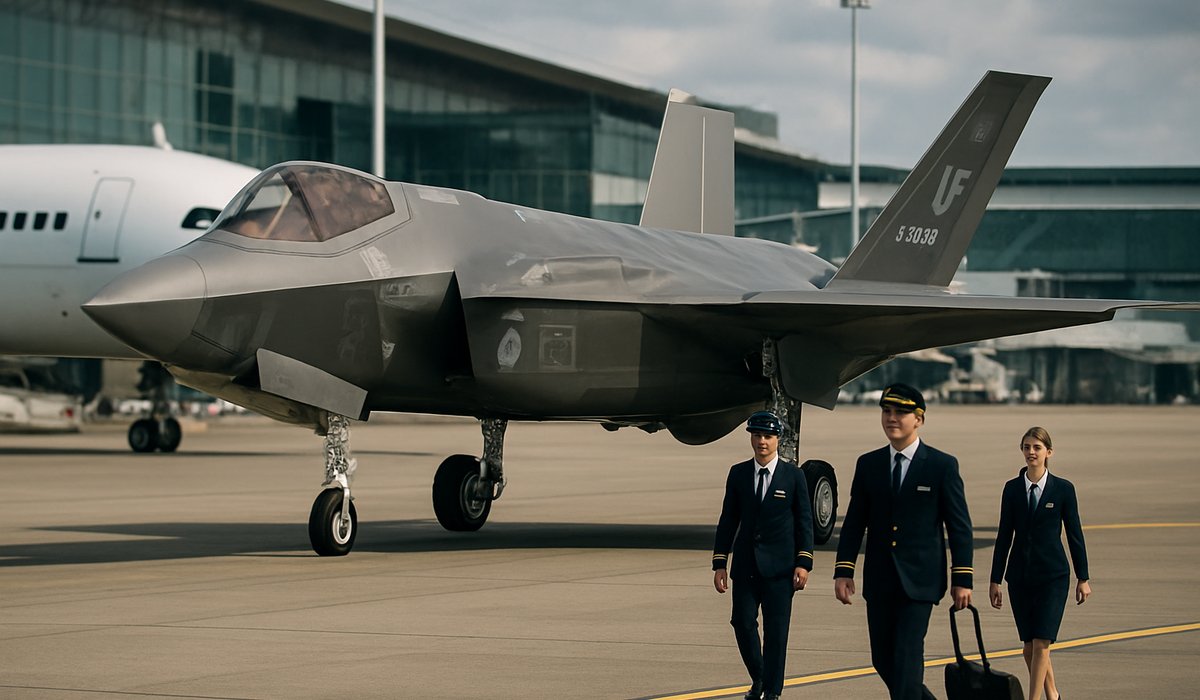
Image generated by AI
U.S. Strategic Decision to Promote F-35 Export Model Over F-22 Reflects Broader Defense Diplomacy Shift
Pentagon prioritizes allied interoperability and industrial partnerships while maintaining strict controls on advanced fighter jet technology
The Export Divide: Two Fighter Jets, Two Strategic Visions
The United States has deliberately steered international defense partnerships toward the F-35 Lightning II rather than the F-22 Raptor, a distinction rooted not in comparative combat capability but in fundamentally different strategic doctrines and export frameworks. While both aircraft represent the pinnacle of American air superiority technology, their roles in global defense relationships diverge sharply—a reality that underscores Washington's calculated approach to allied military modernization.
Legal Restrictions and Technological Safeguards
The F-22 Raptor, developed and manufactured by Lockheed Martin, was engineered specifically as an American air-dominance platform. Unlike its younger counterpart, the F-22 operates under strict congressional export prohibitions that effectively limit its operational presence to U.S. Air Force squadrons. These legal constraints were deliberately constructed to preserve technological advantages and prevent sensitive stealth and avionics systems from reaching foreign operators, regardless of allied status.
This regulatory framework reflects Cold War-era thinking that persists in defense policy, where certain capabilities are deemed too strategically sensitive for international distribution. The F-22's architecture, sensor fusion systems, and stealth technologies remain classified at levels that complicate any potential foreign military sale.
The F-35 Strategy: Building Global Interoperability
Conversely, the F-35 was engineered from inception with allied participation and export viability as central design objectives. This approach enables the Pentagon to strengthen NATO cohesion, reinforce Indo-Pacific partnerships, and create standardized combat ecosystems across allied air forces. Countries including the United Kingdom, Canada, Australia, and Japan have integrated or are integrating F-35 platforms, creating a multinational force structure that enhances collective deterrence capabilities.
The export model also generates substantial economic returns for U.S. defense contractors and supports industrial base sustainability across decades of anticipated production runs.
Geopolitical Implications in an Era of Strategic Competition
The distinction between these export policies reflects broader U.S. strategic calculations regarding China's military modernization and Russia's regional assertiveness. By promoting F-35 proliferation among allied nations, Washington builds interoperable air forces capable of coordinated operations while maintaining technological oversight through software updates and supply chain controls—mechanisms absent from a purely domestic F-22 fleet.
FAQ: F-35 vs. F-22 Export Questions
Why can't the U.S. export the F-22 Raptor? Congressional law prohibits F-22 sales to foreign nations, reflecting Cold War restrictions on advanced stealth technology. The Pentagon treats the F-22's systems as uniquely sensitive to American security interests.
Which countries operate the F-35 Lightning II? Over a dozen allied nations operate or have ordered F-35s, including the U.K., Canada, Australia, Italy, and Japan, with additional partners in procurement pipelines.
Is the F-22 technically superior to the F-35? The F-22 excels in air-to-air combat dominance, while the F-35 prioritizes multi-role versatility and sensor fusion. Both dominate their respective operational niches.
What does the F-35 export strategy accomplish diplomatically? F-35 proliferation strengthens NATO cohesion and Indo-Pacific partnerships while giving the U.S. influence over allied air force modernization and operational doctrine.
How does allied F-35 integration affect U.S. defense strategy? Shared platforms enable real-time intelligence sharing, standardized logistics, and coordinated operations—critical advantages in multi-national deterrence scenarios against near-peer competitors.
Related Travel Guides
Flight Delay Compensation Guide 2026
Understanding Airline Route Changes
Airport Security Process Updated (2026)
External Resources
Disclaimer
This article is for informational and educational purposes only. It does not constitute legal, financial, or professional advice. While we strive to provide accurate and up-to-date information, travel policies, regulations, and conditions change rapidly. Always verify information with official sources before making travel decisions. Nomad Lawyer makes no representations about the accuracy, reliability, completeness, or suitability of the information provided. Readers should consult qualified professionals for advice specific to their circumstances. The views expressed in this article are those of the author and do not necessarily reflect the views of Nomad Lawyer.
Kunal K Choudhary
Co-Founder & Contributor
A passionate traveller and tech enthusiast. Kunal contributes to the vision and growth of Nomad Lawyer, bringing fresh perspectives and driving the community forward.
Learn more about our team →