
F-35C Lightning II Faces Unprecedented Carrier Landing Challenges Despite Advanced Technology
Breaking airline news and aviation industry updates for 2026.

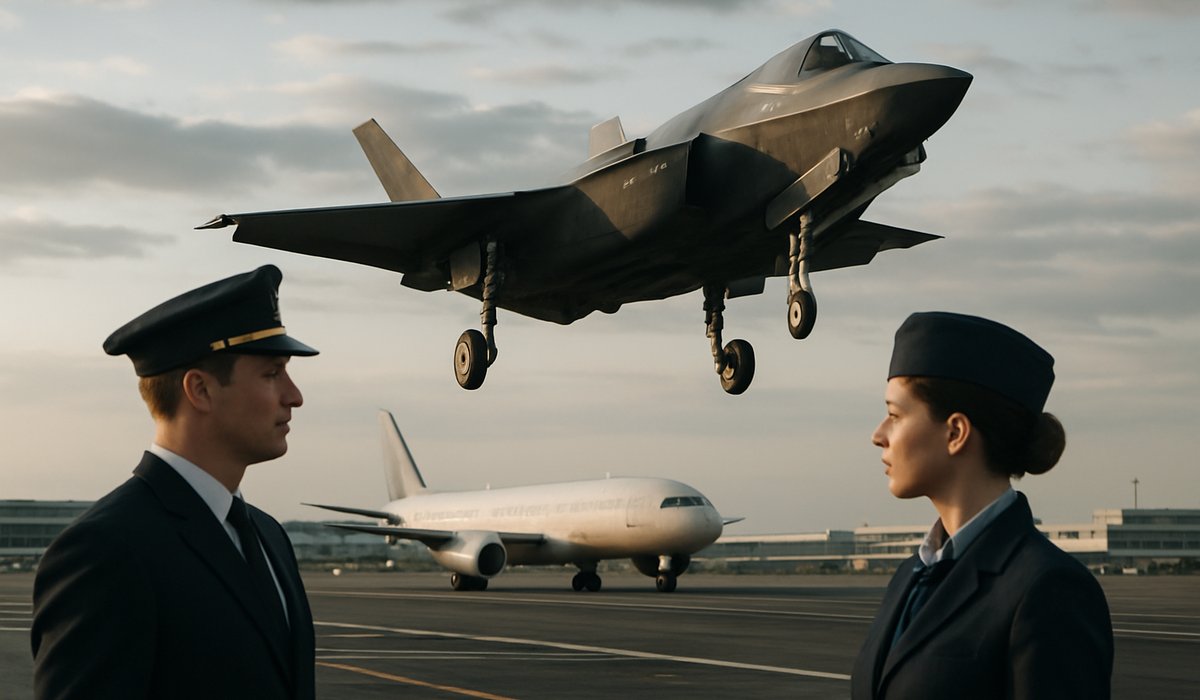
Image generated by AI
F-35C Lightning II Faces Unprecedented Carrier Landing Challenges Despite Advanced Technology
The world's most sophisticated naval fighter jet struggles with one of aviation's most demanding maneuvers
The Paradox of Modern Military Aviation
The Lockheed Martin F-35C Lightning II represents the pinnacle of modern fighter jet engineering, yet pilots operating these cutting-edge aircraft face one of the most treacherous tasks in aviation: executing a controlled crash landing on a moving aircraft carrier deck. Despite revolutionary digital systems and sophisticated avionics, the F-35C must perform a maneuver that leaves virtually no room for error—a reality that underscores the inherent difficulty of naval aviation operations.
An Unforgiving Landing Environment
Every carrier landing demands absolute precision. Pilots must deploy the aircraft's tailhook to snag one of just four arresting wires stretched across the flight deck, all while the carrier's stern can pitch up to 20 vertical feet in challenging sea conditions. This combination of variables creates an extraordinarily demanding operational environment that technology alone cannot fully mitigate.
The F-35C's advanced flight control systems and digital assistance provide crucial support, yet the fundamental challenge remains unchanged: converting forward momentum into a near-instantaneous halt on a surface that is itself in constant motion. The margin for miscalculation is essentially non-existent, making carrier operations among the most physically and mentally demanding tasks any military pilot can undertake.
The Broader Context of Naval Aviation
These difficulties highlight why aircraft carrier operations represent a unique challenge within modern aerospace. Unlike conventional airfield landings, carrier operations demand extraordinary coordination between pilot skill, mechanical precision, and environmental factors beyond anyone's control. Weather conditions, sea state, aircraft performance, and human factors all converge in a single, critical moment.
The F-35C's advanced capabilities in combat scenarios—its sensor fusion, stealth characteristics, and offensive systems—count for nothing if the aircraft cannot successfully return to its floating base. This fundamental requirement drives continuous innovation in both aircraft design and pilot training protocols.
Looking Forward
As naval aviation evolves, the tension between technological advancement and operational reality persists. The F-35C Lightning II exemplifies this challenge: a weapons system so advanced in combat capability, yet bound by the unforgiving physics of carrier landing operations.
Frequently Asked Questions
Why is landing an F-35C on an aircraft carrier so difficult? Pilots must deploy a tailhook to catch one of four arresting wires on a moving, pitching deck with virtually zero margin for error. The carrier's stern can rise or fall up to 20 feet in rough seas.
How does digital technology assist F-35C carrier landings? Advanced flight control systems and digital avionics provide real-time guidance, though they cannot eliminate the fundamental difficulty of the maneuver itself.
What makes carrier operations uniquely challenging compared to conventional landings? Unlike stationary runways, aircraft carrier decks move with ocean swells while pilots must achieve precision in seconds, combining demanding physics with human performance limits.
Is the F-35C the most advanced carrier-capable fighter available? Yes, the Lockheed Martin F-35C Lightning II represents the most technologically sophisticated carrier-capable fighter jet currently in operation globally.
How are pilots trained for carrier landing operations? Military aviators undergo extensive simulator training and graduated practice before attempting actual carrier landings, given the high-risk nature of these operations.
Related Travel Guides
Disclaimer
This article is for informational and educational purposes only. It does not constitute legal, financial, or professional advice. While we strive to provide accurate and up-to-date information, travel policies, regulations, and conditions change rapidly. Always verify information with official sources before making travel decisions. Nomad Lawyer makes no representations about the accuracy, reliability, completeness, or suitability of the information provided. Readers should consult qualified professionals for advice specific to their circumstances. The views expressed in this article are those of the author and do not necessarily reflect the views of Nomad Lawyer.
Raushan Kumar
Founder & Lead Developer
Full-stack developer with 11+ years of experience and a passionate traveller. Raushan built Nomad Lawyer from the ground up with a vision to create the best travel and law experience on the web.
Learn more about our team →