
Pilots Now Predict Severe Weather Hours in Advance, Revolutionizing Storm Avoidance Strategy
Breaking airline news and aviation industry updates for 2026.

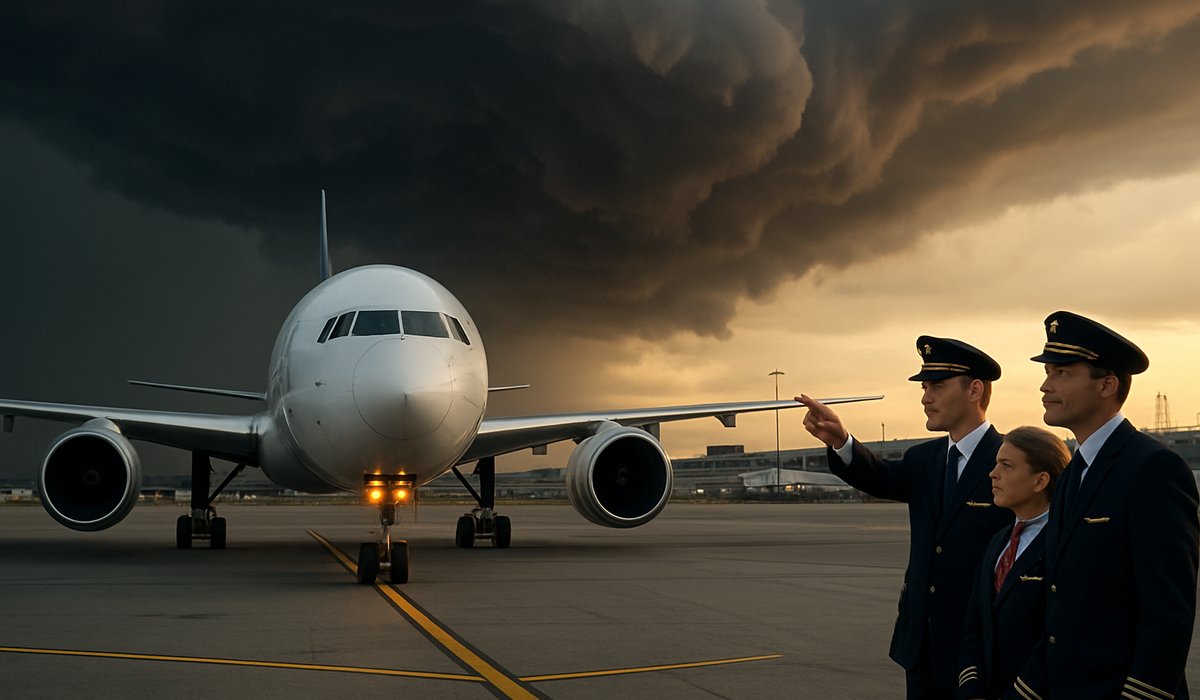
Image generated by AI
Pilots Now Predict Severe Weather Hours in Advance, Revolutionizing Storm Avoidance Strategy
Advanced satellite and ground-based systems enable proactive flight planning, reducing delays and improving passenger safety across commercial aviation
The Shift From Reactive to Predictive Weather Management
Commercial aviation is undergoing a fundamental transformation in how pilots approach one of flying's most unpredictable challenges: severe weather. Rather than relying solely on onboard radar systems that detect storms as aircraft approach them, flight crews now leverage cutting-edge satellite imagery and ground-based weather networks to identify dangerous conditions hours before traditional cockpit instruments can even register their presence.
This shift from reactive to predictive weather avoidance marks a watershed moment for the aviation industry, promising to reduce flight delays, lower operational costs, and enhance passenger safety simultaneously—critical advantages as airlines face mounting pressure to improve efficiency and service reliability.
How Next-Generation Technology Works
Modern flight operations centers now integrate real-time satellite data, lightning detection networks, and advanced atmospheric modeling to create weather forecasts with unprecedented precision. Rather than waiting until a thunderstorm cell appears on radar, pilots and dispatchers can now plan alternative routes hours in advance, avoiding the inefficient last-minute diversions that have long plagued air operations.
This proactive approach eliminates the tactical scrambling that previously characterized storm avoidance. Flight crews no longer face sudden course corrections, unexpected holding patterns, or the fuel-intensive maneuvering required when weather appears unexpectedly on their displays. Instead, optimal flight paths are calculated before departure or during cruise, allowing smoother operations and more predictable flight times.
Industry-Wide Impact and Operational Benefits
The implications extend across multiple dimensions of commercial aviation operations. Airlines benefit from reduced fuel consumption, fewer schedule disruptions, and improved crew efficiency. Passengers experience fewer delays and smoother flights—a tangible quality-of-life improvement for the roughly 4 million people flying daily worldwide.
Ground-based lightning detection systems, combined with satellite observations of cloud development patterns, enable meteorologists and flight dispatch teams to identify developing storm systems with remarkable accuracy. This intelligence allows flight planning teams to route aircraft around weather systems that haven't yet manifested on conventional radar.
Broader Industry Adoption
Major carriers have increasingly integrated these advanced weather systems into their operations, with some airlines reporting measurable reductions in weather-related delays and operational disruptions. The technology represents a natural evolution as aviation continues its digital transformation, following decades of incremental improvements to onboard systems.
This fundamental change in weather avoidance strategy underscores how data analytics and real-time information sharing are reshaping commercial aviation operations, ultimately benefiting all stakeholders in the air transportation system.
Frequently Asked Questions
How far in advance can pilots now predict severe weather? Modern satellite and ground-based systems enable weather predictions hours before traditional onboard radar can detect storms, allowing flight crews to plan alternative routes proactively.
Does this technology reduce aviation delays? Yes, predictive weather systems significantly minimize weather-related schedule disruptions by eliminating last-minute diversions and holding patterns that previously characterized storm avoidance.
What systems provide this advanced weather intelligence? Lightning detection networks, real-time satellite imagery, and atmospheric modeling platforms work together to create comprehensive weather forecasts for flight operations centers and dispatch teams.
Are all airlines currently using this technology? Major carriers have increasingly adopted advanced weather systems, though adoption rates vary globally depending on infrastructure availability and investment levels.
How does this improve passenger experience? Smoother, more efficient flight paths result in fewer delays, reduced turbulence from last-minute course changes, and more predictable flight times for passengers.
Related Travel Guides
External Resources
Disclaimer
This article is for informational and educational purposes only. It does not constitute legal, financial, or professional advice. While we strive to provide accurate and up-to-date information, travel policies, regulations, and conditions change rapidly. Always verify information with official sources before making travel decisions. Nomad Lawyer makes no representations about the accuracy, reliability, completeness, or suitability of the information provided. Readers should consult qualified professionals for advice specific to their circumstances. The views expressed in this article are those of the author and do not necessarily reflect the views of Nomad Lawyer.
Raushan Kumar
Founder & Lead Developer
Full-stack developer with 11+ years of experience and a passionate traveller. Raushan built Nomad Lawyer from the ground up with a vision to create the best travel and law experience on the web.
Learn more about our team →