
Airbus A350 Emerges as Quieter Alternative to Boeing 787 in Next-Generation Widebody Aircraft Battle
Breaking airline news and aviation industry updates for 2026.

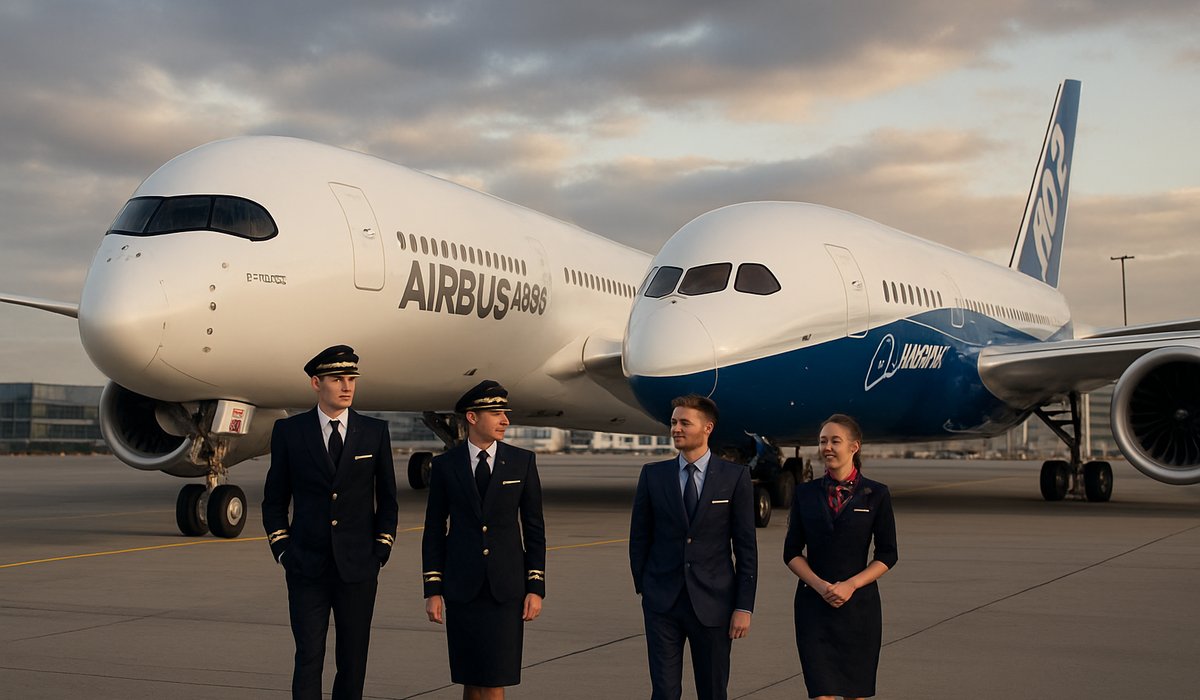
Image generated by AI
Airbus A350 Emerges as Quieter Alternative to Boeing 787 in Next-Generation Widebody Aircraft Battle
Noise reduction becomes competitive advantage as airlines prioritize passenger comfort and regulatory compliance on long-haul routes
The Acoustic Advantage in Modern Aviation
The Airbus A350 and Boeing 787 represent the cutting edge of widebody aircraft design, yet a significant performance gap exists in cabin noise levels—a factor increasingly influencing airline procurement decisions and passenger satisfaction metrics. As both manufacturers compete for dominance on ultra-long-haul and long-haul routes, noise reduction has emerged as a crucial differentiator in an industry facing mounting environmental pressure and stricter airport regulations worldwide.
Competing Technologies, Divergent Outcomes
Both aircraft incorporate state-of-the-art engineering to minimize noise pollution, yet the A350 delivers measurably superior acoustic performance during cruise operations. This distinction stems from variations in fuselage design, engine integration, and insulation technologies, positioning Airbus's flagship widebody as the quieter option for airlines operating from noise-sensitive airports in densely populated regions.
The noise advantage carries real-world implications. Airlines operating from European hubs, where noise restrictions increasingly limit flight schedules and impose substantial fines, find the A350's quieter profile particularly valuable. Similarly, departures and arrivals at major metropolitan airports—London Heathrow, Paris Charles de Gaulle, and Tokyo Haneda—benefit operationally from reduced noise signatures.
Setting Industry Standards for Efficiency and Comfort
Both aircraft have become foundational to modern fleet strategies, blending advanced aerodynamics, fuel efficiency, and passenger comfort into competitive packages. The A350 and 787 have fundamentally reshaped expectations for long-haul travel, introducing premium cabin environments, improved air quality systems, and innovative seating configurations that justify premium ticket pricing.
Airlines worldwide have embraced these platforms as essential tools for maintaining competitiveness on profitable intercontinental routes. Their reliability and operational efficiency help carriers absorb rising jet fuel prices and navigate volatile aviation economics.
Implications for Fleet Planning
The acoustic performance differential reinforces a broader trend: next-generation widebodies increasingly compete on passenger experience metrics beyond speed and capacity. Noise reduction, cabin humidity control, and lighting systems designed to minimize jet lag have become legitimate competitive advantages in an industry where margins remain tight and passenger loyalty proves elusive.
As environmental regulations tighten globally and airport noise restrictions intensify, the A350's quieter operational profile may influence purchasing decisions for years ahead, particularly among carriers prioritizing sustainability credentials alongside profitability.
FAQ: Airbus A350 vs. Boeing 787 and Aircraft Noise Standards
How much quieter is the Airbus A350 compared to the Boeing 787? The A350 demonstrates measurable noise reduction during cruise operations, though specific decibel comparisons vary depending on flight phase, altitude, and engine thrust settings. The difference becomes most pronounced during takeoff and landing phases.
Why does aircraft noise matter for airlines and passengers? Stricter airport noise regulations limit flight schedules, impose fines for violations, and affect passenger satisfaction. Airlines operating from noise-sensitive European and Asian airports gain operational flexibility with quieter aircraft like the A350.
Are the A350 and 787 equally fuel-efficient despite noise differences? Both aircraft feature advanced engines and aerodynamics designed for fuel efficiency. While noise performance differs, their fuel consumption profiles remain competitive, helping airlines manage jet fuel price volatility.
Which airlines prefer the A350 for noise-sensitive routes? European and Asian-Pacific carriers prioritize the A350 for operations from noise-restricted airports, while American carriers show mixed preferences based on route networks and existing fleet investments.
Will future widebody aircraft focus more on noise reduction? Yes. Environmental regulations, airport restrictions, and passenger demand for quieter cabins indicate that noise performance will become an increasingly important design priority for next-generation aviation platforms.
Related Travel Guides
- Air New Zealand and Singapore Airlines Expand Christchurch Routes to Combat Travel Chaos: New Perth and Singapore Direct Flights Mitigate Airport Disruptions Across Australia and New Zealand in 2026
- Emirates Brings Premium Economy to France With Retrofitted A380 From October 25, 2026
- Frontier Airlines Partners With Viator to Offer 4X Miles on Global Travel Activities
Disclaimer
This article is for informational and educational purposes only. It does not constitute legal, financial, or professional advice. While we strive to provide accurate and up-to-date information, travel policies, regulations, and conditions change rapidly. Always verify information with official sources before making travel decisions. Nomad Lawyer makes no representations about the accuracy, reliability, completeness, or suitability of the information provided. Readers should consult qualified professionals for advice specific to their circumstances. The views expressed in this article are those of the author and do not necessarily reflect the views of Nomad Lawyer.
Kunal K Choudhary
Co-Founder & Contributor
A passionate traveller and tech enthusiast. Kunal contributes to the vision and growth of Nomad Lawyer, bringing fresh perspectives and driving the community forward.
Learn more about our team →