
Boeing 777X Dwarfs Predecessor: How Much Larger Is the Next-Generation Widebody?
Breaking airline news and aviation industry updates for 2026.

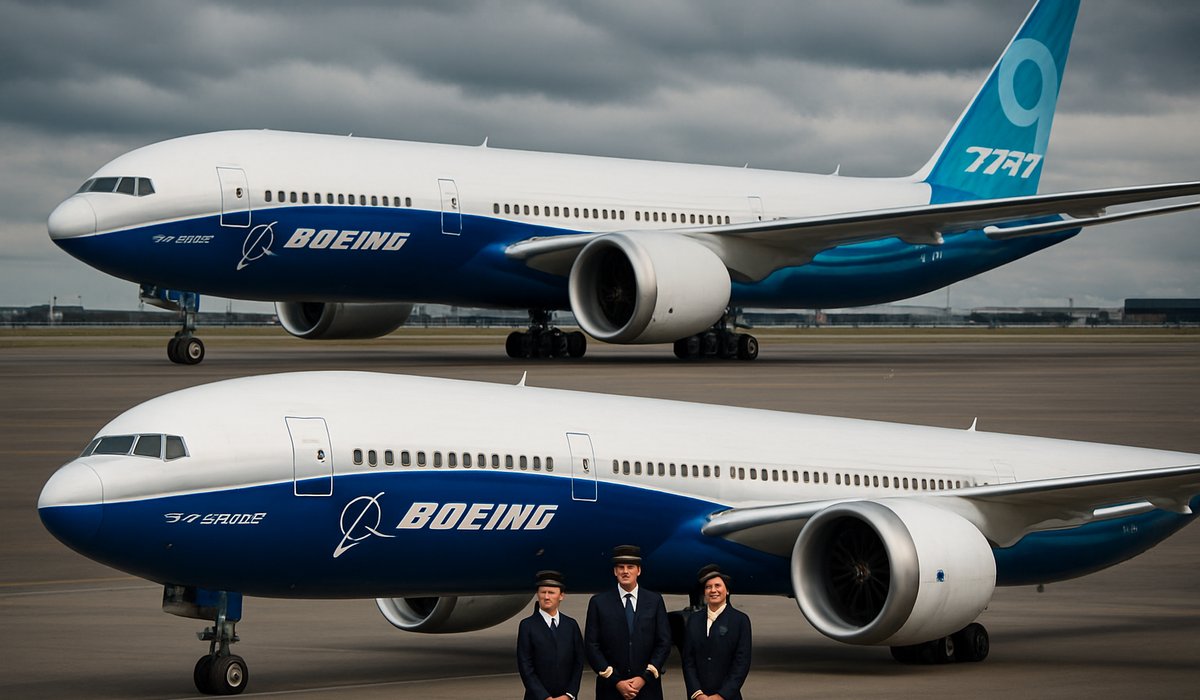
Image generated by AI
Boeing 777X Dwarfs Predecessor: How Much Larger Is the Next-Generation Widebody?
The aviation industry's shift toward supersized twin-engine jets marks a pivotal moment in aircraft design
The Widebody Evolution Accelerates
Boeing's transition from the venerable 777-300ER to the next-generation 777X represents a watershed moment in commercial aviation engineering. As airlines worldwide prioritize operational efficiency and expanded passenger capacity on long-haul routes, the manufacturer has engineered a substantially larger aircraft that sets new benchmarks for the twin-engine widebody segment.
The 777X, particularly its 777-9 variant, extends considerably beyond its predecessor in overall dimensions—a physical manifestation of the industry's push toward high-capacity, fuel-efficient operations that address both environmental pressures and competitive market dynamics.
Dimensional Comparison: Size Matters
The 777-9 stretches significantly longer than the 777-300ER, with engineering innovations that maximize internal space while maintaining aerodynamic efficiency. This extended fuselage enables airlines to accommodate more passengers and cargo without requiring additional aircraft rotations on their networks—a critical economic advantage for carriers managing long-haul operations across competitive international routes.
The lengthened design reflects decades of composite materials advancement and aeronautical engineering refinement, allowing Boeing to increase structural dimensions while simultaneously reducing overall aircraft weight compared to purely metallic predecessors.
Strategic Industry Implications
The 777X's introduction arrives amid shifting global aviation patterns. Airlines are consolidating their widebody fleets around ultra-efficient twin-engine platforms, moving away from four-engine configurations that dominated the previous generation. This transition directly correlates with volatile jet fuel prices, environmental regulations, and evolving post-pandemic travel demand that favors point-to-point connectivity over traditional hub-and-spoke networks.
Boeing's engineering emphasis on the 777X underscores the manufacturer's commitment to capturing the premium long-haul segment, where operational economics hinge on fuel efficiency, seat-mile cost reduction, and extended range capabilities—factors that directly influence airline ticket pricing and baggage charge structures passed to consumers.
Looking Forward
As the 777X enters service across major international carriers, the widebody aviation market will undergo fundamental restructuring. Airlines upgrading from aging 777-300ER fleets will unlock significant cost savings through improved fuel consumption and reduced maintenance requirements—advantages that may eventually translate into more competitive fares for passengers booking international flights.
The aircraft represents more than incremental progress; it embodies the aviation industry's response to sustainability demands, economic pressures, and technological possibility.
FAQ
How much longer is the Boeing 777-9 compared to the 777-300ER? The 777-9 extends considerably beyond the 777-300ER in fuselage length, enabling greater passenger capacity and cargo volume for long-haul operations.
Why is the larger 777X more fuel-efficient than older widebody jets? Advanced composite materials, aerodynamic refinement, and modern engine technology reduce overall weight and drag, improving fuel economy per passenger-mile despite the aircraft's larger size.
When will the Boeing 777X enter commercial service? Airlines have ordered the 777X for fleet deployments beginning in the mid-2020s, with major carriers prioritizing the aircraft for high-capacity international routes.
How does the 777X compare to Airbus competitors? The 777X directly competes with the Airbus A350-900/1000 series, offering different operational strengths and economics that appeal to different airline business models.
Will 777X operations reduce airline baggage fees and ticket prices? While operational cost savings from improved efficiency could theoretically enable lower fares, competitive market dynamics and fuel price volatility ultimately determine pricing strategies.
Related Travel Guides
Flight Delay Compensation Guide 2026
Understanding Airline Route Changes
Airport Security Process Updated (2026)
External Resources
Disclaimer
This article is for informational and educational purposes only. It does not constitute legal, financial, or professional advice. While we strive to provide accurate and up-to-date information, travel policies, regulations, and conditions change rapidly. Always verify information with official sources before making travel decisions. Nomad Lawyer makes no representations about the accuracy, reliability, completeness, or suitability of the information provided. Readers should consult qualified professionals for advice specific to their circumstances. The views expressed in this article are those of the author and do not necessarily reflect the views of Nomad Lawyer.
Kunal K Choudhary
Co-Founder & Contributor
A passionate traveller and tech enthusiast. Kunal contributes to the vision and growth of Nomad Lawyer, bringing fresh perspectives and driving the community forward.
Learn more about our team →