
Boeing 787 vs. Airbus A350: The Price Tag Behind Aviation's Fiercest Widebody Rivalry
Breaking airline news and aviation industry updates for 2026.

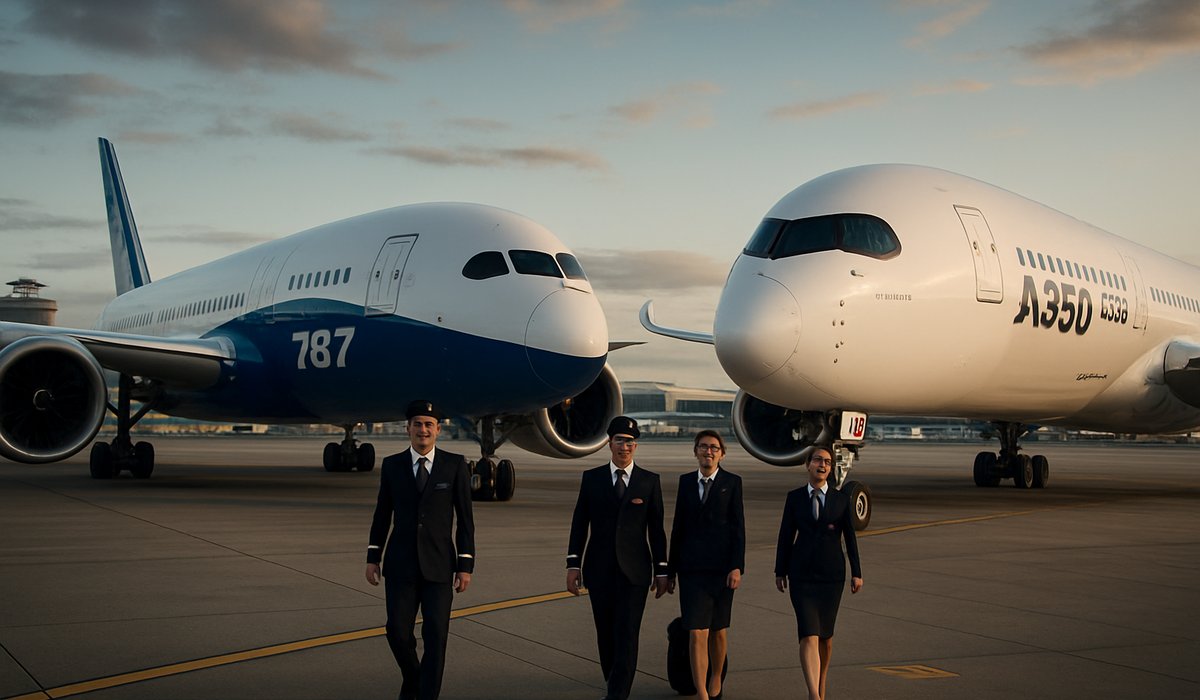
Image generated by AI
Boeing 787 vs. Airbus A350: The Price Tag Behind Aviation's Fiercest Widebody Rivalry
As airlines navigate economic uncertainty and fuel volatility, the cost calculus between two industry titans shapes the future of long-haul travel
The Widebody Showdown: Price Points That Matter
The battle for dominance in modern long-haul aviation hinges on a critical decision facing global carriers: choosing between Boeing's 787 Dreamliner and Airbus's A350 XWB. Both aircraft command premium list prices that reflect cutting-edge engineering, but the financial implications extend far beyond the initial purchase, directly influencing the baggage charges, seat availability, and jet fuel surcharges passengers encounter when booking tickets.
The Boeing 787, introduced in 2011, carries a list price exceeding $250 million for base configurations, while Airbus's A350, which entered service in 2015, positions itself in a comparable range. However, these headline figures represent merely the starting point for airlines evaluating total cost of ownership—a calculation that encompasses fuel efficiency, maintenance expenses, crew training, and asset depreciation over a 25-30 year operational lifespan.
Operating Costs: Where Real Economics Emerge
Beyond acquisition prices, the operational efficiency of each aircraft determines profitability margins that directly impact airline fees and pricing strategies. The 787 Dreamliner emphasizes fuel economy through advanced composite construction and engine efficiency, consuming approximately 20-25% less fuel than comparable widebody predecessors. This translates into reduced per-seat operating costs on ultra-long-range routes, allowing carriers to maintain competitive fares while preserving margins.
The A350, competing with similar technological advantages, delivers comparable fuel efficiency through aerodynamic refinement and weight optimization. Airlines operating both platforms report marginally different maintenance intervals and component lifecycle costs, with the A350 offering certain advantages in cabin pressurization and materials durability.
Market Impact on Passenger Travel
The competition between these aircraft architecturally shapes aviation's commercial landscape. Carriers deploying 787s and A350s across Pacific and transatlantic corridors can operate efficiently despite volatile jet fuel prices, reducing pressure to impose aggressive baggage surcharges or fuel-related fees. Conversely, operators maintaining older widebody fleets face compressed margins, often necessitating additional ancillary revenue strategies to offset elevated fuel consumption.
Industry analysts project that as newer aircraft penetrate global fleets, competitive pricing on premium long-haul routes will intensify, potentially moderating the supplementary charges passengers currently shoulder for checked luggage and premium seating.
Looking Ahead
The forthcoming Boeing 777X will introduce additional competitive pressure, though A350 and 787 platforms will remain dominant through the 2040s. Airlines' selection criteria—balancing upfront capital requirements against 15-20 year fuel savings—will continue defining international connectivity and pricing structures passengers experience.
FAQ: Understanding Widebody Aircraft Economics
Q: What's the typical list price difference between a 787 and A350? A: Both aircraft occupy similar price brackets above $250 million, with variations based on configuration, seating capacity, and avionics packages.
Q: How do fuel costs influence airline ticket pricing? A: Aircraft fuel efficiency directly impacts per-seat operating expenses; more efficient jets allow carriers to offer competitive fares without sacrificing profitability.
Q: Why do airlines choose one widebody over another? A: Route networks, maintenance infrastructure, financing availability, and total cost of ownership projections drive aircraft selection decisions.
Q: Will the 777X replace 787s and A350s? A: No—all three will coexist throughout the 2040s, serving distinct market segments and route requirements.
Q: How does widebody aircraft selection affect baggage fees? A: Efficient aircraft reduce per-passenger operating costs, potentially moderating ancillary charges, though competition and fuel volatility remain significant pricing factors.
Related Travel Guides
Flight Delay Compensation Guide 2026
Understanding Airline Route Changes
Airport Security Process Updated (2026)
External Resources
Disclaimer
This article is for informational and educational purposes only. It does not constitute legal, financial, or professional advice. While we strive to provide accurate and up-to-date information, travel policies, regulations, and conditions change rapidly. Always verify information with official sources before making travel decisions. Nomad Lawyer makes no representations about the accuracy, reliability, completeness, or suitability of the information provided. Readers should consult qualified professionals for advice specific to their circumstances. The views expressed in this article are those of the author and do not necessarily reflect the views of Nomad Lawyer.
Kunal K Choudhary
Co-Founder & Contributor
A passionate traveller and tech enthusiast. Kunal contributes to the vision and growth of Nomad Lawyer, bringing fresh perspectives and driving the community forward.
Learn more about our team →