
Hemkund Sahib Trek: Uttarakhand's Spiritual Adventure Boom
Hemkund Sahib has transformed from a pilgrimage into a global experiential travel phenomenon, attracting spiritual seekers and adventure travelers to Uttarakhand's highest Himalayan shrine.

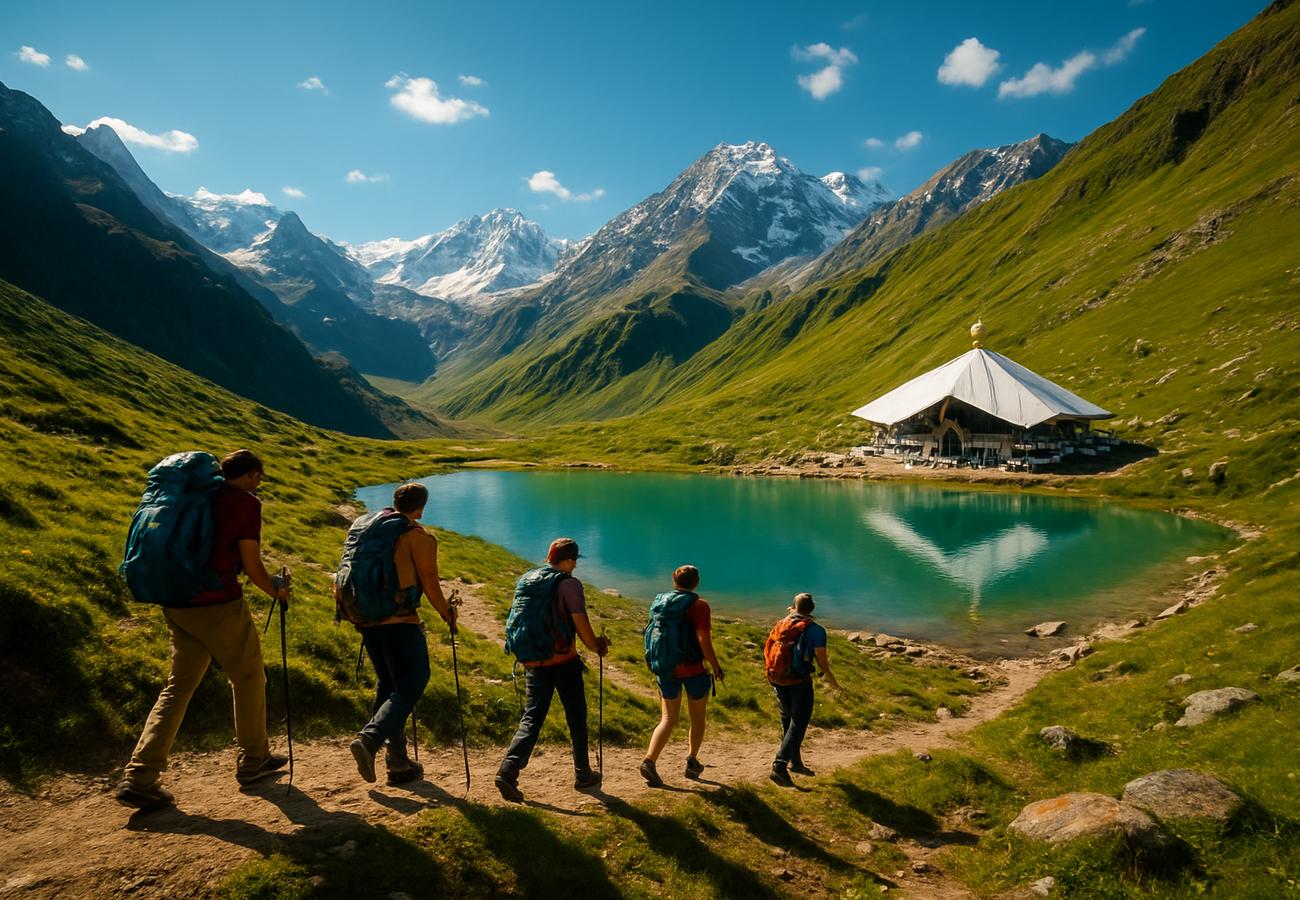
Image generated by AI
When Sacred Becomes Global: The Hemkund Sahib Phenomenon
There's a particular kind of journey that starts as a destination and finishes as a life reset. Hemkund Sahib, nestled deep within Uttarakhand's majestic Himalayan spine, has quietly become exactly that for travelers worldwide. What began as primarily a religious pilgrimage has evolved into something far larger—a global symbol of meaningful travel that attracts spiritual seekers, adventure trekkers, photographers, and cultural explorers in unprecedented numbers.
This isn't your typical tourism story. The Hemkund Sahib route—snaking through Govindghat, Ghangaria, and into the Valley of Flowers National Park—represents something the travel industry has been desperately seeking: authentic transformation over passive sightseeing.
Reddit: "I went expecting a religious trek. I came back questioning everything about how I live." — r/travelstories
The Global Shift Toward Meaningful Travel
Modern travelers have stopped hunting for Instagram backdrops. They're hunting for meaning.
Across the world, tourism has fundamentally shifted. The luxury hotel, the guided tour, the curated experience—these no longer satisfy. Instead, travelers increasingly crave emotional resonance, cultural depth, and personal transformation. Hemkund Sahib has emerged as one of the most compelling examples of this pivot toward experiential travel that matters.
Located in the Chamoli district of Uttarakhand at an elevation of approximately 4,329–4,632 meters above sea level, Hemkund Sahib holds the distinction of being one of the world's highest Sikh pilgrimage destinations. But its appeal extends far beyond faith. The destination increasingly attracts trekkers, nature photographers, environmental advocates, and adventure travelers from dozens of countries—many arriving for a mountain challenge only to discover something far more profound.
The setting itself speaks volumes. Surrounded by snow-blanketed peaks and overlooking a pristine glacial lake, Hemkund Sahib presents a landscape that feels almost untouched by modernity. Visitors consistently describe the environment using the same words: peaceful, humbling, transformative.
The Gateway: Where Every Adventure Begins
Every unforgettable journey starts somewhere. For Hemkund Sahib trekkers, that somewhere is Govindghat—a mountain settlement that marks the threshold between ordinary life and immersive Himalayan experience.
Govindghat doesn't announce itself with fanfare. It simply exists as the primary gateway, nestled quietly in Uttarakhand's mountainous terrain. Here, visitors shed the rhythms of urban existence and prepare for something that unfolds gradually, not instantly.
The first leg stretches approximately 13–14 kilometers from Govindghat to Ghangaria. But distance here is deceptive. This isn't simply kilometers—it's a transition point. The trail winds through dense forests where sunlight fractures through towering deodars. Glacial-fed rivers thunder alongside rocky pathways. Waterfalls cascade from steep mountainsides, creating a natural soundtrack that accompanies every step.
What makes this section remarkable is its refusal to repeat itself. One moment: lush alpine greenery enveloping the trail. The next: expansive valleys framed by jagged peaks. The constantly shifting landscape transforms the trek into a living narrative, where each chapter reveals a different dimension of Himalayan beauty. Unlike modern travel experiences that prioritize speed, this journey rewards patience. Slow down, observe, become present.
Ghangaria: The Sacred Pause
After hours of trekking, visitors arrive at Ghangaria—a modest mountain settlement that functions as something far more significant than its modest appearance suggests. It's the heart of the journey's story.
Ghangaria serves dual purposes: it's both the gateway to Hemkund Sahib and the access point to the renowned Valley of Flowers National Park. More importantly, it's where travelers rest, acclimatize to altitude, and psychologically prepare for what comes next. The settlement's isolation becomes its greatest asset. Surrounded by dramatic mountain walls and untouched natural landscapes, Ghangaria offers something increasingly rare in 2026: genuine disconnection from the digital world.
For many visitors, the pause in Ghangaria becomes the most memorable portion of the entire trek. It's reflection space. It's where travelers process what they've already accomplished while bracing themselves for the final ascent.
The role of Ghangaria also reveals something crucial about sustainable tourism: local economies thrive when communities actively participate. Accommodation providers, guides, transport operators, and small businesses don't just support the visitor experience—they form the economic backbone of responsible tourism development. As global travel expands, settlements like Ghangaria may become critical examples of how local communities benefit from sustainable tourism practices rather than exploitation.
The Final Climb: Where Determination Meets Destiny
The summit push begins in Ghangaria and continues upward through a punishing 6-kilometer ascent to Hemkund Sahib. This final stage is widely regarded as the trek's most demanding section.
Altitude climbs steadily. Oxygen thins perceptibly. Weather transforms without warning. Each step demands concentration. Yet these very challenges create the journey's profound significance. As trekkers ascend higher, scenery intensifies dramatically. Snow-covered peaks dominate peripheral vision. Rocky ridges create panoramas that stop people mid-breath. Streams and waterfalls appear unexpectedly through rugged terrain.
The physical demands accomplish something psychological: they force visitors into the present moment. Daily concerns dissolve. Attention narrows to the immediate: breathing, stepping, ascending. For most travelers, reaching Hemkund Sahib becomes more than a destination milestone—it becomes a personal achievement shaped by grit, patience, and resilience.
The Shrine: Where Spirituality Transcends Belief
Upon arrival, visitors encounter something genuinely extraordinary: a sacred shrine standing beside a glacial lake so pristine it mirrors the surrounding mountains like polished glass. The scene creates an atmosphere of profound serenity that affects visitors regardless of religious background or spiritual orientation.
Hemkund Sahib's historical significance connects directly to Guru Gobind Singh, the tenth Sikh Guru, making it one of the world's most important pilgrimage sites for Sikhs globally. Every year, thousands of devotees undertake this challenging journey specifically to experience the unique spiritual environment.
Adjacent stands the Lakshman Temple, attracting Hindu pilgrims and contributing to the destination's broader appeal as a place where diverse spiritual traditions coexist peacefully. This interfaith dimension has significantly broadened Hemkund Sahib's appeal beyond single-faith communities.
Travelers arrive seeking adventure. They depart with deeper appreciation for cultural and spiritual heritage they may never have encountered otherwise. In a fractured world, Hemkund Sahib functions as a rare space where different faith traditions share sacred geography without conflict or competition.
The Larger Story: Tourism's Transformation in Real Time
What's happening at Hemkund Sahib isn't isolated. It's symptomatic of how global travel has fundamentally reorganized around authenticity, sustainability, and emotional fulfillment. The destination has become a living laboratory for what meaningful tourism looks like when communities, nature, spirituality, and adventure coexist intentionally.
The trek's growing popularity suggests travelers are valuing something previously dismissed as inefficient: the slow journey. The challenging path. The transformation that requires effort. In an age of instant gratification, Hemkund Sahib demands patience and rewards it profoundly.
For nomad lawyers, digital workers, and professionals seeking to reset their relationship with both work and place, the Hemkund Sahib route offers something rare: a legally accessible journey through India that demands nothing except willingness to climb higher than you've climbed before—literally and metaphorically.
The highest pilgrimages aren't always about reaching peaks—they're about what happens to you while climbing them.
Related Travel Guides
UAE Airlines Resume Routes as Regional Airspace Reopens
Dubai flights remain constrained despite April 2026 ceasefire
Uttar Pradesh Deploy 110 Electric Buses for Jewar Airport June Launch
Disclaimer
This article is for informational and educational purposes only. It does not constitute legal, financial, or professional advice. While we strive to provide accurate and up-to-date information, travel policies, regulations, and conditions change rapidly. Always verify information with official sources before making travel decisions. Nomad Lawyer makes no representations about the accuracy, reliability, completeness, or suitability of the information provided. Readers should consult qualified professionals for advice specific to their circumstances. The views expressed in this article are those of the author and do not necessarily reflect the views of Nomad Lawyer.
Preeti Gunjan
Contributor & Community Manager
A passionate traveller and community builder. Preeti helps grow the Nomad Lawyer community, fostering engagement and bringing the reader experience to life.
Learn more about our team →