
Heavy Rain Triggers Hundreds of Delays and Dozens of Cancellations at Boston Logan International Airport in July 2026
Heavy rain and low clouds on July 30, 2026, triggered hundreds of delays and dozens of cancellations at Boston Logan International Airport, stranding passengers.

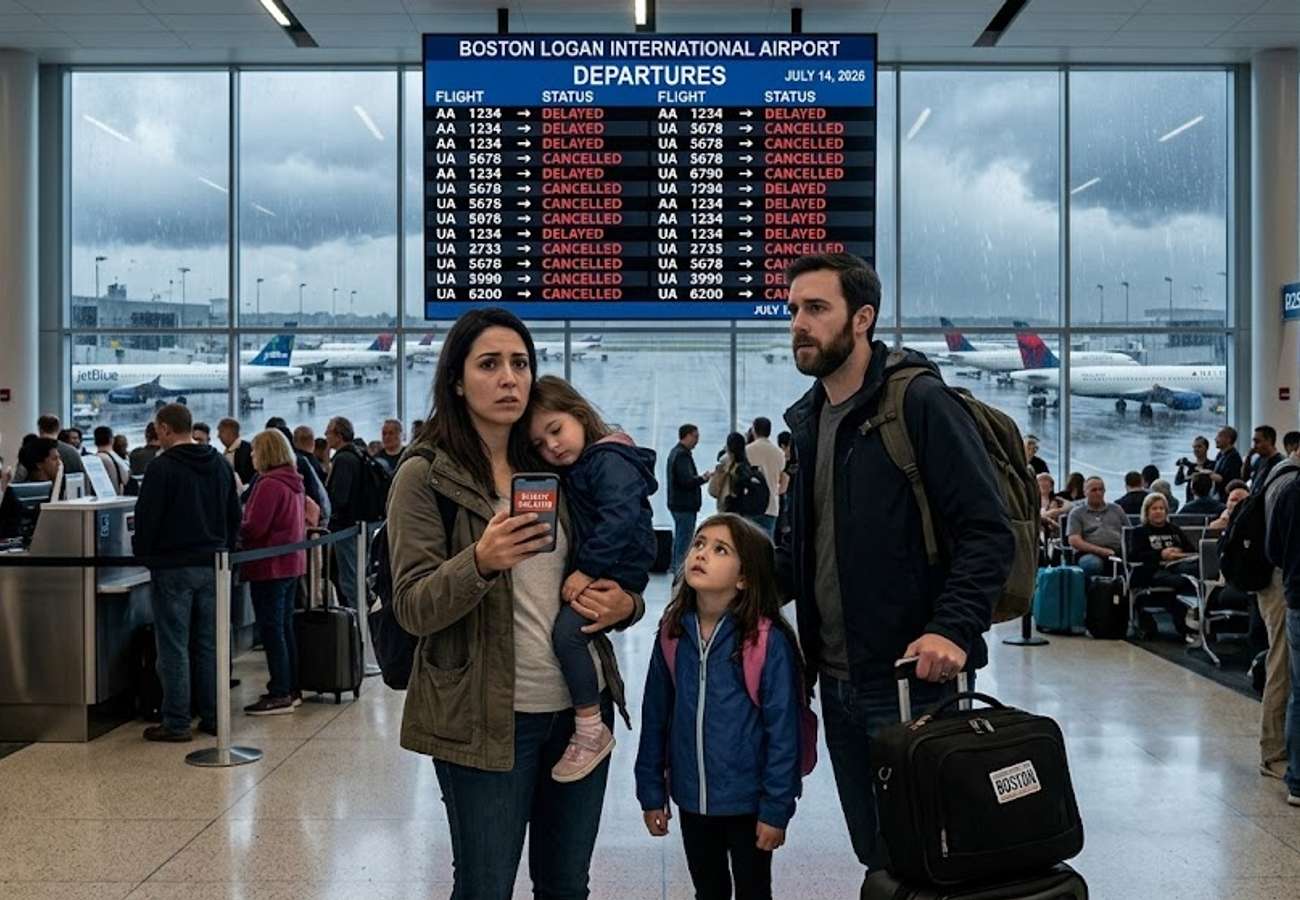
Image generated by AI
A persistent band of heavy rain and low clouds over eastern Massachusetts on July 30, 2026, forced Boston Logan International Airport into a ground delay program, resulting in hundreds of delayed flights and dozens of cancellations. The weather system severely constrained arrival and departure rates, stranding passengers across domestic and international networks and triggering a ripple effect across the national airspace.
Core Transit Update: Weather System Slows New England Skies
On July 30, 2026, heavy rain moving through eastern Massachusetts severely disrupted operations at Boston Logan International Airport. Publicly available flight tracking data showed a sharp spike in departure and arrival delays as a band of steady, occasionally heavy rain lingered over the region. Low clouds and reduced visibility forced aircraft to operate under tighter spacing, directly cutting the number of takeoffs and landings the airport could safely handle in each hour.
According to Federal Aviation Administration (FAA) air traffic management protocols, rolling ground delays were implemented for portions of the day. This created a knock-on effect that rippled through airline schedules. Flights scheduled for midmorning and early afternoon were pushed back repeatedly. When turnaround windows and crew duty limits became too tight, some short-haul services were ultimately cancelled. By early afternoon, aggregate airport status boards and tracking services indicated that Logan was contending with hundreds of delayed flights and dozens of outright cancellations.
The majority of affected services involved domestic routes within the Northeast and Mid-Atlantic, where aircraft must transit the same stormy airspace that is constraining Boston operations. Regional flights to and from New York area airports, Washington, D.C., and other New England cities appeared to be among the hardest hit. These shorter segments offer airlines less flexibility to absorb extended ground holds. Some carriers consolidated frequencies by cancelling individual departures and rebooking passengers onto later flights with available seats.
International operations generally remained more resilient, but they were not immune. Long-haul departures to Europe and the Caribbean experienced pushbacks from their scheduled times as crews and aircraft arrived late from earlier segments. In some instances, late-arriving inbound flights forced tight turnarounds that further compressed already strained schedules.
Transit Schedule and Route Specifications
The operational data from July 30, 2026, reveals a distinct pattern of disruption across different route categories at Boston Logan International Airport.
| Route Category | Affected Regions | Operational Status | Primary Cause of Disruption |
|---|---|---|---|
| Domestic Short-Haul | New York Area, Washington D.C., New England | Dozens of cancellations, heavy delays | Tight turnaround windows, constrained airspace |
| Domestic Mid-Atlantic | Northeast Corridor | Hundreds of delays | Rolling ground delays, low visibility |
| International Long-Haul | Europe, Caribbean | Resilient but experiencing pushback delays | Late inbound aircraft, tight turnarounds |
| Leisure Routes | Florida, West Coast | Limited rebooking availability, missed connections | Network ripple effects from Logan delays |
Traveler Logistics Guide: Navigating Weather Disruptions at Logan
From a ground-level perspective, the best way to navigate this is through proactive schedule management and a thorough understanding of airport-specific digital policies. For travelers connecting through Boston Logan International Airport during severe weather events, optimal layover times should be extended from the standard 60 minutes to at least 120 minutes for domestic connections, and 180 minutes for international ones. This buffer absorbs rolling ground delays that frequently impact short-haul regional flights from the New York area and Washington D.C.
When navigating the terminals, utilizing TSA PreCheck or CAT (Credential Authentication Technology) lanes can save significant time if rebooking requires exiting and re-entering security. For international arrivals, passengers should ensure their Mobile Passport Control app or Global Entry credentials are updated, as weather delays often cause simultaneous arrival bunching, overwhelming customs processing.
International travelers arriving from global hubs equipped with advanced biometric systems, such as India's Digi Yatra, should note that while Boston Logan employs biometric entry and exit for certain international carriers, domestic rebooking processes still heavily rely on traditional identification checks. Ensuring physical ID documents are easily accessible can expedite the rebooking process if digital kiosks are overwhelmed.
For those connecting onward to Europe, keeping abreast of the upcoming European Travel Information and Authorisation System (ETIAS) requirements ensures that a weather delay does not compound into a documentation issue if an overnight stay forces an unexpected airport exit. Passengers holding tickets on European carriers may be entitled to care and compensation under EU261 regulations if their flight is delayed overnight, though extraordinary weather conditions often exempt airlines from monetary compensation. However, the duty of care still applies, meaning airlines must provide meals and hotel accommodations.
Travelers experiencing missed connections should immediately use their airline's mobile application to rebook rather than waiting in line at customer service counters. During peak travel season, available seats on later flights are limited, particularly on popular leisure routes to Florida and the West Coast. If the airline app shows no available inventory, checking alternative routing through other New England airports or Mid-Atlantic hubs can provide a viable path forward.
Infrastructure Impact Assessment: Logan's Weather Vulnerability
The latest round of disruptions arrives in the middle of a busy and weather-sensitive summer for air travel across the Northeast. Public data and storm analyses show that Boston Logan is particularly vulnerable when visibility drops and crosswinds increase. The airport's runway and airspace configuration leave limited room to maintain full capacity during low cloud and precipitation events. When air traffic managers must increase spacing between arriving aircraft, the hourly arrival rate drops significantly.
Recent months have highlighted how quickly disruptions can escalate at Logan when storms stall over the region. Earlier in the year, winter systems and late-season nor’easters triggered extensive cancellations and delays, underscoring how tightly airline schedules are wound during peak travel periods. Heavy rain events in warmer months can have similar operational impacts even without snow or ice.
Industry research on extreme weather and air transportation indicates that such conditions not only slow aircraft movements but also produce longer passenger dwell times inside terminals. As flights are rescheduled or diverted, crowds build around gate areas and customer service counters, increasing the strain on Massport infrastructure and airline staff.
The disruption at Logan also affects passengers and crews far beyond Boston. When one of the Northeast’s primary hubs slows down, aircraft and staff scheduled to operate subsequent legs elsewhere in the country fall behind. This leads to secondary delays at outlying airports that may not be experiencing significant weather themselves. According to delay models, this knock-on effect is especially evident on busy summer afternoons when most aircraft are already in continuous use. A delayed arrival into Boston often becomes a delayed departure to another city, creating additional late departures down the line.
Forecast discussions for eastern Massachusetts indicate that periods of rain and embedded thunderstorms may continue into the evening, suggesting that irregular operations at Logan could persist for several more hours. Even if rainfall intensity eases near the airport, residual congestion in the airspace and a backlog of delayed flights are likely to keep schedules off balance. As aircraft and crews reach the end of their legally permitted duty periods, some late-night services may be cancelled if further delays occur. The impacts may not fully resolve until early Friday, when airlines can reposition aircraft and reset schedules.
Proactive monitoring and flexible rebooking remain the most effective tools for passengers navigating unpredictable Northeast weather patterns.
Related Travel Guides
Disclaimer
This article is for informational and educational purposes only. It does not constitute legal, financial, or professional advice. While we strive to provide accurate and up-to-date information, travel policies, regulations, and conditions change rapidly. Always verify information with official sources before making travel decisions. Nomad Lawyer makes no representations about the accuracy, reliability, completeness, or suitability of the information provided. Readers should consult qualified professionals for advice specific to their circumstances. The views expressed in this article are those of the author and do not necessarily reflect the views of Nomad Lawyer.
Kunal K Choudhary
Co-Founder & Contributor
A passionate traveller and tech enthusiast. Kunal contributes to the vision and growth of Nomad Lawyer, bringing fresh perspectives and driving the community forward.
Learn more about our team →