
Heathrow, Changi and JFK Lead Shift as Airport Hotels Pivot to Luxury Experiences in 2026
Global aviation hubs are transforming airport hotels from mere conveniences into luxury destinations as ACI World projects passenger traffic to hit 10.2 billion in 2026.

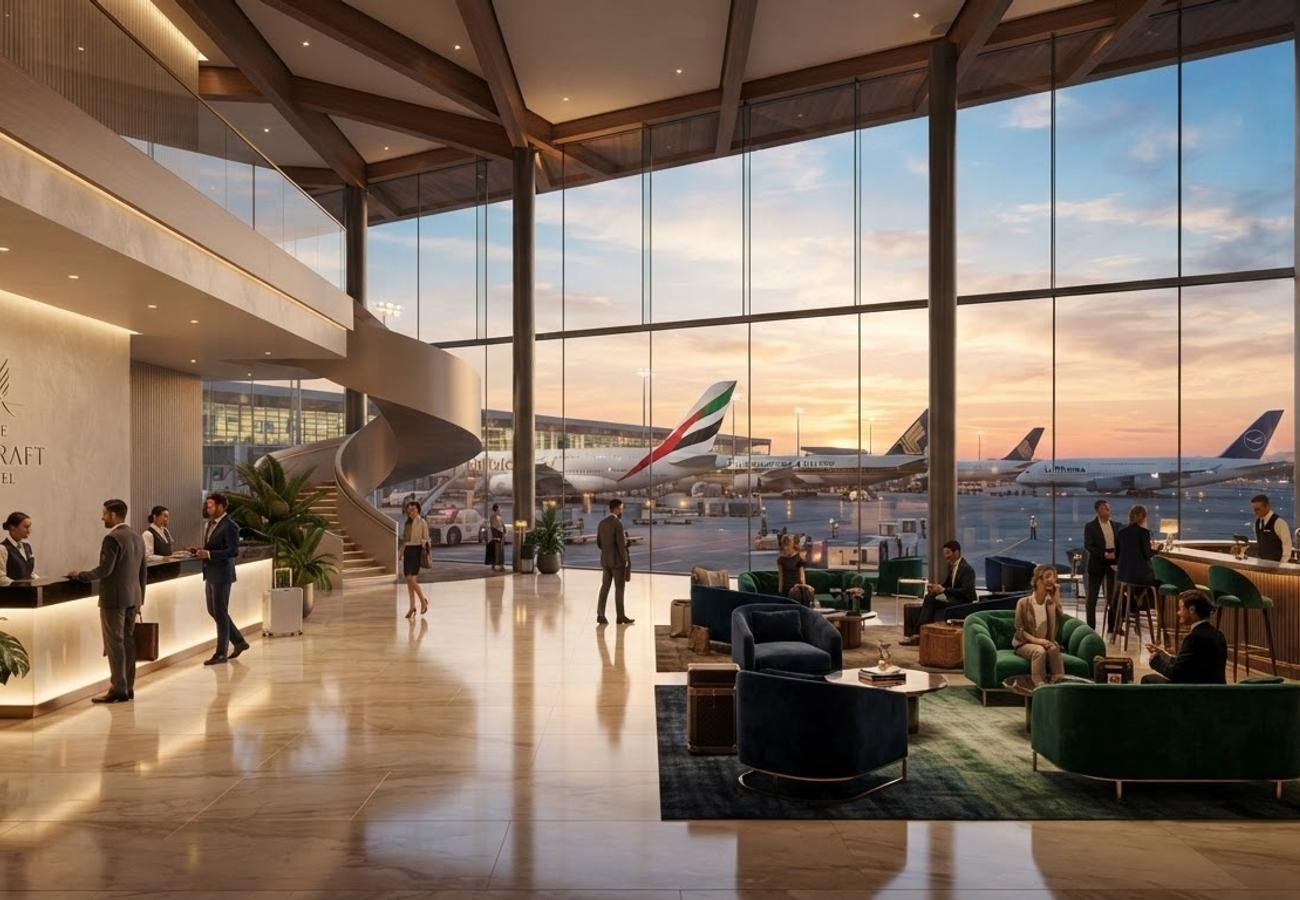
Image generated by AI
Global aviation hubs are shifting from basic transit lodging to high-end "experience" hotels. With passenger volumes surging, the airport hotel is no longer a last resort but a strategic component of the travel journey.
The Evolution of Transit Accommodation
Airport hotels have transitioned from utilitarian spaces designed to "kill time" into integrated wellness, dining, and design hubs. This shift is driven by an exponential increase in air travel volume. According to ACI World, air passenger traffic reached 9.8 billion in 2025, representing a 3.7% increase from 2024 and standing 6.5% above 2019 levels.
Our analysis indicates that airports are now competing on the "total journey" experience. With international traffic reaching approximately 4 billion passengers in 2025 and projections hitting 10.2 billion in 2026, the pressure to provide efficient, comfortable, and luxury-tier accommodation has intensified.
Global Hub Impact Breakdown
Different hubs are adopting distinct strategies to capture various passenger demographics:
- London Heathrow (LHR): The Sofitel Heathrow focuses on seamless terminal integration, connecting directly to Terminal 5. This model prioritizes rest and proximity for early departures and long-haul family transit.
- Singapore Changi (SIN): A leader in "resort-style" transit. The Crowne Plaza Changi Airport features a 20-metre swimming pool and tropical landscaping. Changi handled nearly 70 million passengers in 2025, with 69.4 million being international travelers.
- New York JFK (JFK): The TWA Hotel leverages aviation heritage, occupying the restored 1962 Eero Saarinen Flight Center. It functions as a standalone destination for non-flying visitors and aviation enthusiasts.
- Johannesburg O.R. Tambo (JNB): The InterContinental Johannesburg O.R. Tambo Airport blends five-star luxury with terminal proximity, targeting high-net-worth travelers arriving from safaris or long-haul flights.
- Melbourne (MEL): The Novotel and ibis Styles complex (opened 2024) uses a multi-brand approach to serve different price points, mitigating the risks of local road congestion for early flights.
- Rome Fiumicino (FCO): HelloSky Air Rooms and Lounge focuses on the "practicality" market, providing essential sleep and shower facilities for transit passengers.
Passenger Rights & Advisory: Navigating Disruptions
The strategic importance of these hotels increases during flight disruptions. For the affected passenger, the availability of on-site accommodation is a critical factor in claiming "duty of care" benefits.
Our analysis of aviation policy suggests the following for passengers facing delays:
- EU261/2004 & UK261: If your flight is cancelled or delayed overnight, the airline is legally required to provide hotel accommodation and transport. If the airline fails to provide a room at an airport hotel (like the Sofitel at LHR), passengers can book their own and claim reimbursement. Ensure you keep all itemized receipts.
- US DOT Guidelines: While US regulations are less prescriptive than EU laws, many airlines provide vouchers for airport hotels during "controllable" delays (e.g., mechanical issues). If denied, passengers should document the disruption and request reimbursement via the airline's customer relations portal.
- Day-Use Flexibility: For passengers with short layovers (4–8 hours), we recommend "day-use" packages (such as those offered by YotelAir at Changi). These often provide showers and gym access without requiring a full overnight booking, protecting both time and energy.
Industry Analyst View: The "Destination" Airport
The current trajectory suggests that airports are becoming destinations in their own right. By integrating luxury hotels, airports extend commercial activity beyond the terminal gate.
The move toward "social hotels," such as Moxy Sydney Airport, indicates a desire to maintain the vacation atmosphere right up to the boarding gate. We are seeing a bifurcation of the market: one segment focusing on "ultra-efficiency" (capsule hotels/pods) and another on "ultra-luxury" (destination resorts). This allows hubs to capture maximum revenue from both the budget transit traveler and the premium leisure passenger.
The airport hotel is no longer a place to wait—it is now a place to stay.
Related Travel Guides
Disclaimer
This article is for informational and educational purposes only. It does not constitute legal, financial, or professional advice. While we strive to provide accurate and up-to-date information, travel policies, regulations, and conditions change rapidly. Always verify information with official sources before making travel decisions. Nomad Lawyer makes no representations about the accuracy, reliability, completeness, or suitability of the information provided. Readers should consult qualified professionals for advice specific to their circumstances. The views expressed in this article are those of the author and do not necessarily reflect the views of Nomad Lawyer.
Naina Thakur
Contributor & Travel Specialist
Travel enthusiast and legal writer covering visa regulations, responsible tourism, and cultural journeys across global destinations.
Learn more about our team →