
US Experiential Romantic Getaways: Luxury Hotels Pivot to Experience-Led Escapes
From 100,000 sq ft wellness hubs to truffle hunting in Oregon, US hotels in New York, Nashville, and Dallas reshape couples travel for cuffing season.

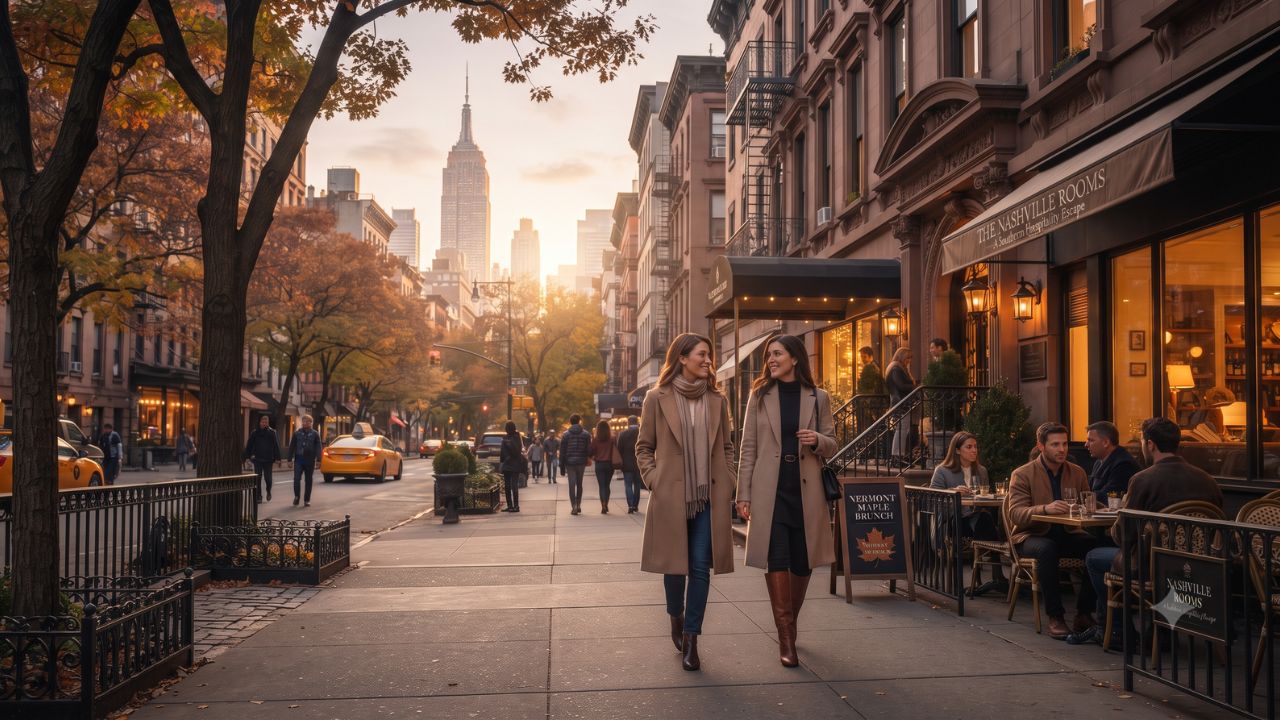
Image generated by AI
Facilities scaling up to a 100,000-square-foot athletic club in Philadelphia and private 140-acre agricultural estates in New York's Hudson Valley demonstrate how American hospitality operators are restructuring romantic tourism around experiential real estate. As lexicographers at Merriam-Webster formally integrate the seasonal relationship phrase "cuffing season" into standard reference dictionaries, lodging providers across New York, Dallas, Nashville, Boston, and Sarasota are moving away from passive overnight stays. Instead, properties are packaging specialized cultural, automotive, culinary, and wellness access into high-margin autumn and winter travel programs.
This pivot addresses clear changes in consumer behavior. Affluent travelers are increasingly rejecting commoditized room-and-breakfast bundles. According to performance trend analysis tracked by the American Hotel & Lodging Association (AHLA), experiential programming now serves as the primary differentiator for independent and lifestyle boutique properties competing against homogenized corporate chains. By curating activities that cannot be replicated at home, hotels are establishing distinct identity profiles while insulating room rates against broader leisure travel corrections.
Experiential Repositioning Across Urban and Rural Hospitality Assets
The diversification of romantic travel reflects geographic segmentation across major metropolitan markets and remote rural corridors. Rather than concentrating solely on Valentine's Day promotions or generic candlelit dining, operators are aligning inventory with seasonal companionship trends that extend continuously from October through March.
In New York City, property managers are using neighborhood geography to shape specialized romantic micro-trips. In Brooklyn, The Penny Williamsburg relies on apartment-style residential layouts that encourage travelers to integrate into community retail and dining corridors rather than adhere to rigid commercial itineraries. In central Manhattan, Park Lane New York leverages unobstructed sightlines across Central Park to capture foliage tourism, while The Dominick in SoHo has partnered with celebrity stylist Law Roach to supply guests with a bespoke Fashion Fix Emergency Kit alongside oversized soaking tubs.
Nightlife-oriented properties target alternative demographics. Dream Downtown positions guests adjacent to the Meatpacking District and Chelsea, offering loft accommodations designed for post-midnight entertainment. Similarly, midtown properties are differentiating through themed hospitality assets: Hard Rock Hotel New York supplies rooms with Fender guitars and vinyl record setups, while The Knickerbocker features specialized tableside martini service within its dedicated Martini Suite. Through these targeted amenities, operators convert standard square footage into experiential venues.
Comparative Matrix: Specialty Programming Across Premier US Romantic Retreats
To illustrate how luxury and boutique operators structure experience-led romance travel, the following matrix details key properties, geographic settings, and signature operational programming across the United States.
| Property & Location | Geographic Setting | Signature Amenity or Experience | Scale & Operational Dimension | Target Consumer Focus |
|---|---|---|---|---|
| The Bellevue, Philadelphia | Urban Historic District | Restored Bathhouse and Athletic Club | 36,000 sq ft spa; 100,000 sq ft sporting club | High-performance fitness & contrast therapy |
| Wildflower Farms, Hudson Valley, NY | Rural Agricultural Basin | Foraging, working farm, Clay & Thistle | 140-acre private campus | Agricultural luxury & nature immersion |
| The LINE DC, Washington DC | Historic Adams Morgan | Preserved ecclesiastical architecture | 110-year-old former church structure | Architectural heritage & cultural discovery |
| Omni Parker House, Boston | Downtown Freedom Trail | Historic culinary traditions | Over 170 years of continuous operation | Heritage exploration & culinary origin dining |
| The Joseph, Nashville | Downtown Cultural Core | Ferrari & Lamborghini excursions, Yolan | Private luxury sports car fleet | Automotive luxury & Italian fine dining |
| The Joule, Dallas | Downtown Commercial Core | Curated contemporary art collection | Property-wide gallery & Midnight Rambler | Visual art immersion & cocktail culture |
| Perlée, Dundee Hills, Oregon | Pacific Northwest Wine Country | Truffle hunting, beekeeping, sausage craft | Estate vineyard & culinary farm | Hands-on artisanal gastronomy |
| Superfrico at Spiegelworld, Las Vegas | The Strip Entertainment Strip | THE PARTY theatrical dining | 50-guest capacity intimate Blue Room | Immersive dining & live vinyl performance |
| Outbound Stowe, Vermont | Northern Appalachian Alpine | Mountain trailside cabin access | Adjacent to Stowe Recreation Path | Alpine hiking & four-season outdoor sport |
| AutoCamp, National Park Corridors | Protected Wilderness Borders | Custom-outfitted boutique Airstreams | Exclusive Airstream hospitality partnership | Outdoor adventure with boutique comfort |
| The Ritz-Carlton, Sarasota | Southwest Florida Gulf Coast | Private Gulf Beach Club & championship golf | Tom Fazio-designed 18-hole golf course | Coastal recreation & resort wellness |
Regional Specialization: From Historic Sanctuaries to Agricultural Escapes
Outside major metropolitan centers, properties are converting historical landmarks and working farmland into immersive romantic destinations. In Washington, D.C., The LINE DC operates within a 110-year-old church in Adams Morgan. The venue preserves original vaulted ceilings, solid copper entrance doors, and ecclesiastical stonework, offering architectural preservationists a distinct alternative to standard glass-and-steel downtown towers. In New England, Boston's Omni Parker House leverages over 170 years of operating history along the Freedom Trail, drawing couples through its culinary lineage as the birthplace of Boston Cream Pie and Parker House Rolls.
In the American South, Nashville and Dallas demonstrate how hospitality brands incorporate high-end lifestyle assets. The Joseph Nashville integrates fine art and wellness at Rose, craft cocktails at Four Walls, and fine dining at Yolan. To elevate weekend itineraries, the property provides private excursions in exotic sports cars, including Ferrari and Lamborghini models. In downtown Dallas, The Joule embeds museum-grade contemporary art collections across public corridors, pairing visual culture with underground mixology at Midnight Rambler.
Agricultural and wilderness properties take the opposite operational approach by emphasizing physical seclusion and hands-on skill development. In Oregon's Dundee Hills, Perlée engages couples in active food production through guided truffle hunting, beekeeping workshops, and artisanal sausage fabrication. On the East Coast, Auberge Resorts Collection's Wildflower Farms in the Hudson Valley encompasses 140 acres of private trails and farmland, inviting guests to participate in seasonal foraging before dining at Clay or receiving wellness therapies at Thistle.
For travelers who prefer direct nature access without traditional campsite logistics, AutoCamp deploys custom-manufactured Airstream suites across gateway communities bordering national parks managed by the National Park Service. By offering morning yoga sessions, live acoustic performances, and communal fire pits, the brand delivers an outdoor experience without requiring guests to transport specialized outdoor gear. In northern New England, Outbound Stowe provides direct access to Mount Mansfield and the Stowe Recreation Path, balancing cold-weather trail access with private cabins and fire pits.
Southern coastal operators focus on sports leisure. The Ritz-Carlton, Sarasota pairs a Tom Fazio-designed championship golf course with a private Gulf of Mexico beach club, while The Bellevue in Philadelphia has introduced a 36,000-square-foot subterranean Bathhouse offering thermal plunge pools and contrast saunas, directly attached to a 100,000-square-foot Sporting Club.
Expert Analysis: The Unit Economics of Experiential Amenity Packaging
For travelers evaluating experiential hotel packages, the direct consequence of this industry shift is structural unbundling paired with aggressive ancillary pricing. Hotel operators have discovered that while base room rates face stiff resistance during economic uncertainty, affluent guests demonstrate high willingness to pay for exclusive, non-transferable activities.
The pricing pressure this creates means that advertised couples getaways frequently represent entry-level charges that exclude the property's primary attractions. When a resort advertises sports car rentals, private truffle expeditions, or tableside theatrical performances, these features are rarely bundled into the baseline room tariff. Private drives in a Ferrari at The Joseph or private dinners inside the 50-seat Blue Room for THE PARTY in Las Vegas require separate ticket reservations, specialized security deposits, and non-refundable retainers.
From an asset-management perspective, programming allows boutique operators to maximize revenue per available room (RevPAR) through ancillary spend rather than standard room-rate inflation. However, this model introduces legal and contractual friction for consumers. Experiential bookings frequently enforce stricter cancellation timelines than conventional lodging reservations. While a standard hotel room might offer 48-hour cancellation flexibility, specialized activities involving private instructors, licensed guides, or exotic automotive insurance policies routinely require 14-day to 30-day non-refundable commitments.
Additionally, travelers face mandatory facility charges and operational surcharges. Properties boasting expansive square footage, such as The Bellevue's 100,000-square-foot sporting complex or Wildflower Farms' 140-acre agricultural campus, often assess mandatory daily resort or amenity fees ranging from $45 to $120 per night. These compulsory fees are levied regardless of whether the guest uses the wellness equipment, hiking trails, or contrast therapy pools.
Marketing campaigns highlighting cultural discovery promote a compelling vision of contemporary companionship, but travelers must inspect the contract terms behind experience-led hospitality. Without clear auditing of booking inclusions, deposits, and cancellation penalties, an experiential weekend escape can quickly double in cost before the guest ever checks in.
Key Takeaways
- Experiential Asset Transformation: US luxury properties are replacing traditional couples amenities with extensive facilities, such as Philadelphia's 100,000-square-foot athletic club and the Hudson Valley's 140-acre working farm.
- Cultural and Automotive Differentiation: Operators are leveraging specialized partnerships, ranging from exotic Ferrari and Lamborghini drives in Nashville to celebrity stylist wardrobe kits in SoHo.
- Strict Ancillary Terms: Signature hotel experiences routinely require separate advance bookings, non-refundable activity deposits, and cancellation terms far stricter than standard room reservations.
- Hidden Fee Impacts: Expansive wellness and countryside estates frequently impose daily resort fees of $45 to $120 to cover property upkeep, regardless of actual guest usage.
- Authentic Regional Heritage: Historic conversions, including The LINE DC's 110-year-old former church and the 170-year culinary heritage of Boston's Omni Parker House, offer genuine architectural and culinary distinction.
FAQ: US Couples Experiential Hospitality 2026
What defines an experience-led romantic hotel getaway?
Experience-led getaways focus on active guest participation, such as truffle hunting, performance dining, or sports car excursions, rather than traditional passive room stays with wine and chocolates.
Are signature activities included in base room rates?
Typically no. Premium experiences, including exotic car drives, private culinary workshops, and specialized wellness treatments, require separate bookings, additional fees, and distinct cancellation deposits.
How do cancellation terms differ for experiential hotel packages?
While standard room bookings often permit cancellation 48 hours prior to arrival, experiential packages frequently impose non-refundable terms 14 to 30 days in advance due to third-party scheduling and guide staffing.
What added fees should couples anticipate at wellness and estate retreats?
Guests should anticipate mandatory daily resort fees between $45 and $120, plus local hotel occupancy taxes, parking charges, and mandatory gratuities on private culinary and spa services.
As luxury lodging moves beyond conventional room amenities, the true value of a romantic escape lies in evaluating the contract terms, inclusions, and physical substance of the experiences on offer.
Related Travel Guides
France and Austria Expand Alpine Hotel Capacity for Winter 2026-27
Global Luxury Winter Travel Rankings: Egham Hotel Rates Reach $1,792 Per Night
12 Best Romantic Luxury Getaways in the US, According To Reddit
Disclaimer
This article is for informational and educational purposes only. It does not constitute legal, financial, or professional advice. While we strive to provide accurate and up-to-date information, travel policies, regulations, and conditions change rapidly. Always verify information with official sources before making travel decisions. Nomad Lawyer makes no representations about the accuracy, reliability, completeness, or suitability of the information provided. Readers should consult qualified professionals for advice specific to their circumstances. The views expressed in this article are those of the author and do not necessarily reflect the views of Nomad Lawyer.
Kunal K Choudhary
Co-Founder & Contributor
A passionate traveller and tech enthusiast. Kunal contributes to the vision and growth of Nomad Lawyer, bringing fresh perspectives and driving the community forward.
Learn more about our team →