
Hawaiian Airlines Slashes Free Economy Meals as Massive Operational Costs Threaten Broader Travel Chaos and Airport Disruptions: Latest Airline News
As soaring operational costs squeeze airline margins, Hawaiian Airlines aggressively cuts free economy meals, signaling a broader industry shift that leaves passengers vulnerable to travel chaos.

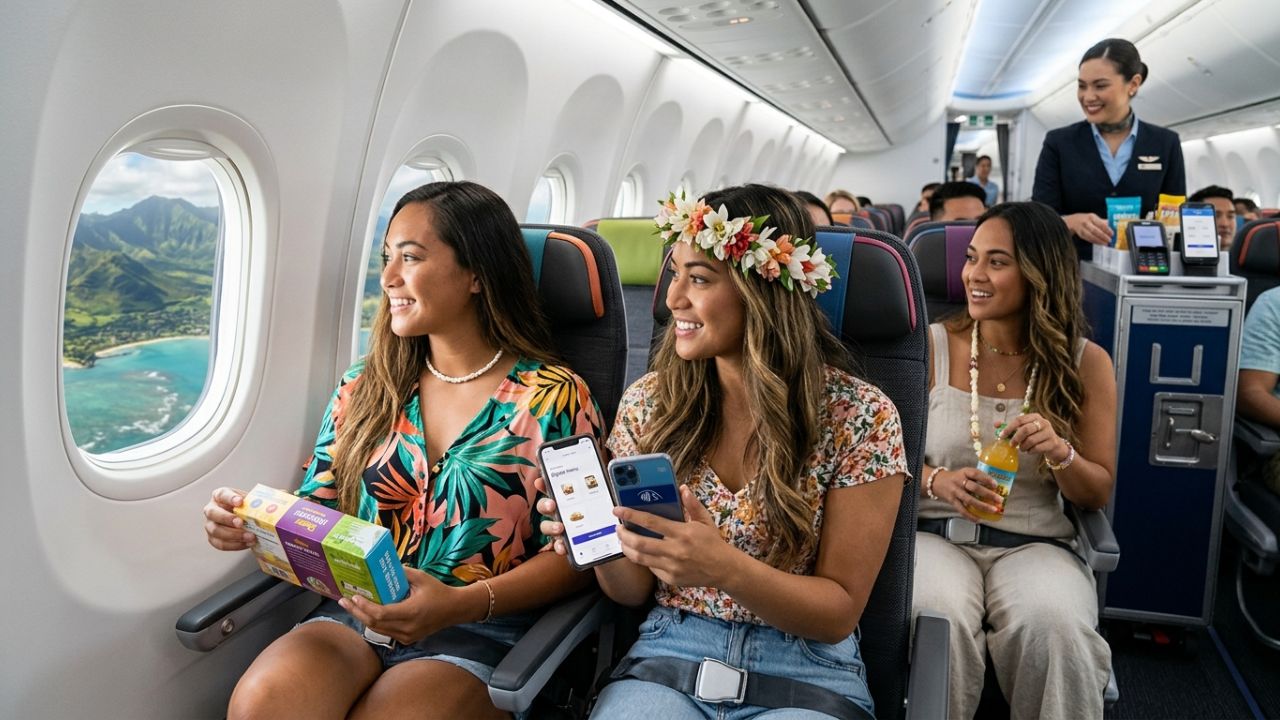
Image generated by AI
In a massive structural pivot designed to aggressively combat the soaring operational costs that frequently trigger compounding travel chaos and sudden flight cancellations across the industry, Hawaiian Airlines has confirmed the termination of its complimentary economy meal service on most flights starting next month. Reported on June 19, 2026, this highly controversial cost-cutting measure marks a definitive end to one of the last remaining legacy perks in domestic aviation. As airlines face intense, sustained pressure from crippling fuel costs, massive inflation-driven supply chain expenses, and highly complex catering logistics, carriers are desperately unbundling their services to maintain base profitability. This major policy shift leaves standard passengers with fewer onboard amenities and significantly less buffer when inevitable airport disruptions strike, fundamentally altering the transpacific passenger experience and dominating today's most crucial headline in breaking airline news and essential global aviation updates.
By introducing direct passenger coordination and dynamic scheduling backups, the regional aviation hubs target growing passenger demand across vital commerce sectors. The choice to coordinate flight departures in phases helps to manage gate capacity, supporting the country's broader regional transportation network.
Context: The Unbundling Survival Strategy
For the global tourism and aviation industry, the rapid removal of free economy meals by Hawaiian Airlines serves as a stark, highly visible warning regarding the extreme financial pressures suffocating modern carriers.
Historically, Hawaiian Airlines differentiated itself from massive low-cost carriers by offering complimentary meal service in its economy cabins, an amenity considered standard for long-haul island routes. However, the aviation industry is currently battling a severe operational squeeze. Massive increases in aviation fuel costs, soaring labor demands, and the highly complex, expensive logistics of sourcing and packaging onboard food have made complimentary dining mathematically unsustainable. To prevent total financial destabilization—which inevitably leads to mass layoffs, sudden route suspensions, and systemic travel chaos—Hawaiian Airlines is forced to adopt the global trend of unbundled fare structures. Under this brutal but necessary model, the base ticket price covers purely the physical transportation; every other amenity, from baggage to seat selection to food, is aggressively monetized, fundamentally rewriting the passenger contract.
To view live flight schedules, verify the active buy-on-board status of your specific transpacific itinerary, or to track potential route disruptions, travelers must consult official aviation directories. For direct updates regarding how this massive corporate restructuring impacts current flight cancellations out of major hubs like Honolulu and Los Angeles, travelers should aggressively utilize the official portals of Hawaiian Airlines. To explore live flight tracking and monitor the exact severity of the cascading bottlenecks across competitor hubs navigating similar cost pressures, passengers can consult the official FlightAware tracking service.
Section-Wise Breakdown: The New Service Reality
The Next-Month Policy Rollout
Under the revised corporate policy taking effect next month, Hawaiian Airlines will completely discontinue complimentary meal service in the economy class across the vast majority of its route network. Passengers who previously relied on included food for long-haul transpacific journeys will now be forced into a "buy-on-board" ecosystem. The airline will offer alternative onboard food options heavily dependent on the specific route length and aircraft type, primarily consisting of paid pre-packaged meals, snacks, and beverages.
Premium Cabins and Short-Haul Operations
Airlines fiercely protect their highest-yield passengers to ensure financial stability. Consequently, premium cabins (First and Business Class) are entirely shielded from these cuts and will completely retain their existing, elevated meal services. For standard economy passengers on inter-island short-haul flights, the shock will be minimal, as those routes have already operated with highly limited complimentary food services for years. The massive impact of this policy shift falls squarely on the standard long-haul economy traveler crossing the Pacific.
Navigating Highly Competitive Markets
Hawaiian Airlines operates in an incredibly volatile, hyper-competitive environment, battling both massive full-service legacy carriers and aggressive low-cost airlines. To remain competitive on entry-level pricing while maintaining strict operational efficiency, the airline must align with industry standards where economy-class dining is no longer universally included. This structural shift allows the airline to generate critical ancillary revenue, creating a financial buffer against the macroeconomic shocks that routinely cause systemic travel chaos.
Technical Roster: Inflight Service Restructuring Data
To ensure absolute factual accuracy regarding the specific policy changes, the targeted cabins, and the exact operational timeline, the following matrix details the verified service update parameters:
Hawaiian Airlines Inflight Service Update Matrix
| Service Element | Verified Policy (Effective Next Month) |
|---|---|
| Economy Meals | Complimentary service discontinued on most routes |
| New Dining Model | Buy-on-board (paid snacks, beverages, and meals) |
| Premium Cabins | Complimentary meal services strictly retained |
| Short-Haul Routes | Existing limited food service structure continues |
| Fare Structure | Accelerated shift toward unbundled base pricing |
Data strictly reflects the verified operational restructuring of Hawaiian Airlines, highlighting the termination of free economy meals and the transition to a rigid buy-on-board revenue model.
Passenger Impact: The Threat of Onboard Scarcity
For the millions of vacationers and local residents heavily relying on Hawaiian Airlines for transpacific transit, the sudden removal of complimentary meals introduces a highly stressful new dynamic to long-haul travel.
The immediate passenger impact of this unbundled model is the extreme vulnerability of onboard food supplies. Travelers will now need to aggressively plan ahead before departure. Because airlines utilize highly restrictive catering logistics for buy-on-board systems to prevent food waste, the availability of paid meals varies wildly depending on flight duration, aircraft configuration, and supply constraints. If a passenger fails to pre-purchase a meal or board with their own food, they risk spending a 6-hour flight entirely without sustenance if the onboard supply sells out in the front rows. Furthermore, when unexpected airport disruptions strike—such as a 4-hour tarmac delay due to severe weather—passengers trapped on an aircraft with a strictly monetized, low-inventory food system will experience severe physical discomfort, massively amplifying the psychological stress of the travel chaos.
Industry Analysis: The Unbundled Reality
Aviation and financial industry analysts view the termination of Hawaiian Airlines' free economy meals as the definitive death of the "all-inclusive" domestic airline ticket, proving that carriers will brutally slash non-essential services to survive macroeconomic headwinds.
Analysts note that meal service represents a massive operational cost due to the highly complex logistics of sourcing, preparation, packaging, and onboard storage. By eliminating this expense, Hawaiian Airlines streamlines its catering operations and unlocks massive ancillary revenue potential. This approach allows the airline to offer more competitive entry-level fares on search engines, masking the true cost of travel. Industry experts emphasize that while passengers may view this as a severe reduction in service value, airlines have correctly calculated that consumers will overwhelmingly prioritize the cheapest possible base fare over bundled amenities, forcing the entire global aviation market to adopt this hyper-efficient, stripped-down operational model.
Actionable Advice for Navigating Unbundled Flights
Because passengers cannot reverse an airline's massive corporate cost-cutting measures, you must execute this strategic survival checklist to actively manage your transpacific itinerary and avoid onboard deprivation during travel chaos:
- Never Rely on Buy-On-Board Inventory: Do not board a 6-hour Hawaiian Airlines flight assuming you can simply purchase a sandwich. Airlines load highly limited buy-on-board inventory to save aircraft weight and prevent food spoilage. If you are seated in the back of the economy cabin, the food will likely be sold out before the trolley reaches you. Always bring substantial, non-liquid food through TSA security to guarantee your own supply.
- Audit Your Fare Class: When booking your next flight, aggressively compare the true cost of your travel. While the unbundled base fare may look incredibly cheap, calculate the total cost once you add mandatory baggage fees, seat selection, and airport food purchases. In many cases, paying slightly more for a premium economy ticket on a competitor airline that still includes meals and baggage yields a better overall value.
- Prepare for Tarmac Delays: Unbundled airlines provide zero complimentary buffer during severe airport disruptions. If your flight is delayed on the tarmac for hours due to air traffic control or severe weather, the flight attendants are not obligated to distribute free meals. Carry an empty water bottle to fill after security and pack high-protein snacks; this ensures you remain hydrated and fed when operational travel chaos paralyzes the aircraft.
FAQ: Hawaiian Airlines Economy Meal Cuts
When will Hawaiian Airlines stop serving free meals in economy?
The airline has officially confirmed that complimentary meal service in the standard economy cabin will be discontinued on most routes starting next month.
Will I still get free food if I fly First Class?
Yes. Premium cabins, including First and Business Class, are completely shielded from these corporate cost-cutting measures and will retain their full, complimentary meal services.
What food options will be available for economy passengers?
Hawaiian Airlines is shifting to a "buy-on-board" model, offering a limited selection of paid meals, snacks, and beverages that passengers can purchase, subject to route length and onboard inventory availability.
The Reality of Navigating Hyper-Efficient Aviation
The massive decision by Hawaiian Airlines to aggressively terminate free economy meals proves definitively that the modern aviation industry is ruthlessly focused on unbundled efficiency to survive crushing operational costs. By prioritizing cheap base fares and monetizing every onboard amenity, the carrier is successfully future-proofing its balance sheet against the macroeconomic shocks that trigger massive route suspensions. Yet, as travelers nervously navigate this stripped-down service environment, they must accept a critical new reality: securing a comfortable journey requires aggressive pre-flight planning, a total refusal to rely on limited onboard inventory, and the tactical awareness that when sudden travel chaos strikes, the airline will no longer provide a complimentary safety net.
Key Takeaways
- Service Termination: Hawaiian Airlines will officially end its complimentary meal service for economy-class passengers on most routes starting next month.
- The New Paid Model: The airline is transitioning to a strictly monetized "buy-on-board" system, offering paid snacks, beverages, and meals based on flight logistics.
- Premium Cabins Protected: Passengers flying in premium cabins (First/Business) will continue to receive their standard complimentary inflight dining.
- Driven by Operational Costs: The massive policy shift is a direct response to soaring aviation fuel prices, inflation, and the heavy logistical costs of onboard catering.
- Unbundled Vulnerability: Passengers must now aggressively pack their own food to avoid severe onboard deprivation, especially during unexpected airport disruptions and tarmac delays.
Related Travel Guides
Massive Travel Chaos Paralyzes Chicago O'Hare with 1,425 Disruptions
Disclaimer
This article is for informational and educational purposes only. It does not constitute legal, financial, or professional advice. While we strive to provide accurate and up-to-date information, travel policies, regulations, and conditions change rapidly. Always verify information with official sources before making travel decisions. Nomad Lawyer makes no representations about the accuracy, reliability, completeness, or suitability of the information provided. Readers should consult qualified professionals for advice specific to their circumstances. The views expressed in this article are those of the author and do not necessarily reflect the views of Nomad Lawyer.
Kunal K Choudhary
Co-Founder & Contributor
A passionate traveller and tech enthusiast. Kunal contributes to the vision and growth of Nomad Lawyer, bringing fresh perspectives and driving the community forward.
Learn more about our team →