
Hawaii Island-Hopping Guide: New 50-Minute Airport Check-In Rules, HNL Terminal Shifts, and Multi-Island Logistics

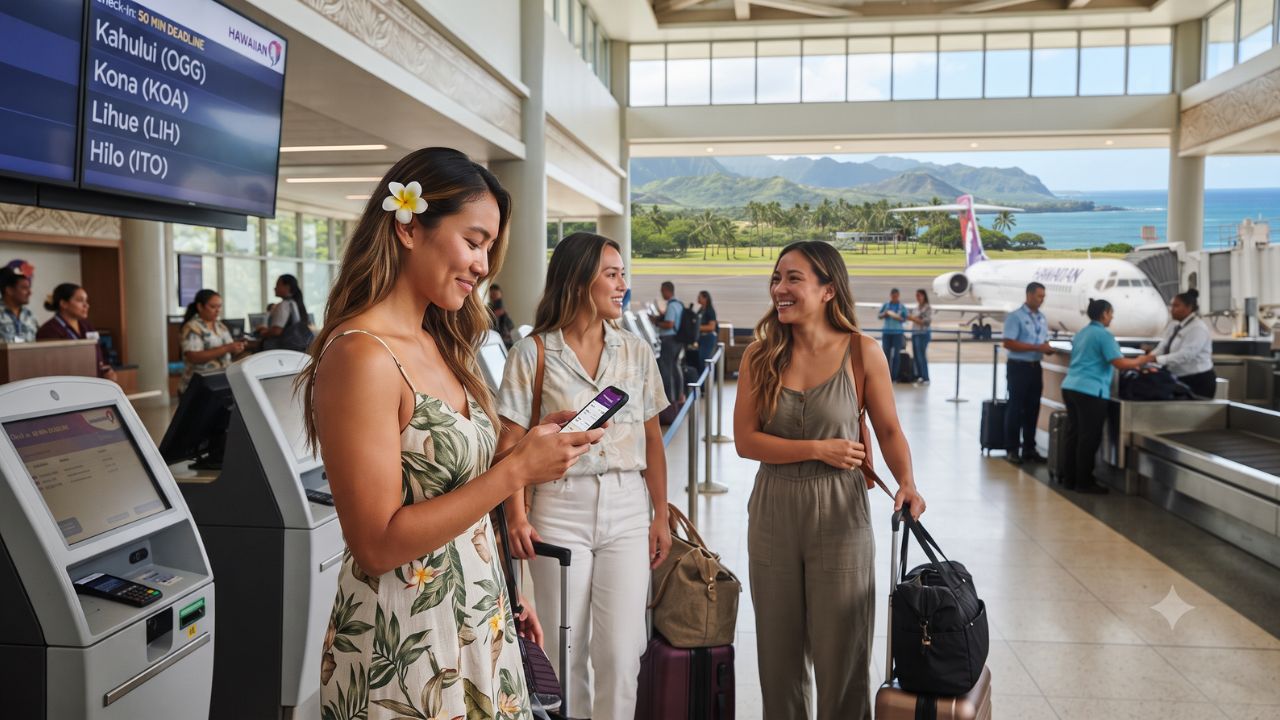
While island-hoppers once treated flights between Honolulu, Maui, and Kauai as casual 30-minute commuter hops, Hawaiian Airlines has officially enforced a strict 50-minute check-in and bag-drop deadline—a 66.7% increase in mandatory lead time. Paired with the relocation of all Hawaiian international departures to Terminal 2, Lobby 4 at Daniel K. Inouye International Airport, exploring multiple Hawaiian islands now demands disciplined schedule planning as statewide tourism spending reaches $21.75 billion.
The operational update introduced by the Hawaii Department of Transportation Airports Division and Hawaiian Airlines addresses heavy baggage logistics and supports on-time departures across an interisland network handling over 21 million annual passengers at Honolulu alone. The adjustment also aligns with fleet preparations surrounding the carrier's transition toward Boeing 737 aircraft on high-density interisland corridors. For travelers designing multi-island itineraries through resources like Go Hawaii, understanding these terminal shifts and check-in buffers is essential to prevent missed connections.
Breaking Down the 50-Minute Rule and HNL Terminal Shifts
The primary rule change affects passengers traveling on Hawaiian Airlines flights between Neighbor Islands (Oahu, Maui, Kauai, and Hawaii Island):
- The 50-Minute Neighbor Island Cutoff: Passengers must complete check-in and deposit checked baggage at least 50 minutes prior to scheduled departure, replacing the previous 30-minute cutoff. Arriving at the counter 49 minutes before takeoff will result in denied baggage acceptance.
- HNL Terminal Consolidation: Effective October 3, 2026, all Hawaiian Airlines international check-in operations—including non-stop Japan routes—relocated permanently from Terminal 1 to Terminal 2, Lobby 4.
- Neighbor Island Flights Remain in Terminal 1: Hawaiian Airlines and Alaska Airlines interisland departures continue operating out of Terminal 1.
- Recommended Airport Arrival Times: Daniel K. Inouye International Airport recommends arriving 90 minutes before interisland flights and at least two hours before overseas transpacific departures, with an additional 30-minute buffer required when returning rental vehicles.
Hawaii Five-Year Tourism Trajectory and Island Distribution
The need for tighter airport timing reflects Hawaii's remarkable post-pandemic tourism resurgence, with visitor spending expanding by 65.4% over four years:
| Calendar Year | Total Visitor Arrivals | Annual Percentage Change | Total Visitor Spending | Economic Context |
|---|---|---|---|---|
| 2021 | 6,777,760 | Baseline | $13.15 billion | Initial recovery phase |
| 2022 | 9,233,983 | +36.3% | $19.80 billion | Broad domestic rebound |
| 2023 | 9,644,519 | +4.4% | $20.78 billion | Transpacific capacity normalization |
| 2024 | 9,701,499 | +0.6% | $20.72 billion | Pre-pandemic volume parity |
| 2025 | 9,642,991 | -0.6% | $21.75 billion | High-yield spending peak |
| 2026 (Forecast) | 9,730,000 | +0.9% | Projected growth | Strong regional demand |
| 2027 (Forecast) | 9,820,000 | +0.9% | Projected expansion | Record visitor target |
Island-by-island data for 2025 illustrates how visitor volumes are distributed across the archipelago:
- Oahu: Captured 5,679,047 visitors (down 2.0% from 5,794,854 in 2024), maintaining its position as the state's commercial and international gateway.
- Maui: Rebounded strongly with 2,516,163 visitor arrivals—a 7.0% increase over 2024's ~2.35 million baseline—with visitor spending surging 12.7% to $5.97 billion.
- Hawaii Island (Big Island): Welcomed 1,752,589 visitors (up 1.0% from 1,735,380 in 2024), driven by outdoor recreation around Kona and Hilo.
- Kauai: Maintained steady high-value resort occupancy across Poʻipū and the North Shore.
What Makes Interisland Travel Unique
Unlike mainland road trips where drivers can easily adjust timelines, Hawaii's geography requires strict maritime or aviation hops. Daniel K. Inouye International Airport spans 4,790 acres with four active runways, including the famous 12,000-foot offshore Reef Runway.
Moving between islands allows travelers to experience wildly diverse microclimates within a 35-minute flight. One morning you can stand beneath the royal architecture of ʻIolani Palace in downtown Honolulu, and by afternoon you can walk among volcanic craters in Hawaiʻi Volcanoes National Park on Hawaii Island or view dramatic sea cliffs along Kauai's Nāpali Coast.
Visitor Insider Tips
Executing an unhurried multi-island holiday requires smart logistics and local travel awareness:
- Never Book Same-Day Tight Connections Upon International Arrival: If arriving on an overseas flight into Honolulu, do not schedule an interisland connection with less than three hours of transfer time. You must clear US Customs and Border Protection, collect international baggage in Terminal 2, and transfer on foot or via the Wiki Wiki shuttle to Terminal 1.
- Opt for Morning Interisland Departures: Trade winds and convective cloud build-ups over island mountain ranges tend to increase by mid-afternoon. Booking flights before 10:00 AM ensures calmer flying conditions and fewer cascading gate delays.
- Base Yourself Efficiently by Island: On Oahu, base yourself in Waikīkī for walkable beaches and dining, or downtown for cultural museums. On Maui, choose West Maui (Kāʻanapali) for resort relaxation or Kahului for early-morning Road to Hāna departures. On Hawaii Island, split stays between sunny Kona and lush, waterfall-rich Hilo.
- Eat Local at Neighborhood Plate Lunch Counters: Skip resort buffet lines and seek out authentic Hawaiian culinary staples. Look for traditional poke, laulau (steamed pork in taro leaves), kalua pig, saimin noodle soup, and warm malasadas from historic neighborhood bakeries in Kapahulu and Wailuku.
Cultural and Environmental Context
With nearly 10 million annual visitors traversing the islands, responsible travel (mālama) is essential to preserving Hawaii's fragile natural resources and indigenous heritage. Interisland travelers are encouraged to respect native Hawaiian cultural sites (heiau), stay strictly on designated park trails, and refrain from removing volcanic rocks or touching endangered Hawaiian monk seals (ʻīlioholoikauaua) and green sea turtles (honu).
Supporting community-led agriculture—such as purchasing produce at regional farmers markets in Upcountry Maui or touring traditional taro (kalo) farms on Kauai—keeps tourism dollars directly circulating within local family economies.
FAQ: Hawaii Airport Travel Rules 2026
What is the new check-in cutoff for Hawaiian Airlines interisland flights? Passengers traveling on Neighbor Island flights must check in and drop checked bags at least 50 minutes prior to scheduled departure.
Where do Hawaiian Airlines international flights depart from at Honolulu Airport? All Hawaiian Airlines international departures and Japan flights check in and depart from Terminal 2, Lobby 4.
How early should I arrive at Honolulu Airport for an interisland flight? Daniel K. Inouye International Airport officially recommends arriving 90 minutes before scheduled interisland departures, and at least two hours before overseas flights.
How many visitors traveled to Hawaii in 2025? Hawaii hosted 9,642,991 visitors in 2025, generating a record $21.75 billion in direct visitor spending.
Travelers who embrace the unhurried spirit of the islands and plan their airport transfers with generous buffers will enjoy an authentic, seamless Hawaiian journey.
Related Travel Guides
Disclaimer
This article is for informational and educational purposes only. It does not constitute legal, financial, or professional advice. While we strive to provide accurate and up-to-date information, travel policies, regulations, and conditions change rapidly. Always verify information with official sources before making travel decisions. Nomad Lawyer makes no representations about the accuracy, reliability, completeness, or suitability of the information provided. Readers should consult qualified professionals for advice specific to their circumstances. The views expressed in this article are those of the author and do not necessarily reflect the views of Nomad Lawyer.
Raushan Kumar
Founder & Lead Developer
Full-stack developer with 11+ years of experience and a passionate traveller. Raushan built Nomad Lawyer from the ground up with a vision to create the best travel and law experience on the web.
Learn more about our team →