
Abu Dhabi's 37km Coastal Expressway: How the Al Dhafra to Al Hudayriyat Highway Will Transform Island and Desert Travel
Abu Dhabi unveils a 37km coastal bypass featuring 7km of marine bridges and eco-tunnels, linking the adventure shores of Al Hudayriyat directly with the desert expanses of Al Dhafra.

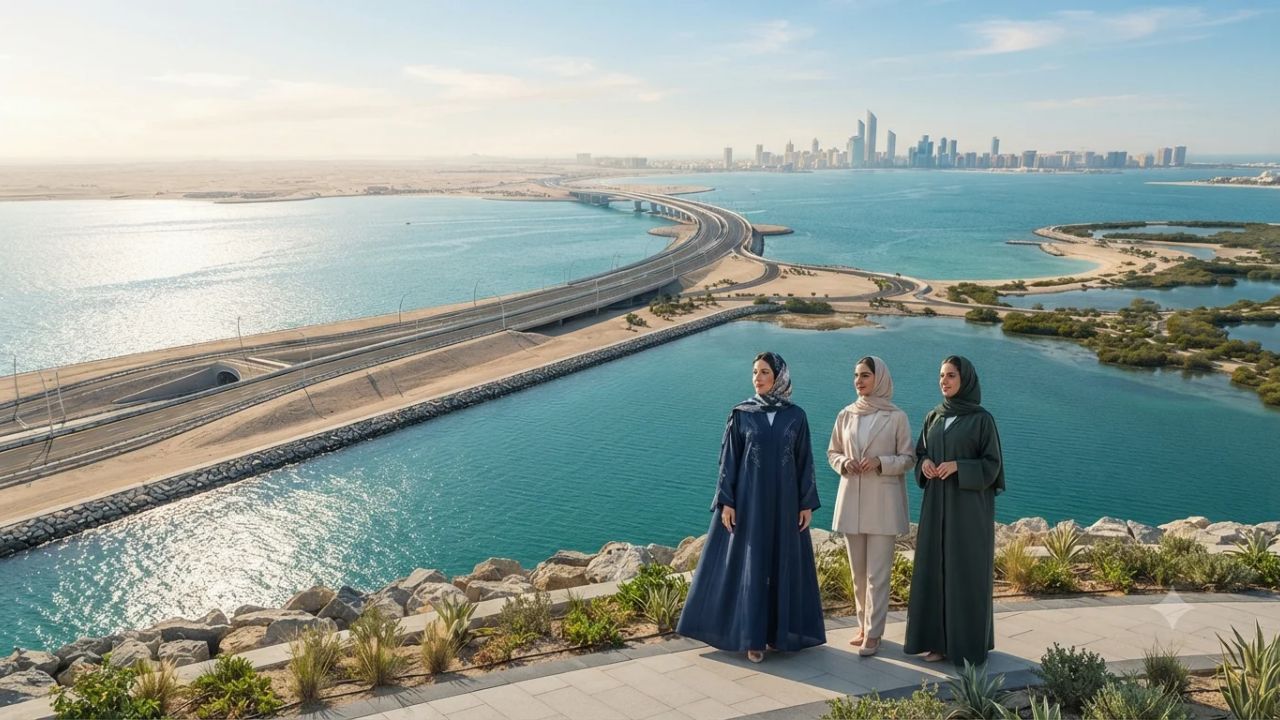
While most international visitors know Abu Dhabi through the glass towers of downtown and the grand architecture of Saadiyat Island, a planned 37-kilometer coastal expressway is set to redraw the capital's geographic map across the Persian Gulf. Outlined by the Department of Municipalities and Transport (DMT), the proposed multi-lane corridor will connect the adventure beaches of Al Hudayriyat Island directly with the E11 highway at Al Nouf, traversing a chain of pristine offshore isles including Halat Al Bahrani, Al Futaisi, and Al Aryam. Designed with three lanes in each direction, 7 kilometers of elevated marine bridges, 4 kilometers of causeways, and a dedicated marine tunnel, the bypass allows travelers to journey between the western desert expanses of Al Dhafra and the capital without entering congested downtown thoroughfares.
The infrastructure announcement unfolds against unprecedented tourism momentum across the emirate. Official figures published by the Department of Culture and Tourism – Abu Dhabi revealed that the capital welcomed 26.6 million total visitors in 2025, generating AED 9.1 billion in hotel revenues—a 19.5 percent surge from 2024 with an average hotel occupancy rate of 81 percent. Al Dhafra alone hosted 147,900 registered guests, marking a 3 percent annual rise. As the emirate advances its Tourism Strategy 2030 targeting 39.3 million annual visitors and an AED 90 billion economic contribution, understanding how future transit corridors interface with pristine marine habitats is fundamental for forward-looking travelers.
Infrastructure Blueprint: The 37km Coastal Route & Tourism Metrics
| Project Dimension / Statistical Indicator | Recorded Value & Metric | Strategic Function & Traveler Significance |
|---|---|---|
| Total Route Length | 37 Kilometers | Seamless coastal bypass connecting Al Hudayriyat to the E11 at Al Nouf |
| Marine Structures | 7km Marine Bridges + 4km Causeways + 1 Tunnel | Elevated crossings preserving coastal hydrology across offshore islands |
| Highway Capacity | 3 traffic lanes in each direction | Bypasses central city arterial traffic for western regional transit |
| Mid-Island Parkway (Phase One) | AED 2.85 Billion (2027 completion target) | Companion transport scheme enhancing central island connectivity |
| Abu Dhabi Visitor Volume (2025) | 26.6 Million total visitors / 5.9M hotel guests | Record leisure and business travel demand across the emirate |
| Tourism Strategy 2030 Target | 39.3 Million visitors / AED 90B Tourism GDP | Long-term roadmap creating 178,000 new hospitality and transport jobs |
How the Coastal Link Redefines Regional Excursions
Currently, journeys originating from the luxury glamping sites and cycling circuits of Al Hudayriyat Island toward the sweeping sand dunes of the Empty Quarter (Rub' al Khali) or the historic oasis settlements of Al Dhafra require routing through central highway interchanges. The planned 37km link establishes an uninterrupted western gateway, opening future potential for streamlined resort transfers and specialized self-drive expeditions along the coastline.
The project runs parallel to, but operates on an independent timetable from, the Mid-Island Parkway megaproject, whose AED 2.85 billion first phase is targeted for completion in 2027. While the coastal bypass remains in detailed engineering and environmental planning phases, it will ultimately integrate with Abu Dhabi's broader network of smart road corridors, linking the cultural districts of Saadiyat and Yas Island with outer eco-tourism sanctuaries.
However, travelers must note that the construction of marine bridges crossing Halat Al Bahrani, Al Futaisi, and Al Aryam does not automatically open private or protected islands to commercial foot traffic. Many of these offshore landmasses remain ecologically sensitive conservation zones, requiring verified tour operator permits or institutional permissions for environmental research and maritime visits.
Experiential Contrasts: Al Hudayriyat to Al Dhafra
The two anchor points of this future expressway showcase the extraordinary diversity of the Emirati landscape. Al Hudayriyat Island has evolved into Abu Dhabi’s premier sports and outdoor lifestyle district. Here, dedicated cycling tracks wrap around white sand beaches, OCR obstacle courses host international athletes, and Circuit X water parks cater to active families overlooking the skyline.
In stark contrast, Al Dhafra comprises over two-thirds of the Abu Dhabi emirate, characterized by towering dunes that reach over 300 meters in the Liwa Desert, ancient date palm groves, and deserted coastlines where traditional dhow building and camel breeding continue unbroken. Visiting Al Dhafra feels like stepping into the ancestral heart of the Arabian Peninsula, where bedouin hospitality thrives in tranquil desert resorts and remote coastal fishing villages.
Visitor Insider Tips
- Explore Al Hudayriyat’s Trail 30 at Sunset: Rent a high-performance road bicycle at the Hudayriyat cycling hub and ride the dedicated 5km or 10km lighted loops during early evening hours when sea breezes cool the asphalt.
- Drive the E11 West to Mirfa and Sir Bani Yas: While awaiting the new coastal bypass, take the current E11 highway west to Jebel Dhanna to catch the passenger catamaran ferry to Sir Bani Yas Island, home to over 17,000 free-roaming Arabian oryx, gazelles, and cheetahs.
- Register for the Darb Toll Gate System: If renting a vehicle in Abu Dhabi, confirm that your rental agency has linked the car to the Darb automated toll system to avoid automated fines when passing highway gantries during weekday peak hours (07:00–09:00 and 17:00–19:00).
- Time Liwa Desert Journeys for Winter Mornings: When driving south from the coast into the Liwa Oasis to explore Moreeb Dune (one of the world's tallest sand dunes at 300 meters), depart before dawn to experience shifting sunrise colors over the sand without extreme afternoon heat.
- Carry Local Currency for Heritage Markets in Madinat Zayed: While credit cards are widely accepted across Abu Dhabi city, small camel auctions and traditional date souks throughout Al Dhafra’s interior prefer cash dirhams (AED).
Cultural and Environmental Context
The design of the 37km coastal expressway incorporates rigorous environmental protocols to safeguard fragile coastal habitats. The alignment borders the Bul Syayeef Marine Protected Area, a globally recognized wetland under the Ramsar Convention managed in coordination with the Environment Agency – Abu Dhabi. These shallow coastal channels and mangrove lagoons harbor breeding colonies of greater flamingos, critically endangered hawksbill turtles, and one of the world's largest populations of Indian Ocean humpback dolphins and dugongs.
To preserve the delicate marine hydrology, the Department of Municipalities and Transport has mandated elevated marine bridges over solid embankments where possible, accompanied by designated fauna movement corridors and environmental monitoring stations. Furthermore, the route respects the ancestral heritage of the Bani Yas tribe, whose historic seasonal migrations between pearling camps on the coast and date plantations in the Liwa Oasis shaped the cultural foundations of modern Abu Dhabi. By pairing advanced civil engineering with wetland conservation, the emirate demonstrates how major infrastructure can coexist with irreplaceable marine ecology.
FAQ: Abu Dhabi Coastal Route & Regional Travel 2026
Is the 37km Abu Dhabi coastal route currently open to drivers?
No. The coastal expressway between Al Hudayriyat Island and Al Dhafra is a planned infrastructure project announced by DMT, with construction timelines and official opening dates to be confirmed.
Does the Mid-Island Parkway 2027 completion date apply to this coastal road?
No. The 2027 completion target applies specifically to the AED 2.85 billion Phase One of the Mid-Island Parkway, which is a separate urban transit project.
Can tourists visit all the islands crossed by the planned bridges?
No. Bridges crossing islands such as Al Futaisi and Al Aryam are designed for through-transit; access to specific protected or private islands remains subject to government conservation regulations.
What is the primary airport serving Abu Dhabi?
Zayed International Airport (AUH) serves as the primary international gateway, offering direct highway connections to Al Hudayriyat Island in approximately 25 minutes.
From the cycling tracks of Al Hudayriyat to the tranquil dunes of Al Dhafra, Abu Dhabi's ambitious coastal vision bridges the thrill of modern island life with the timeless majesty of the desert.
Related Travel Guides
- Hong Kong to Hefei Direct: How HK Express Unlocks Anhui's Imperial Heritage
- The Battle for European Skies: Franco-German Aviation Alliances and Green Fuel Rules
- The Great US Airline Loyalty War: Inside United's $7,000 Status Match Blitz
- The UK-Singapore Travel Corridor: £28 Billion Trade Axis and Bleisure Routes
Disclaimer
This article is for informational and educational purposes only. It does not constitute legal, financial, or professional advice. While we strive to provide accurate and up-to-date information, travel policies, regulations, and conditions change rapidly. Always verify information with official sources before making travel decisions. Nomad Lawyer makes no representations about the accuracy, reliability, completeness, or suitability of the information provided. Readers should consult qualified professionals for advice specific to their circumstances. The views expressed in this article are those of the author and do not necessarily reflect the views of Nomad Lawyer.
Naina Thakur
Contributor & Travel Specialist
Travel enthusiast and legal writer covering visa regulations, responsible tourism, and cultural journeys across global destinations.
Learn more about our team →