
Harry Reid Delay Proposal Rattles Spring 2026 Travel Plans
Las Vegas travelers face mounting spring break uncertainty as Harry Reid International Airport implements delay-management protocols amid federal funding disputes and construction constraints impacting 2026 travel.

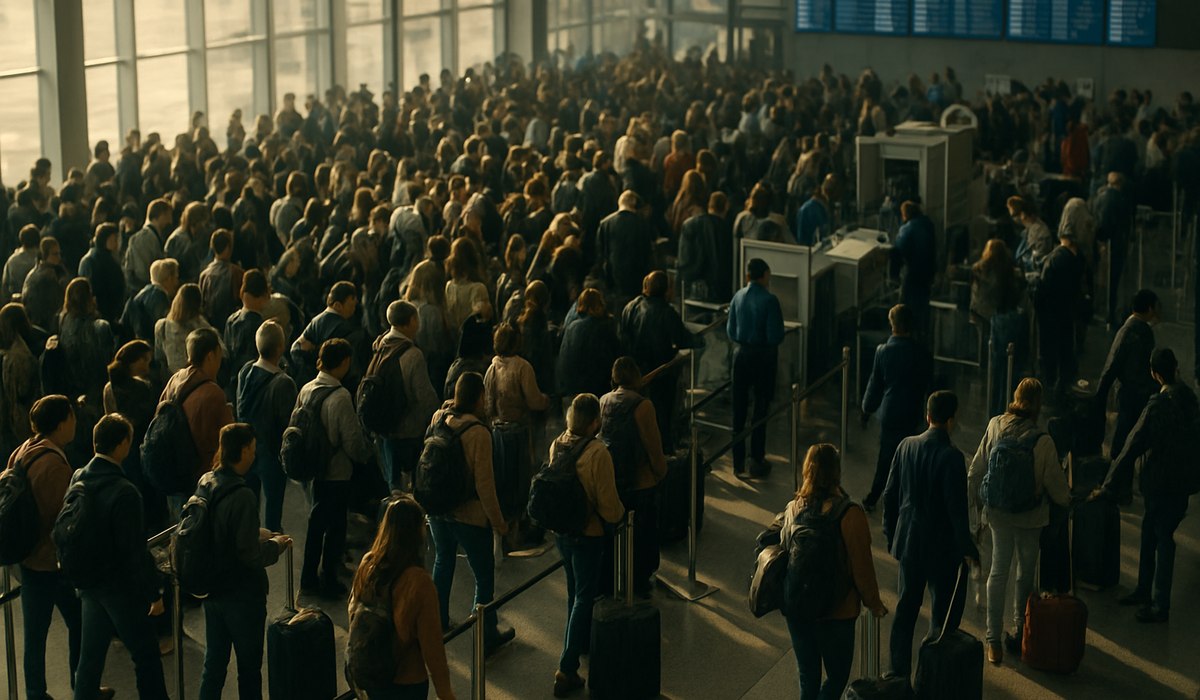
Image generated by AI
Spring Break Travelers Confront New Delays at Harry Reid International
Harry Reid International Airport is implementing an aggressive delay-management proposal that threatens to compound travel disruptions during peak spring 2026 season. The new operational framework coincides with federal funding disputes affecting Transportation Security Administration staffing, concurrent highway construction near airport access routes, and rising passenger volumes. Industry analysts warn that Las Vegas travelers may face longer security queues, extended ground delays, and missed connections as the airport formalizes "controlled queuing" protocols during morning (6–9 a.m.) and evening (4–7 p.m.) departure waves.
The Proposal: Formalizing Delays During Peak Travel
Harry Reid International Airport's latest operational initiative centers on sequencing flight delays and managing congestion during peak departure banks. Airport planning documents reveal that the facility experiences its most severe bottlenecks during early-morning and late-afternoon windows when multiple carriers launch simultaneous departure waves.
The new framework would institutionalize ground delay programs and departure metering when security checkpoints or airfield capacity become constrained. Aviation planners characterize the proposal as a method to prevent knock-on disruptions from cascading across regional and national networks. However, the terminology around "planned delay windows" and "controlled queuing" has alarmed spring break travelers who perceive the measure as an institutionalized slowdown precisely when leisure travel peaks.
Early-2026 performance data shows Harry Reid routinely recorded mid-teens minute delays on key routes in February and March. February and March security screening times occasionally extended beyond published service levels. The airport's gate and runway capacity remain limited relative to growing passenger demand, forcing planners to adopt more formal delay protocols.
Timing Troubles: Why Spring 2026 Is Particularly Vulnerable
Spring break represents one of the year's busiest leisure travel periods, with families, students, and vacation travelers converging on Las Vegas and connecting through Harry Reid. The delay proposal's April 2026 rollout collides with peak-season demand, amplifying traveler anxiety about missed connections and extended layovers.
National travel coverage and social media commentary reflect heightened sensitivity to operational changes. Winter 2026 brought multiple federal shutdowns, temporary airspace closures in other regions, and ongoing budget debates affecting aviation security. After months of headlines about federal uncertainty, travelers interpret any airport operational change as a potential new disruption. Las Vegas community forums reveal mixed reports—some travelers report normal security lines on certain days, while others cite frustrating sporadic backups attributed to federal funding volatility.
The timing compounds existing vulnerabilities. Many spring break itineraries were finalized months ago, before news of the delay proposal emerged, leaving travelers with limited flexibility to reschedule.
Federal Funding Disputes Compound Operational Strain
The Harry Reid delay proposal unfolds against an unstable federal budget backdrop. Early-2026 federal government shutdowns, including one specifically affecting the Department of Homeland Security, prompted widespread warnings about potential staffing reductions and longer screening times at Transportation Security Administration checkpoints nationwide.
National news outlets documented wait times stretching to several hours at major aviation hubs as TSA staff worked without pay or under constrained schedules. While Harry Reid generally avoided the worst spikes, the broader climate has made travelers acutely sensitive to any operational framework involving delays or security processes.
Ongoing Washington discussions about future homeland security budgets and aviation security funding have fueled questions about airport resilience. Aviation labor groups and security experts, highlighted in regional coverage, warn that reduced budgets could delay equipment upgrades and leave screening operations vulnerable to traffic surges. Public comments suggest that another protracted political standoff later in 2026 could severely strain operations at busy leisure gateways like Harry Reid.
For spring travelers finalizing plans, this federal context matters significantly. Even if immediate operational changes remain modest, the perception of risk influences flight-booking decisions and travel timing.
Road Construction Constrains Ground Access
Additional pressure comes from road work near Harry Reid's access routes. Transportation alerts describe rolling work zones and safety barricades around key terminal approaches, advising drivers to budget extra time reaching the airport over the coming weeks.
Lane reductions on major highways serving the airport create ground-level bottlenecks that compound air-side delays. Construction-related constraints are not new for Harry Reid—federal aviation construction reports list ongoing projects in and around the airfield through mid-2026. These projects affect overnight aircraft parking, ground handling capacity, and service vehicle access. While infrastructure improvements support long-term operations, their timing during spring break season exacerbates congestion.
Travelers arriving by rental car or rideshare services should expect 15–20 minute delays on terminal access routes. Public transit options remain limited, making ground transportation decisions critical for connecting passengers on tight itineraries.
What This Means for Travelers in Spring 2026
Immediate impacts of the Harry Reid delay proposal include:
- Extended security screening times during peak morning (6–9 a.m.) and evening (4–7 p.m.) windows, potentially reaching 45–60 minutes on busy days
- Ground delays of 15–30 minutes for departing aircraft as the airport implements formal delay programs to manage congestion
- Ground transportation delays of 15–20 minutes for airport access due to concurrent road construction
- Missed connection risk for passengers with tight layovers in Las Vegas
- Reduced gate availability as overnight aircraft parking constraints persist through mid-2026
- Staffing variability at TSA checkpoints due to ongoing federal budget uncertainty
Spring break travelers should arrive 3 hours before domestic flights and 4 hours before international departures. Check real-time departure information on FlightAware before heading to the airport. Monitor TSA PreCheck availability—expedited screening lanes typically avoid worst congestion. If your flight departs during 6–9 a.m. or 4–7 p.m. peak windows, expect delays and build extra connection time into multi-leg itineraries.
Real-Time Monitoring and Passenger Rights
Travelers can track Harry Reid departure performance through FlightAware and official Harry Reid International Airport notifications. The FAA publishes current ground delay program information and airspace status. For passenger rights information, consult the US Department of Transportation's Air Consumer Protection Division, which provides guidance on compensation for schedule changes, oversales, and delays exceeding 3 hours.
Airlines operating at Harry Reid—including Southwest Airlines, United, American, Delta, and Frontier—have obligation to disclose known delays at booking and provide rebooking options if schedule changes exceed standard policies. Passengers facing cancellations due to the delay proposal may be entitled to compensation or alternative routing, though domestic policies vary by carrier and delay cause.
Key Data: Harry Reid Operations and Spring 2026 Outlook
| Metric | Value | Impact |
|---|---|---|
| Peak Departure Windows | 6–9 a.m., 4–7 p.m. | Highest vulnerability for delays and missed connections |
| Average February-March Delays | 12–18 minutes | Expected to increase with new delay-management protocols |
| Typical Security Screening Time (peak) | 45–60+ minutes | May extend beyond current levels during spring break |
| Road Construction Duration | April–June 2026 | Ground access delays of 15–20 minutes likely |
| Spring Break Passenger Volume | 200,000+ weekly | Sustained high-demand period through mid-April |
| TSA Staffing Status | Variable / Federal Budget Dependent | Potential for reduced screening lanes if budget disputes resume |
Traveler Action Checklist
Follow these steps to minimize disruption from the Harry Reid delay proposal and related operational constraints:
- Book flights outside peak windows – Choose early morning (before
Disclaimer
This article is for informational and educational purposes only. It does not constitute legal, financial, or professional advice. While we strive to provide accurate and up-to-date information, travel policies, regulations, and conditions change rapidly. Always verify information with official sources before making travel decisions. Nomad Lawyer makes no representations about the accuracy, reliability, completeness, or suitability of the information provided. Readers should consult qualified professionals for advice specific to their circumstances. The views expressed in this article are those of the author and do not necessarily reflect the views of Nomad Lawyer.
Kunal K Choudhary
Co-Founder & Contributor
A passionate traveller and tech enthusiast. Kunal contributes to the vision and growth of Nomad Lawyer, bringing fresh perspectives and driving the community forward.
Learn more about our team →