
Harry Reid Spring Break Chaos Triggers Nationwide Airline Volatility
Spring break demand, federal shutdown staffing gaps, and severe weather created a perfect storm at Harry Reid International Airport in March 2026, cascading flight delays across U.S. airline networks and rattling investor confidence nationwide.

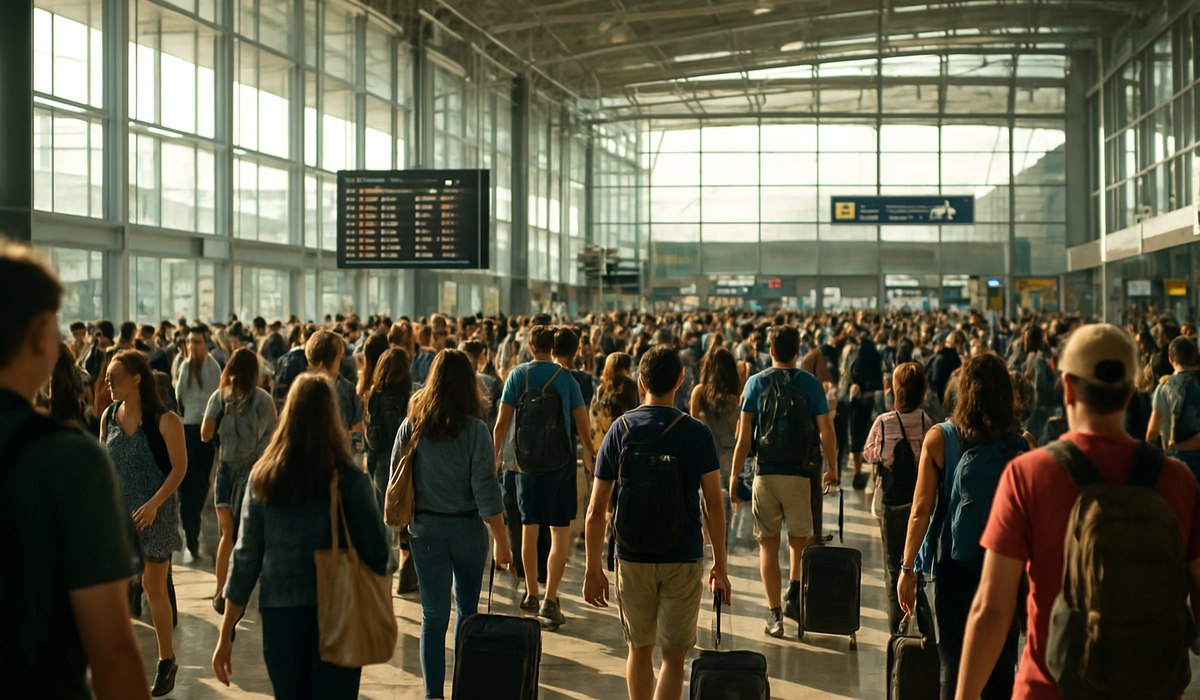
Image generated by AI
Spring Break Demand Collides With System-Wide Strain
Harry Reid International Airport faced unprecedented operational pressure in March 2026 when three simultaneous crises converged: explosive spring break travel demand, federal government staffing shortages, and a major U.S. storm system. The Las Vegas hub processed over 4.8 million passengers during the month, with peak days between March 16–20 when Southern Nevada schools released students for break. This surge alone would have strained the airport's capacity, but compounding factors created cascading flight delays that rippled across the national airline network and spooked investors holding airline stocks.
The timing proved devastating. Harry Reid serves as a critical connecting point for low-cost carriers and leisure airlines that depend on high-volume, price-sensitive routes. When disruptions struck Las Vegas, secondary markets relying on those connections faced immediate knock-on effects. Passengers heading to smaller regional airports discovered their flights canceled or delayed by hours as aircraft and crews repositioned to manage the crisis.
March marks Southern Nevada's busiest travel month annually. Convention traffic, spring training baseball fans, and families escaping winter combine to create one of America's highest-volume airport periods. Airlines had scheduled accordingly, but industry capacity planning proved inadequate when external shocks hit simultaneously.
Federal Shutdown Compounds TSA Staffing Challenges
The partial federal government shutdown beginning in mid-February created severe staffing complications at security checkpoints nationwide. Transportation Security Administration screeners worked under prolonged budget uncertainty, affecting checkpoint staffing levels precisely when demand peaked. Harry Reid's security infrastructure, while equipped with multiple checkpoint lanes and dedicated processing areas, couldn't fully compensate for reduced personnel availability.
Reports from March described wildly inconsistent passenger experiences. Early morning peaks on March 16–20 saw security lines extending toward ticket counters, with some travelers reporting waits exceeding 90 minutes during peak hours. Yet the same checkpoints processed passengers in minutes during off-peak afternoon windows. This unpredictability created additional stress, forcing many travelers to arrive excessively early out of caution—further congesting entry areas.
The airport's published guidance recommended two hours before domestic departures and three hours before international flights, acknowledging that posted wait times were only rough estimates. This admission underscored the challenge: TSA staffing gaps meant wait times became unreliable, forcing passengers toward conservative arrival buffers that paradoxically intensified crowding.
Compared with severely impacted hubs like Atlanta and New York, Harry Reid avoided the worst-case cancellation scenarios. However, departure delays averaged well beyond scheduled times on peak days, with dozens of operations delayed daily. The difference between Las Vegas and the hardest-hit airports appeared marginal to frustrated passengers caught in queues.
Storm Systems Force Cascade of Cancellations and Delays
A powerful mid-March storm complex swept across the United States, disrupting airline schedules from coast to coast. The system forced aircraft repositioning, crew schedule disruptions, and vulnerability to further cascading delays. Weather-related groundings and reroutes meant planes and personnel couldn't reach scheduled assignments, creating domino effects throughout airline networks.
Harry Reid experienced moderate weather-related cancellations compared with other major hubs, but the storm's timing amplified its impact. With security bottlenecks already slowing passenger processing and spring break volumes at peak levels, any operational disruption proved magnified. The combination meant aircraft sat on aprons longer, crew duty times extended, and connections failed across regional networks.
National media coverage from the Associated Press and other major outlets highlighted thousands of cancellations nationwide as the storm coincided with peak spring travel. Airlines faced impossible choices: absorb massive losses by holding aircraft waiting for weather clearance, or cancel flights and face passenger rebooking costs and regulatory scrutiny. Most chose cancellation, leaving passengers stranded.
The storm's impact extended beyond immediate delays. Aircraft positioning problems cascaded through subsequent days, as planes and crews scattered across the network took time to return to scheduled bases. This residual disruption persisted through late March, even after weather improved, as airlines worked through the backlog.
Ripple Effects on Low-Cost Carriers and Secondary Markets
Low-cost carriers operating hub-and-spoke networks from Las Vegas faced disproportionate pressure. Spirit Airlines, already struggling financially, announced significant Las Vegas route reductions for the April–June quarter. The carrier cut multiple routes from Harry Reid as part of a broader capacity pullback, citing sustained financial pressure and unit revenue challenges in competitive leisure markets.
These capacity adjustments represent broader airline industry responses to March's disruptions. When operational reliability deteriorates and costs spike, carriers reassess market viability. Secondary markets dependent on Las Vegas connections—smaller regional airports relying on low-cost carrier service—face service cuts and higher fares as airlines redirect capacity to more resilient markets.
The financial impact extended to investor confidence. Major U.S. network carriers saw stock volatility spike as traders reacted to March's operational chaos and the perception that spring break demand no longer reliably generates profitable revenue. Airlines had already contended with higher fuel prices and shifting demand patterns; the Harry Reid crisis reinforced concerns about operational resilience.
Investors worried that if America's second-busiest leisure airport couldn't handle spring break volumes, broader network reliability questions loomed. This sentiment drove airline sector selling, creating headwinds for carrier stock valuations across the board.
| Metric | Details |
|---|---|
| Airport Traffic | 4.8+ million passengers in March 2026 |
| Peak Period | March 16–20 (Southern Nevada school break) |
| Federal Status | Partial shutdown began mid-February |
| TSA Impact | Staffing gaps, variable checkpoint wait times |
| Typical Wait Times | 30–90 minutes during peak hours; minutes during off-peak |
| Recommended Arrival | 2 hours domestic, 3 hours international |
| Weather Event | Mid-March storm complex affected national operations |
| Spirit Airlines | Announced Las Vegas route cuts for Q2 2026 |
| Comparison Hub | Fewer cancellations than Atlanta, New York |
| Investor Reaction | Airline sector volatility increased |
What This Means for Travelers
Traveler Action Checklist
-
Verify flight status before arriving at Harry Reid by checking FlightAware 60–90 minutes before departure; don't rely solely on airline notifications.
-
Arrive 2.5 hours early for domestic flights and 3.5 hours for international; don't cut margins during peak travel periods when TSA staffing remains unpredictable.
-
Download airline and TSA apps to receive real-time security wait time data and flight change notifications without depending on email or texts.
-
Pack carry-on luggage only when possible to bypass baggage processing delays and maintain flexibility if flight changes occur.
-
Build 3+ hour connection buffers at Harry Reid when connecting to secondary markets, accounting for potential delays and security checkpoint variability.
-
Document delays with boarding passes and receipts if flights miss departure windows; you may qualify for compensation under U.S. Department of Transportation regulations.
-
Contact your airline proactively if delays exceed two hours; request meal vouchers, hotel accommodation, or rebooking options before the airline denies availability.
-
Review your rights under DOT rules by visiting US DOT's airline consumer protection page before travel.
Spring break chaos at Harry Reid demonstrated that even America's busiest leisure airports face capacity breaking points when demand, staffing, and weather converge. Travelers should view March 2026 as a cautionary lesson: build buffer time, verify information through multiple sources, and understand your passenger rights before flying during peak periods.
Frequently Asked Questions
**Q: Will Harry Reid airport implement permanent changes to prevent future spring
Disclaimer
This article is for informational and educational purposes only. It does not constitute legal, financial, or professional advice. While we strive to provide accurate and up-to-date information, travel policies, regulations, and conditions change rapidly. Always verify information with official sources before making travel decisions. Nomad Lawyer makes no representations about the accuracy, reliability, completeness, or suitability of the information provided. Readers should consult qualified professionals for advice specific to their circumstances. The views expressed in this article are those of the author and do not necessarily reflect the views of Nomad Lawyer.
Preeti Gunjan
Contributor & Community Manager
A passionate traveller and community builder. Preeti helps grow the Nomad Lawyer community, fostering engagement and bringing the reader experience to life.
Learn more about our team →