Living on the Stilt Pillars: The Rise of Community-Led Homestays Across Vietnam's Ha Giang Province

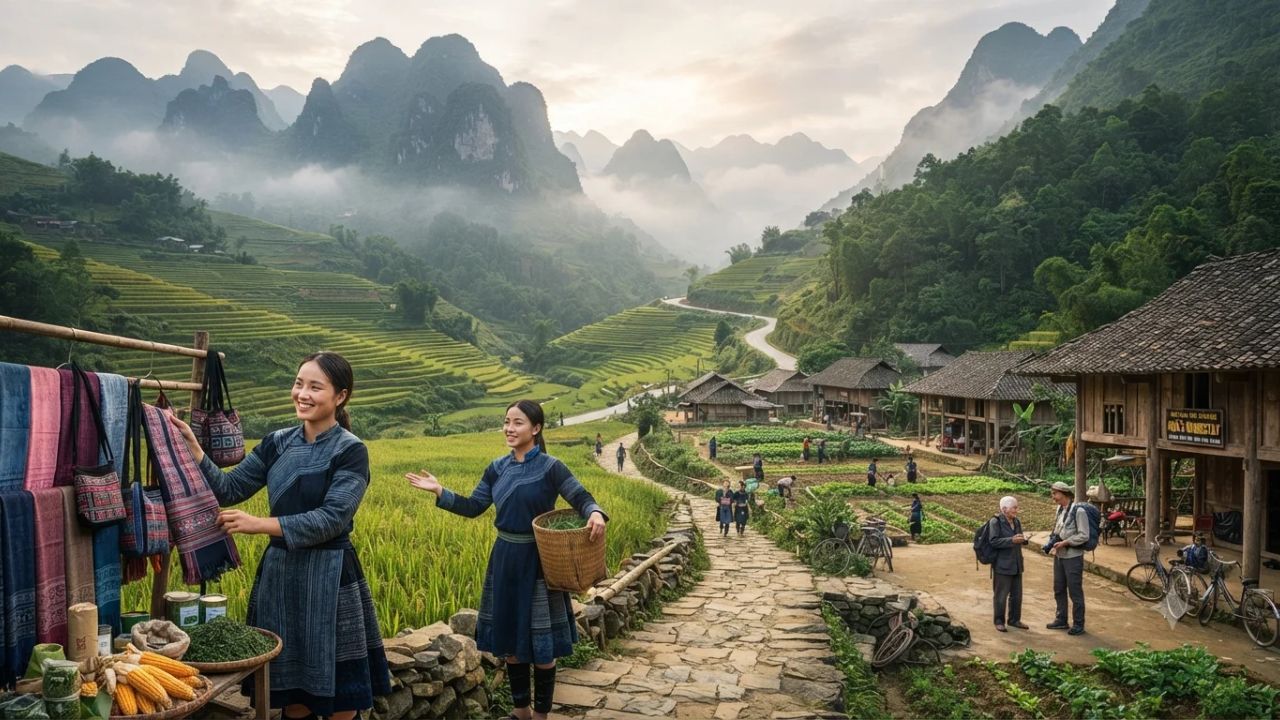
In remote mountain hamlets like Thôn Tha nestled beneath the limestone peaks of Ha Giang, traditional Tày wooden stilt houses have turned subsistence agricultural homesteads into community-governed eco-lodges where 100 percent of tourism revenue remains directly in the hands of indigenous families. Rather than leaving their ancestral valleys for factory work in distant industrial zones, young Tày, Dao, Hmong, and Lo Lo villagers are revitalizing ancient farming rhythms, handloom weaving, and herbal medicine traditions to guide international travelers along Vietnam's northern frontier.
For decades, the dramatic karst valleys of Ha Giang province were among the most economically isolated regions in Southeast Asia. Steep terrain, unpaved mountain switchbacks, and harsh winter freezes restricted household earnings to seasonal corn farming and livestock raising. Today, grassroots initiatives spearheaded by community collectives and social enterprises like YESD are demonstrating that responsible tourism can elevate household prosperity without eroding centuries of indigenous heritage.
The Community-Based Tourism Model in the Northern Highlands
The rapid emergence of Ha Giang as an adventure travel hub—famed globally for the winding motorcycle route through the Dong Van Karst Plateau—initially raised concerns about over-commercialization and outside investor encroachment. In response, local ethnic minority cooperatives established a decentralized community-based tourism (CBT) framework that anchors visitors in authentic village life.
This grassroots model operates across several distinct cultural valleys:
| Ethnic Minority Community | Traditional Architecture | Signature Cultural & Homestay Experience |
|---|---|---|
| Tày (Thôn Tha & Phương Độ) | Elevated thatched wooden stilt houses | Fishpond harvesting, palm-roof architecture, traditional Then singing |
| Hmong (Sảng Tủng & Lũng Cú) | Earthen-rammed walls with yin-yang roof tiles | Flax linen processing, natural indigo dyeing, stone corn cultivation |
| Red Dao (Nậm Đăm & Quản Bạ) | Earth-and-timber mountain homes | Traditional medicinal herbal baths, silver jewelry smithing |
| Lo Lo (Lô Lô Chải) | Clay-rammed compounds near the northern border | Elaborate geometric embroidery, bronze drum ceremonial dances |
In villages like Thôn Tha, families maintain their traditional stilt dwellings, hosting small numbers of travelers in clean, partitioned loft spaces furnished with locally woven cotton bedding. Instead of abandoning daily farm routines, hosts invite guests to participate in morning rice planting, mountain tea plucking, and evening family dinners cooked over open hearths.
Portions of individual homestay earnings flow into communal village development funds. These collective reserves finance concrete footpath construction, solar street lighting, school supplies for children, and micro-loans for families seeking to purchase breeding cattle or restore aging wooden roofs.
What Sets Ha Giang's Cultural Geography Apart
Ha Giang is distinguished by its sheer vertical geology. The province is home to the Dong Van Karst Plateau, recognized by UNESCO as a Global Geopark for its dramatic limestone canyons, towering peaks, and profound fossil heritage dating back hundreds of millions of years.
Traveling through the province reveals an extraordinary harmony between human culture and rugged mountain ecology:
- Ma Pi Leng Pass and the Nho Que River: A legendary mountain roadway carved into vertical limestone walls, dropping nearly 1,000 meters to the turquoise ribbon of the Nho Que River below.
- Historic Hmong King's Palace (Dinh Vua Mèo): A fortified stone-and-poppy-wood mansion in Sa Phin that blends traditional Chinese Qing Dynasty architecture with native Hmong craftsmanship and French colonial elements.
- Ancient Weekly Ethnic Markets: Sunday trading gatherings in Dong Van, Meo Vac, and Yen Minh, where villagers dressed in vibrant pleated skirts and embroidered headscarves barter mountain honey, hand-forged knives, and artisanal buckwheat cakes.
Travelers can research verified regional homestay networks, seasonal weather patterns, and mountain trekking permits via the official Vietnam National Tourism Administration portal.
Visitor Insider Tips for Journeying Through Ha Giang
Exploring Ha Giang respectfully and safely requires mindful cultural etiquette and smart transport choices:
- Hire a Local "Easy Rider" Guide: If you are not an experienced motorcyclist on steep mountain hairpins, hire a licensed local driver (Easy Rider) through a social enterprise. This ensures your safety along perilous cliff passes while providing direct employment for young village guides who speak fluent ethnic dialects.
- Observe Homestay Etiquette Around Ancestral Altars: When staying in a traditional Tày or Hmong home, never touch the central wooden pillar (cột cái) or the sacred family altar, and avoid pointing your feet toward the hearth fire while sitting down.
- Savor Regional Mountain Gastronomy: Look beyond pho to taste slow-cooked thắng cố (spiced mountain horsemeat or beef soup with cardamom and star anise), fragrant cơm lam (sticky rice roasted in fresh bamboo tubes), and steamed buckwheat cakes (bánh tam giác mạch) paired with house-distilled corn wine.
- Time Your Visit with the Agricultural Calendar: Plan your trip between September and November to witness golden terraced rice harvests in Hoang Su Phi followed by the soft pink bloom of buckwheat blossoms across Dong Van, or visit from March to April for peach and plum blossom blooms.
- Pack Thermal Layers and Rain Protection: Mountain weather in the high plateaus can change rapidly. Bring a high-grade waterproof jacket, thermal fleece layers for chilly nights, and sturdy hiking boots with deep rubber tread for muddy limestone paths.
Cultural and Environmental Context of Highland Tourism
Community-based tourism in Ha Giang acts as a vital buffer against environmental degradation and cultural loss. For generations, slash-and-burn farming on steep limestone slopes contributed to soil erosion and deforestation.
By replacing destructive land-clearing with hospitality, organic farming, and eco-guiding, villages are preserving high-altitude forest canopies that protect vital watersheds. Training programs run by YESD emphasize zero-waste hospitality, encouraging homestays to replace single-use plastic water bottles with boiled herbal spring teas served in refillable bamboo cups.
Importantly, community ownership ensures that local elders retain authority over cultural representation. Sacred rituals, traditional weaving techniques, and ancestral musical forms are preserved not as staged tourist performances, but as genuine living expressions of indigenous identity that now command economic respect across Vietnam.
FAQ: Visiting Ha Giang Homestays 2026
How do I get to Ha Giang from Hanoi? Comfortable overnight sleeper coaches and VIP limousine vans depart daily from Hanoi's My Dinh Bus Station, reaching Ha Giang City in roughly six hours.
Do I need a special permit to travel through Ha Giang? Yes. Foreign travelers require a Border Area Entry Permit (around 250,000 VND), easily obtained from the Ha Giang Immigration Office in Ha Giang City or through your homestay host.
What are the accommodation facilities like in village homestays? Homestays in villages like Thôn Tha and Nậm Đăm offer clean private or shared sleeping lofts with mosquito nets, western-style flush toilets, hot-water showers, and high-speed Wi-Fi.
How many days are needed to complete the Ha Giang loop? A minimum of 4 to 5 days is recommended to comfortably explore Ha Giang City, Quan Ba, Yen Minh, Dong Van, Meo Vac, and Du Gia without rushing.
Perched high on wooden stilts beneath karst peaks, Ha Giang's mountain villages prove that genuine prosperity grows when communities welcome the world without forgetting their roots.
Related Travel Guides
This article is for informational purposes. Flight routes, passenger regulations, visa rules, and transit advisories are subject to change by airlines and aviation authorities. Readers are advised to verify schedules and travel documentation with relevant carriers and border agencies before departure.
Related Stories

Uniworld Unveils Mekong Mystique for 2028: New Luxury Vessel Redefines Cambodia and Vietnam River Cruises

China Expands 10-Day Visa-Free Transit and 30-Day Hainan Entry for Vietnam and Kyrgyzstan Citizens 2026