
Qatar Travel Flights Grounded: 63 Cancelled Routes Strand Thousands Across Gulf
Qatar travel flights face mass cancellations as 63 services abandoned across Saudi Arabia, UAE in March 2026, leaving thousands stranded at major Gulf hubs.

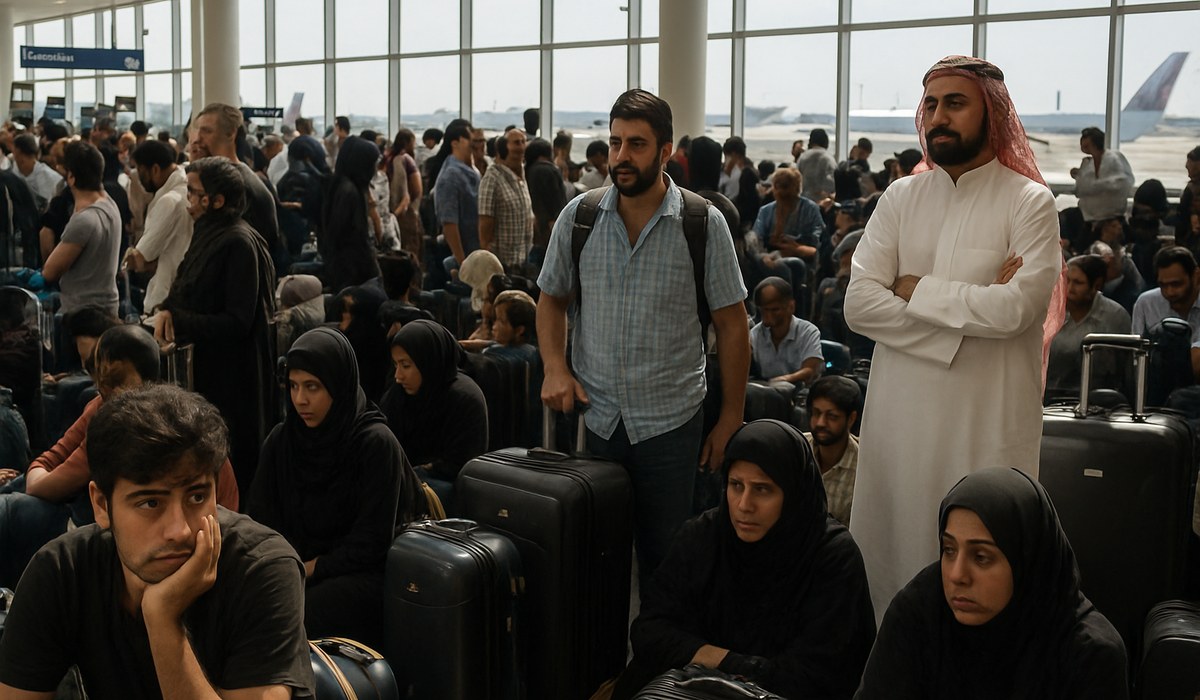
Image generated by AI
Quick Summary • 63 flights cancelled or postponed across Saudi Arabia, UAE, and Qatar this week • Saudia Airways, Qatar Airways, and FlyDubai collectively abandoned 21 scheduled services • Additional 42 flights rescheduled, creating cascading delays for thousands of connecting passengers • Major disruptions concentrated at Jeddah, Riyadh, Dubai, and Doha international airports
Over sixty scheduled departures evaporated from airport monitors across the Middle East's most trafficked aviation corridors this week, transforming routine travel into extended airport stays for thousands. The simultaneous operational breakdowns affecting three major Gulf carriers have exposed critical fragilities in regional air transport infrastructure during what should be a stable shoulder season for travel.
The crisis erupted without advance warning. Twenty-one flights were completely cancelled, while another forty-two services received indefinite postponement notices. Passengers holding confirmed bookings discovered their journeys disrupted only upon arrival at departure terminals, with minimal communication from airline ground staff.
This disruption follows recent Doha flight cancellations that signalled emerging operational challenges for Qatar-based carriers. Industry analysts note the concentration of failures across multiple competing airlines suggests systemic infrastructure issues rather than isolated carrier problems.
Breaking Down the Mass Cancellations: Which Routes Were Hit Hardest
The geographic spread of abandoned qatar travel flights reveals concentrated problems in Saudi Arabian airspace management. Jeddah's King Abdulaziz International Airport (JED) reported fourteen complete cancellations, the highest single-airport total. Riyadh's King Khalid International Airport (RUH) followed with nine cancelled departures.
Dubai International Airport (DXB) logged twelve postponed services, primarily affecting FlyDubai's regional network. Hamad International Airport in Doha (DOH) experienced eight cancellations concentrated on Saudi Arabia-bound routes.
The most severely impacted city pairs included Jeddah-Dubai (six daily services reduced to two), Riyadh-Doha (four cancellations from normal eight-flight schedule), and Dammam-Dubai (complete suspension of morning departures). Secondary routes connecting smaller Saudi cities like Abha and Tabuk to Gulf hubs saw total service elimination for forty-eight-hour periods.
Connecting passengers suffered disproportionately. A typical Jeddah-Dubai-Bangkok itinerary involves coordinated arrival timing; when the first segment disappears, entire multi-leg journeys collapse. Industry data indicates approximately 37% of Gulf hub traffic consists of connecting passengers, meaning single-flight cancellations created exponential downstream disruptions.
FlightAware data captured dramatic visualizations of the crisis as aircraft positioning maps showed unexpected gaps in Gulf airspace coverage. Routes that typically maintain fifteen-minute departure intervals suddenly showed two-hour blank periods.
Saudia, Qatar Airways, and FlyDubai: Airline-by-Airline Impact Analysis
Saudia Airways bore responsibility for the largest share of disruptions. The national carrier cancelled thirteen outbound services from Jeddah and Riyadh, primarily affecting domestic Saudi routes and connections to neighbouring Gulf states. Airline officials attributed the problems to "unforeseen operational requirements" without elaborating on specific technical or staffing causes.
Qatar Airways, typically lauded for operational reliability, abandoned five scheduled departures from Doha. The Doha-Riyadh route suffered particularly, with three consecutive morning services eliminated. This marks an unusual operational failure for a carrier that positions itself as the Gulf's premium option.
FlyDubai's contribution to the chaos centred on postponements rather than outright cancellations. The budget carrier rescheduled twenty-nine flights, creating rolling delays that affected passengers throughout the day. Aircraft rotations depend on sequential flight completeness; one delayed arrival triggers departure postponements for that aircraft's subsequent services.
Sources within regional aviation circles indicated the problems stemmed from a combination of factors: air traffic control capacity constraints in Saudi airspace, unexpected aircraft maintenance requirements, and crew scheduling conflicts exacerbated by recent regional labour negotiations.
The simultaneity suggests coordinated causes. When multiple unrelated carriers experience parallel disruptions, infrastructure bottlenecks typically deserve scrutiny. Saudi Arabia's General Authority of Civil Aviation has not released official statements addressing potential airspace management issues.
Passenger Rights and Compensation: What Stranded Travelers Can Claim
Navigating compensation claims requires understanding which regulations apply. Gulf carriers operate under different frameworks than European airlines subject to EU261 protections.
For flights departing from Saudi Arabia, UAE, or Qatar, passengers should reference International Air Transport Association guidelines that establish baseline carrier obligations during mass disruptions. These include mandatory meal vouchers for delays exceeding four hours, hotel accommodation for overnight disruptions, and rebooking on alternative services.
Saudia Airways passengers qualify for compensation under Saudi Arabia's consumer protection aviation rules. Confirmed ticket holders whose flights were cancelled with fewer than fourteen days' notice can claim full refunds or free rebooking. Delays exceeding five hours trigger additional compensation ranging from 200 to 600 Saudi Riyals ($53-$160 USD) depending on flight distance.
Qatar Airways applies its own disruption policies, which generally exceed minimum requirements. Cancelled passengers receive automatic rebooking on the next available service, hotel accommodation if overnight delays occur, and complimentary lounge access during extended waits. Compensation amounts vary but typically match distance-based scales similar to EU261.
FlyDubai, as a UAE-based budget carrier, follows less generous protocols. Passengers receive rebooking options but must specifically request meal vouchers and accommodation. The carrier's contract of carriage excludes cash compensation for delays under six hours.
Practical steps for affected travelers:
- Document everything: photograph departure boards showing cancellations, retain all boarding passes and booking confirmations
- Request written confirmation of cancellation reasons from airline staff at airport counters
- Obtain receipts for all out-of-pocket expenses (meals, accommodation, alternative transport)
- File compensation claims within prescribed timeframes—typically 45 days for Gulf carriers
- Escalate unresolved claims to national aviation authorities in the carrier's home country
Travel insurance policies often exclude compensation when carrier-provided remedies exist, making direct airline claims the primary recovery path.
Alternative Routes and Rebooking Strategies for Affected Passengers
Passengers stranded in Gulf hubs discovered limited immediate alternatives. The concentrated geography of major Gulf carriers means rerouting often requires backtracking through distant hubs.
For Saudi Arabia to UAE travel, ground transport emerged as the fastest alternative. The Riyadh-Dubai journey spans approximately 870 kilometres, manageable via bus services operated by SAPTCO and other regional carriers. Travel time extends to nine hours but eliminates rebooking uncertainty.
Travelers originally connecting through Gulf hubs to Asian destinations found better alternatives through expanding aviation networks across Asia, which offered competitive pricing and more reliable schedules during this disruption period.
Turkish Airlines increased its Jeddah-Istanbul frequencies to absorb stranded passengers, though connections to final destinations added substantial travel time. Emirates, notably absent from the disruption list, maintained full schedules and absorbed some overflow traffic despite premium pricing.
Monitoring tools became essential. Passengers used real-time flight status tracking platforms to identify which services actually departed versus those showing "on-time" status in airline apps but never materializing. Cross-referencing live aircraft positioning data helped verify whether assigned aircraft were actually approaching departure airports.
Travel agents reported overwhelming inquiry volumes as passengers sought professional assistance navigating rebooking complexities. Agents with consolidated booking systems accessed inventory across multiple carriers, identifying alternative routings invisible to individual passengers searching airline websites.
The disruptions highlighted vulnerability in hub-dependent networks. Point-to-point services, though less common in Gulf aviation, proved more resilient as they avoid cascading delays from hub congestion.
Understanding the Broader Context of Gulf Aviation Challenges
This week's chaos reflects growing pains in Middle Eastern aviation expansion. Gulf carriers have aggressively increased frequencies and aircraft orders, but supporting infrastructure sometimes lags operational ambitions.
Saudi Arabia's aviation growth trajectory has been particularly aggressive. The kingdom's Vision 2030 economic diversification plan targets tripling annual passenger throughput to 330 million by decade's end. Rapid expansion strains air traffic control systems, ground handling capabilities, and airport terminal capacities.
Comparing these struggles with growth in Ukraine's emerging aviation market reveals different development models. European-adjacent markets benefit from established regulatory frameworks and mature air traffic management systems, while Gulf hubs must simultaneously build infrastructure and scale operations.
Weather factors occasionally impact Gulf aviation, though March typically brings stable conditions. Sandstorms can force temporary airport closures, but meteorological data for the disruption period showed clear conditions across affected regions, eliminating weather as a primary cause.
Labour dynamics warrant attention. Gulf carriers increasingly face crew scheduling challenges as international labour standards evolve. Recent negotiations between pilot unions and management at multiple carriers have created operational constraints previously uncommon in the region's aviation sector.
The financial implications extend beyond immediate passenger compensation. Airlines face penalties for slot misuse when scheduled services fail to operate. Reputation damage accumulates as passengers share disruption experiences across social media, potentially influencing future booking decisions.
FAQ: Gulf Flight Disruptions March 2026
How long will the flight disruptions continue across Saudi Arabia, UAE, and Qatar?
Airlines have not provided definitive restoration timelines. Saudia Airways indicated "normal operations resumption within 72 hours" as of March 29, while Qatar Airways and FlyDubai offered no specific recovery schedules. Passengers should verify flight status directly with carriers before airport departure.
Can I get a full refund if my Gulf carrier flight was cancelled?
Yes, under international aviation standards and Gulf carrier policies. Passengers whose flights were cancelled receive unconditional refunds to original payment methods. Processing typically requires 7-14 business days but may extend to 30 days during mass disruption events.
Do travel insurance policies cover expenses from these Middle East flight cancellations?
Coverage depends on policy specifics. Most travel insurance excludes expenses already covered by airline obligations (meals, accommodation provided by carrier). Policies covering "delay expenses" may reimburse costs when airlines fail to provide adequate assistance. Review policy documents or contact insurers for claim eligibility.
Which alternative airlines maintained reliable service during the disruptions?
Emirates, Etihad Airways, and Turkish Airlines reported minimal operational impacts. These carriers maintained scheduled services and absorbed some stranded passengers from affected competitors. Availability varies by route, and pricing typically exceeds original bookings during high-demand disruption periods.
Are there passenger compensation requirements specific to Saudi Arabia aviation?
Saudi Arabia's General Authority of Civil Aviation enforces consumer protection rules requiring compensation for cancellations with insufficient notice. Amounts range from 200-600 SAR ($53-$160) based on flight distance. Passengers must file claims within 45 days of disruption, submitting booking confirmations and cancellation documentation.
Related Articles:
Disclaimer
This article is for informational and educational purposes only. It does not constitute legal, financial, or professional advice. While we strive to provide accurate and up-to-date information, travel policies, regulations, and conditions change rapidly. Always verify information with official sources before making travel decisions. Nomad Lawyer makes no representations about the accuracy, reliability, completeness, or suitability of the information provided. Readers should consult qualified professionals for advice specific to their circumstances. The views expressed in this article are those of the author and do not necessarily reflect the views of Nomad Lawyer.
Preeti Gunjan
Contributor & Community Manager
A passionate traveller and community builder. Preeti helps grow the Nomad Lawyer community, fostering engagement and bringing the reader experience to life.
Learn more about our team →