
Gulf Air and Flydubai Cancel 12+ Flights at Bahrain Airport; Major Disruptions Hit Dubai, Singapore, Muscat Routes
Gulf Air and Flydubai ground dozen flights at Bahrain International Airport. Cancellations ripple across Middle East, South Asia affecting Dubai, Singapore, Muscat, Riyadh, Jeddah, Lahore, Islamabad, Dhaka routes.

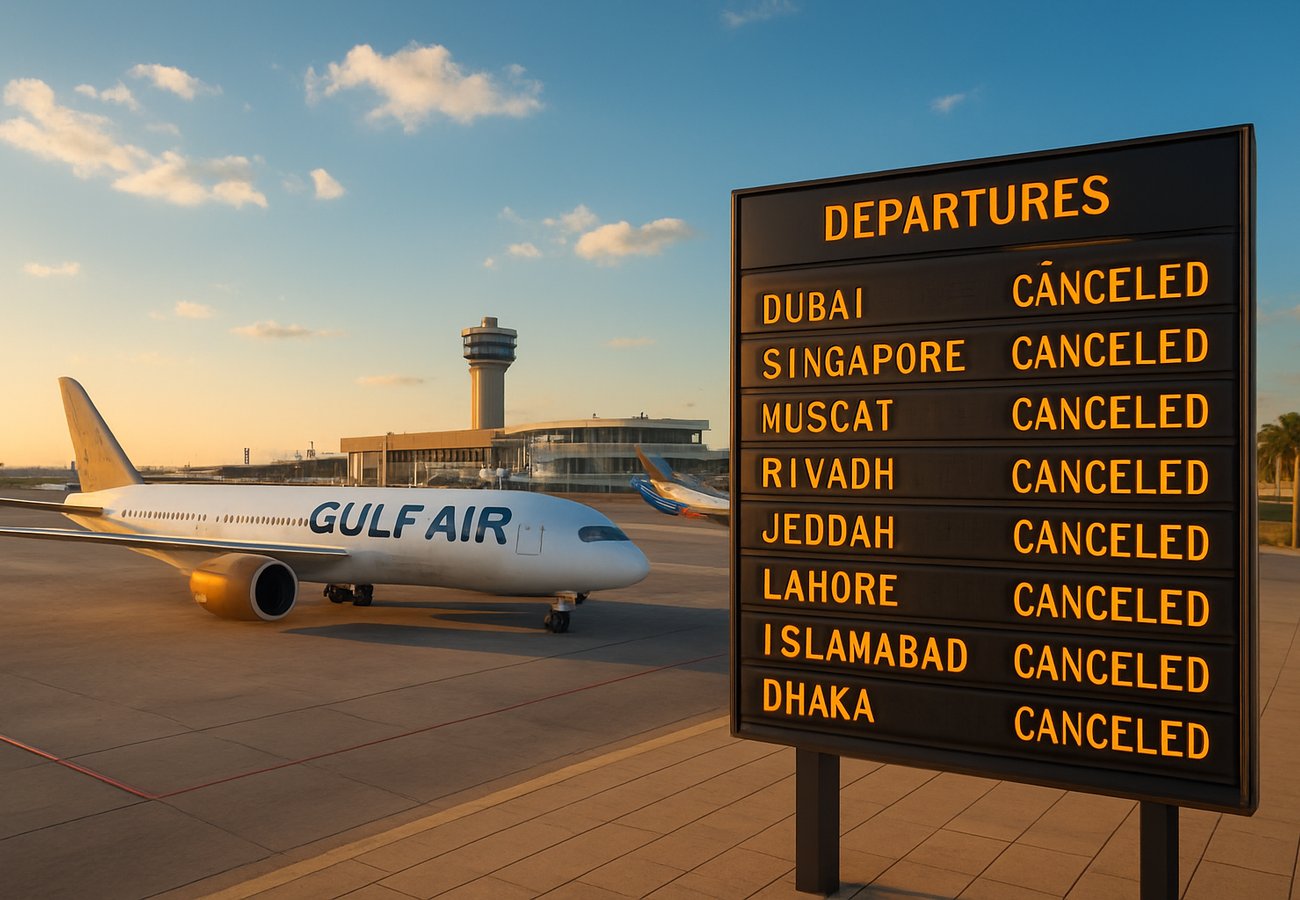
Image generated by AI
Major Operational Crisis Unfolds as Gulf Air and Flydubai Ground Fleet at Bahrain Hub
A significant operational meltdown has struck the Middle Eastern aviation sector, with Gulf Air and Flydubai forced to cancel more than a dozen flights originating from Bahrain International Airport on a single operational day. The cascading cancellations have sent shockwaves through critical regional and international routes, leaving thousands of passengers stranded and forcing airlines to implement emergency rebooking protocols across multiple continents.
The disruption impacts connectivity to some of the world's busiest aviation hubs, including Dubai International Airport (DXB), Singapore Changi Airport (SIN), Muscat International Airport (MCT), King Fahd Road Airport in Riyadh (RUH), King Abdulaziz Airport in Jeddah (JED), Allama Iqbal International Airport in Lahore (LHE), Islamabad International Airport (ISB), and Hazrat Shahjalal International Airport in Dhaka (DAC). The geographic spread of affected destinations underscores the severity of the operational challenge facing both carriers and the broader implications for global aviation connectivity.
Industry observers point to mounting pressures within the regional airline sector, where fuel prices impact airlines' operational margins and scheduling flexibility. According to the International Air Transport Association (IATA), Middle Eastern carriers have faced sustained cost pressures throughout 2026, with fuel surcharges and maintenance requirements consuming significant portions of operational budgets. The simultaneous grounding of aircraft from two major regional operators suggests either a shared infrastructure constraint at Bahrain International Airport or coordinated maintenance and safety protocols that have temporarily removed capacity from the market.
Gulf Air, the flag carrier of Bahrain, operates an extensive network across the Middle East, South Asia, and beyond, while Flydubai, the low-cost subsidiary of Emirates, serves as a critical connector for budget-conscious travelers across the region. The cancellation of flights on both carriers simultaneously indicates the severity of the operational challenge—whether stemming from air traffic control limitations, ground handling complications, or aircraft availability issues. Neither airline has publicly disclosed the root cause of the disruptions, though preliminary reports suggest potential weather-related factors or unscheduled maintenance requirements.
The timing of these cancellations arrives amid broader volatility in global aviation markets. Fuel prices impact airlines' profitability and scheduling decisions, and the Middle East remains particularly sensitive to geopolitical developments that influence crude oil markets. Additionally, the region has experienced elevated passenger demand as travel rebounds across Asia-Pacific and Middle Eastern routes, placing additional strain on airport infrastructure and airline operations. FlightAware tracking data confirms widespread cascading delays across the affected network, with secondary impacts reported at connecting hubs in Abu Dhabi, Doha, and Istanbul.
The financial implications for both carriers extend beyond immediate operational costs. Airline fees structures and ancillary revenue streams face pressure when mass cancellations force carriers to absorb rebooking costs, hotel accommodations, and meal vouchers for displaced passengers. Industry analysts estimate that each cancelled flight in this market segment costs carriers between $50,000 and $150,000 in direct expenses, excluding reputational damage and potential regulatory penalties.
What This Means for Travelers
Passengers holding tickets on affected Gulf Air and Flydubai flights should immediately contact their respective airlines or visit official booking portals to confirm flight status. Under IATA passenger rights protocols, travelers are entitled to rebooking on alternative flights, meal and accommodation provisions for delays exceeding 12 hours, and potential compensation depending on jurisdiction. Those traveling to or from Dubai, Singapore, Muscat, Riyadh, Jeddah, Lahore, Islamabad, and Dhaka should allow additional buffer time for rebooking and expect elevated congestion at airport customer service desks.
Expert Insight: Regional airline disruptions of this magnitude typically cascade across secondary markets within 48 hours, making early rebooking and flexible itinerary adjustments critical for minimizing travel delays.
The operational crisis at Bahrain International Airport serves as a stark reminder of the fragility underlying global aviation networks, where concentrated disruptions at key regional hubs can rapidly propagate across continents. As air travel costs remain elevated and airline fees continue to burden passenger budgets, operational reliability has become a competitive differentiator in the Middle Eastern market. Both Gulf Air and Flydubai face mounting pressure to restore full operational capacity and restore passenger confidence in their scheduling reliability. Industry observers will closely monitor whether this disruption triggers broader capacity adjustments across the region or represents an isolated operational incident.
Related Travel Guides
Disclaimer
This article is for informational and educational purposes only. It does not constitute legal, financial, or professional advice. While we strive to provide accurate and up-to-date information, travel policies, regulations, and conditions change rapidly. Always verify information with official sources before making travel decisions. Nomad Lawyer makes no representations about the accuracy, reliability, completeness, or suitability of the information provided. Readers should consult qualified professionals for advice specific to their circumstances. The views expressed in this article are those of the author and do not necessarily reflect the views of Nomad Lawyer.
Kunal K Choudhary
Co-Founder & Contributor
A passionate traveller and tech enthusiast. Kunal contributes to the vision and growth of Nomad Lawyer, bringing fresh perspectives and driving the community forward.
Learn more about our team →