
Guatemala Mayan Weaving Trails and Global Handloom Routes Reshape Slow Tourism
Global textile trails are reshaping slow travel, linking Guatemala's Mayan weavers around Lake Atitlán with ancient handloom corridors in Peru, India, and Japan.

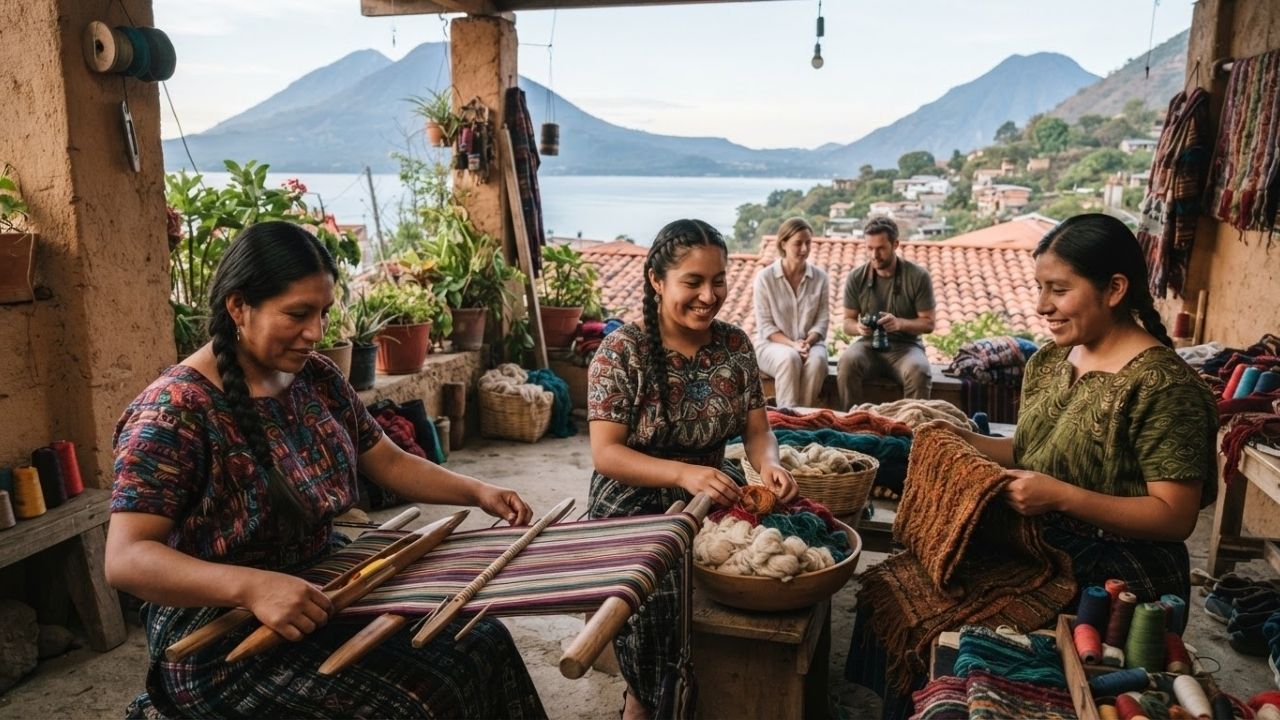
Image generated by AI
Traditional handloom and textile geography trails are emerging as a major global travel movement. By mapping journeys through indigenous weaving villages, natural dye workshops, and ancient loom cooperatives across Guatemala, Peru, India, and Japan, travelers are bypassing commercial retail centers in favor of ethical slow travel.
Mayan Geometric Storytelling Around Guatemala's Lake Atitlán
[GUATEMALA CITY, Guatemala] — In the volcanic highlands surrounding Lake Atitlán, indigenous Mayan women are at the center of a growing global movement in sustainable cultural tourism. Exploring lakeside villages, travelers observe master weavers crafting traditional garments known as huipils using ancestral backstrap looms.
Tethered directly to the weaver's waist, portable backstrap looms allow artisans to regulate thread tension manually:
- Geometric & Zoomorphic Symbols: Every shape stitched into a huipil communicates ancestral lineage, marital status, and village identity.
- Meticulous Brocatelle Brocading: Weavers manually insert supplementary decorative threads to create raised, tactile surface patterns.
- Organic Dyes & Natural Fibers: Local cooperatives utilize natural plant extracts and mineral mordants to color locally spun cotton.
By visiting community-managed workshops around Lake Atitlán, travelers support indigenous women's cooperatives directly, ensuring that financial benefits remain within rural mountain communities while preserving ancient Mayan cosmology.
India's Living Handloom Archives and Peru's Highland Alpaca Trails
Global textile geography trails extend across major artisan hubs worldwide, offering immersive access to living craft traditions:
India: Kutch and Maheshwar Handloom Corridors
India serves as an extensive living archive of regional weaving traditions. In the arid Kutch district of Gujarat, master block printers execute multi-step Ajrakh resist-dyeing using wooden blocks, natural indigo, madder root, and iron-mordanted muds. Along the riverbanks of Maheshwar in Madhya Pradesh, pit-loom weavers produce gossamer cotton and silk fabrics using generational techniques.
Peru: Sacred Valley and Altiplano Communities
High in the Peruvian Andes, Quechua women maintain backstrap weaving practices using native alpaca and llama fibers. Operating tethered wooden looms thousands of feet above sea level, weavers encode agricultural calendars and Andean mythology into dense wool fabrics. Natural dye processes rely on harvested cochineal insects for brilliant crimson tones, alongside native mountain mosses and alpine flora.
Japan's Tokushima Aizome Fermentation and Kyoto Shibori Ateliers
In East Asia, Japan provides a masterclass in high-art textile preservation, taking travelers from rural river valleys to historic urban ateliers:
- Tokushima (Shikoku Island): Rural dye houses practice authentic Aizome indigo dyeing by fermenting composted indigo leaves (sukumo) in large vats using natural spring water and lye.
- Kyoto Workshops: Urban ateliers preserve intricate shibori resist-dyeing techniques—requiring microscopic folding, binding, and hand-stitching—alongside traditional silk reeling and draw-loom weaving for ceremonial kimonos and obi sashes.
These specialized geography trails allow conscious consumers to trace the complete lifecycle of handmade textiles from raw earth to finished garment.
The table below outlines key regions, primary locations, traditional techniques, and core highlights across global textile geography trails:
| Country / Region | Key Travel Locations | Artisan Craft & Technical Methods | Core Regional Highlight |
|---|---|---|---|
| Guatemala | Lake Atitlán & Volcanic Highlands | Mayan huipils, geometric brocatelle & backstrap looms | Indigenous women's cooperative workshops |
| India | Kutch (Gujarat) & Maheshwar (MP) | Ajrakh block printing, pit-loom weaving & natural dyes | Desert & riverbank artisan heritage corridors |
| Peru | Sacred Valley & High Altiplano | Backstrap weaving, alpaca spinning & cochineal dyes | High-altitude Quechua community mountain treks |
| Japan | Kyoto & Tokushima (Shikoku) | Aizome indigo fermentation, shibori & silk reeling | Multigenerational urban & rural dye ateliers |
Why This Matters for Passengers and Cultural Explorers
For travelers seeking meaningful experiences beyond standard resort itineraries, following a textile geography trail provides a direct link to living human history. Purchasing handmade textiles directly from Mayan weavers in Guatemala or Quechua artisans in Peru ensures your travel spending directly supports rural families and preserves endangered craft heritage. By learning how natural dyes and handlooms operate, visitors participate in a form of travel that respects regional ecosystems and indigenous identity.
Frequently Asked Questions
What are traditional textile geography trails?
Textile geography trails are specialized travel routes that direct visitors through indigenous weaving villages, natural dye workshops, and artisan cooperatives rather than commercial shopping districts.
How do Mayan weavers create huipils in Guatemala?
Mayan weavers in Guatemala create traditional huipils using portable backstrap looms tied around their waists, manually inserting supplementary threads to create geometric and zoomorphic patterns representing lineage and village identity.
Which countries are featured in global handloom tourism routes?
Major destinations for handloom trails include Guatemala (Mayan backstrap weaving), Peru (Quechua alpaca weaving), India (Ajrakh block printing and pit-loom silk weaving), and Japan (Aizome indigo dyeing and shibori).
Related Travel Guides
- The End of Spontaneous Travel: Why Kyoto, Amsterdam, and Maui are Becoming More Complex in 2026
- Australian Commercial Marine Conference Debuts Electric Ferry Initiatives
- Aviation Updates: Desperate Travelers Bypass Terrifying European Travel Chaos by Escaping to Iceland, Japan, and Canada for August 2026
Disclaimer
This article is for informational and educational purposes only. It does not constitute legal, financial, or professional advice. While we strive to provide accurate and up-to-date information, travel policies, regulations, and conditions change rapidly. Always verify information with official sources before making travel decisions. Nomad Lawyer makes no representations about the accuracy, reliability, completeness, or suitability of the information provided. Readers should consult qualified professionals for advice specific to their circumstances. The views expressed in this article are those of the author and do not necessarily reflect the views of Nomad Lawyer.
Raushan Kumar
Founder & Lead Developer
Full-stack developer with 11+ years of experience and a passionate traveller. Raushan built Nomad Lawyer from the ground up with a vision to create the best travel and law experience on the web.
Learn more about our team →