
ChinaSPAF 2026 Opens in Shanghai: 144-Hour Transit Waivers, Swedish Visa Exemptions, and European Arts Delegation Guide
Shanghai hosts the 25th ChinaSPAF performing arts market alongside a unilateral Swedish visa waiver and the 144-hour regional transit exemption for global festival delegates.

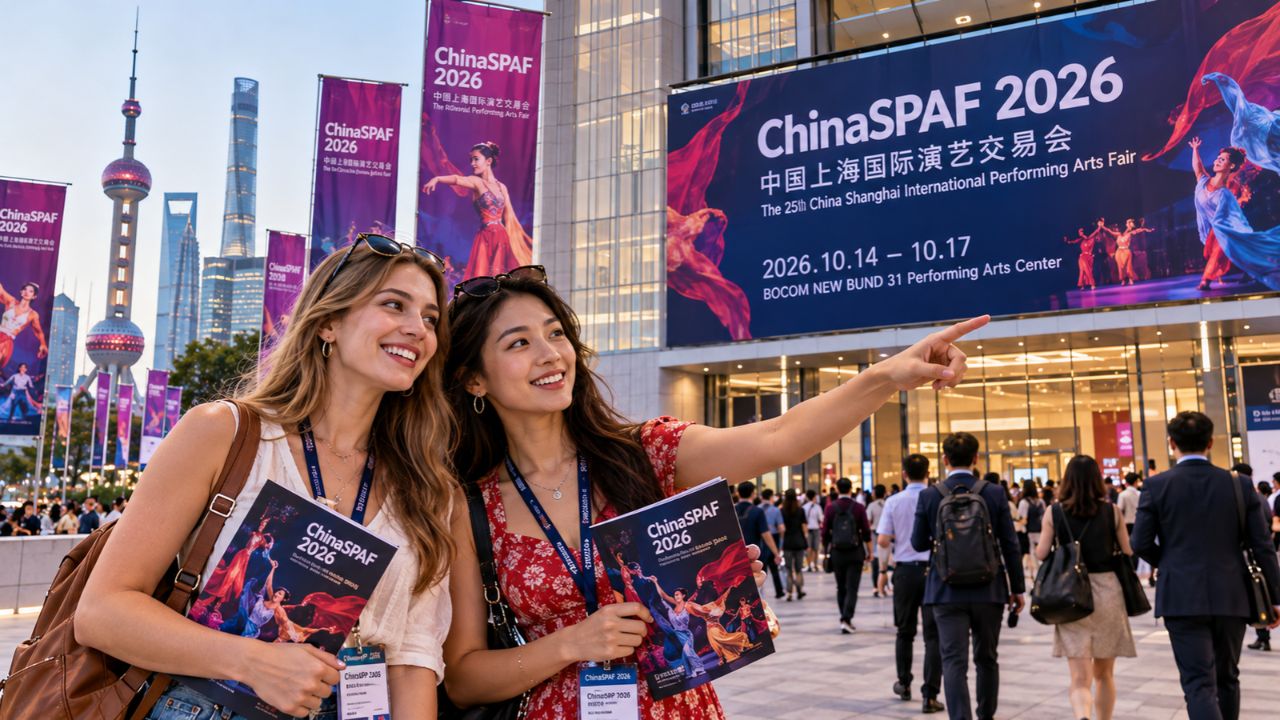
A six-day, 144-hour transit exemption window and a unilateral visa waiver operational through 31 December 2026 provide the legal foundation for international curators converging on Shanghai for the 25th edition of ChinaSPAF. Running from 14 October through 17 October 2026 at the BOCOM NEW BUND 31 Performing Arts Center, the four-day trade market serves as the Asia-Pacific region’s largest commercial performing arts exchange. The fair operates directly alongside the broader China Shanghai International Arts Festival, which opens 17 October and extends continuously through 15 November 2026, generating an intense concentration of cross-border artistic negotiations and testing the operational capacity of municipal border checkpoints.
European Institutional Alignments and Market Mechanisms
Central to this year’s commercial convergence is the structured participation of the European Festivals Association (EFA). Headquartered in Ghent, Belgium, with an executive liaison office in Brussels, the association deployed a formal delegation to negotiate future international touring contracts, multi-year festival co-productions, and reciprocal booking agreements with Asian venue directors.
The EFA framework delivers tangible operational advantages for participating arts administrators. Association members receive discounted registration fees, specialized networking briefings, and direct placement within the fair’s centerpiece component: the Pitch Session and Showcase. This curated pitching segment functions as the primary procurement clearinghouse where international festival curators, venue managers, and theater programmers evaluate new scripts, choreographies, and multimedia installations. By negotiating collective delegation pricing, the EFA enables independent, mid-tier European performing arts organizations to access Asian buyers without absorbing prohibitive individual trade fair registration costs.
To facilitate entry for international creative professionals, the Chinese Ministry of Culture and Tourism and the National Immigration Administration of China have integrated multi-tiered entry protocols designed to expedite trade arrivals across designated aviation, maritime, and rail border ports.
| Immigration Entry Mechanism | Target Nationalities & Legal Eligibility | Maximum Permitted Stay Window | Designated Border Checkpoints in Shanghai Cluster | Core Compliance Prerequisite |
|---|---|---|---|---|
| Unilateral Visa-Free Entry | Swedish ordinary passport holders (and select European partners) | Up to 15 continuous days | All international ports across mainland China | Valid through 31 December 2026; ordinary passport |
| 144-Hour Regional TWOV | Qualifying 54-nation transit list (including Belgium, UK, USA) | Exactly 144 hours (6 full days) | Pudong (PVG), Hongqiao (SHA), Port of Shanghai, Shanghai Railway | Confirmed onward ticket to a third country or territory |
| 24-Hour Direct Transit | Universal global passport holders | Maximum 24 hours | International international transit airports | Transiting airside or restricted municipal zone only |
| Standard F / M Visa | All non-exempt global delegates | Determined by issued consular visa | All accredited national border control posts | Official government invitation letter and prior consular processing |
Dissecting the Swedish Exemption and Regional 144-Hour Transit
Immigration protocols for European delegates diverge sharply based on national bilateral agreements. Swedish citizens holding ordinary passports enjoy unilateral visa-free access across all international border posts in China through 31 December 2026, allowing theatrical directors and performers from Stockholm and Gothenburg to enter without consular pre-approval, formal letters of guarantee, or fixed transit tickets.
Conversely, delegates from Belgium and other non-visa-exempt European states must utilize the 144-hour visa-free transit (TWOV) framework. This exemption allows eligible foreign nationals to remain within the unified Jiangsu-Zhejiang-Shanghai administrative cluster for up to six days. Authorized entry is restricted to specific regional gateways: Shanghai Pudong International Airport (PVG) and Shanghai Hongqiao International Airport (SHA) for aviation arrivals, the Port of Shanghai for passenger maritime vessels, and Shanghai Railway Station for overland rail links.
For delegates relying on the 144-hour TWOV, the mandatory regulatory hurdle is proving onward passage. Under carrier check-in procedures enforced globally via the International Air Transport Association (IATA) Timatic system, travelers must present a confirmed ticket to a third sovereign country or administrative territory (such as Hong Kong, Macau, or Tokyo) departing within 144 hours of arrival. Direct round-trip itineraries (for instance, Brussels to Shanghai and returning directly to Brussels) disqualify travelers from the TWOV program, resulting in immediate boarding denial at European departure gates.
The broader public festival context amplifies this influx. Because the China Shanghai International Arts Festival spans an entire month until 15 November, productions finalized during the four-day ChinaSPAF market can transition immediately into public technical rehearsals and stage runs at the newly built BOCOM NEW BUND 31 Performing Arts Center, which features state-of-the-art acoustic staging designed for large-scale symphonic and theatrical works.
Expert Analysis: The Geopolitics of Cultural Transit and Third-Country Routing
For international arts organizations, navigating China’s layered visa mechanisms is fundamentally an exercise in risk management and strict travel routing. The implementation of the 144-hour transit exemption serves as a strategic policy instrument designed to attract foreign corporate and cultural capital while preserving central sovereign border control.
However, the rigid third-country ticketing rule creates severe operational friction for unsuspecting artistic ensembles. If a Belgian dance company books a flight routing Brussels–Frankfurt–Shanghai and schedules a return via Shanghai–Frankfurt–Brussels, Chinese immigration authorities view the departure country and destination country as identical (Germany), invalidating the transit waiver. To secure legal 144-hour entry, travel managers must artificially engineer three-point itineraries—such as Brussels–Shanghai–Seoul—which inflates aggregate airfare expenditures and adds travel fatigue for touring performers.
From a macroeconomic perspective, expanding unilateral visa waivers to nations like Sweden aligns with broader recommendations advocated by UN Tourism. Frictionless border crossing removes months of consular delays and costly visa processing fees, directly benefiting cross-border creative industries. While unilateral policies remain subject to periodic geopolitical review by Beijing, their current operational window through late 2026 provides international festivals with an unprecedented runway to negotiate high-value cultural co-productions across the Asia-Pacific basin.
Key Takeaways
- Event Timeline: The 25th ChinaSPAF fair convenes 14–17 October 2026 at the BOCOM NEW BUND 31 Center, coinciding with the month-long Shanghai International Arts Festival running through 15 November.
- EFA Delegation Footprint: The European Festivals Association (headquartered in Ghent and Brussels) leads a dedicated delegation accessing reduced member rates and pitching sessions.
- Swedish Visa Waiver: Swedish ordinary passport holders can enter China completely visa-free for cultural and business stays through 31 December 2026.
- 144-Hour Transit Regulations: Non-exempt delegates can use the 144-hour waiver across the Shanghai-Jiangsu-Zhejiang cluster, provided they hold a confirmed onward ticket to a third country.
- Designated Transit Ports: Entry under the 144-hour policy is legally limited to Pudong Airport, Hongqiao Airport, the Port of Shanghai, and Shanghai Railway Station.
FAQ: ChinaSPAF 2026 & Shanghai Visa Regulations
What are the official dates and venue for ChinaSPAF 2026?
The 25th edition takes place from 14 to 17 October 2026 at the BOCOM NEW BUND 31 Performing Arts Center in Shanghai, China.
Can European delegates use the 144-hour visa-free transit for ChinaSPAF?
Yes. Citizens from qualifying European nations can attend the four-day fair using the 144-hour regional transit policy, provided they arrive via designated Shanghai ports with confirmed onward tickets to a third country.
Do Swedish passport holders need a visa to attend the fair?
No. Citizens of Sweden holding ordinary passports can enter China visa-free through 31 December 2026 under China's unilateral visa exemption policy.
Which Shanghai ports accept 144-hour visa-free transit arrivals?
Authorized entry ports include Shanghai Pudong International Airport, Shanghai Hongqiao International Airport, the Port of Shanghai, and Shanghai Railway Station.
As international arts markets pivot decisively toward Asia, mastering strict cross-border immigration architecture is just as critical to a production's success as the performance on stage.
Related Travel Guides
Bermuda Black Film Weekend 2026 Cultural Tourism Hamilton Travel Guide
Gothenburg Christmas Tourism Sweden Winter Travel Guide 2026
10 Best Cultural Festivals and Art Venues in Shanghai, According to Reddit
Disclaimer
This article is for informational and educational purposes only. It does not constitute legal, financial, or professional advice. While we strive to provide accurate and up-to-date information, travel policies, regulations, and conditions change rapidly. Always verify information with official sources before making travel decisions. Nomad Lawyer makes no representations about the accuracy, reliability, completeness, or suitability of the information provided. Readers should consult qualified professionals for advice specific to their circumstances. The views expressed in this article are those of the author and do not necessarily reflect the views of Nomad Lawyer.
Kunal K Choudhary
Co-Founder & Contributor
A passionate traveller and tech enthusiast. Kunal contributes to the vision and growth of Nomad Lawyer, bringing fresh perspectives and driving the community forward.
Learn more about our team →