
Ground Stop at LaGuardia and JFK Delays Mount Amid Air Traffic Staffing Shortages in 2026
Air traffic staffing constraints triggered a ground stop at LaGuardia and rolling delays at JFK, straining New York’s already congested summer travel corridor.

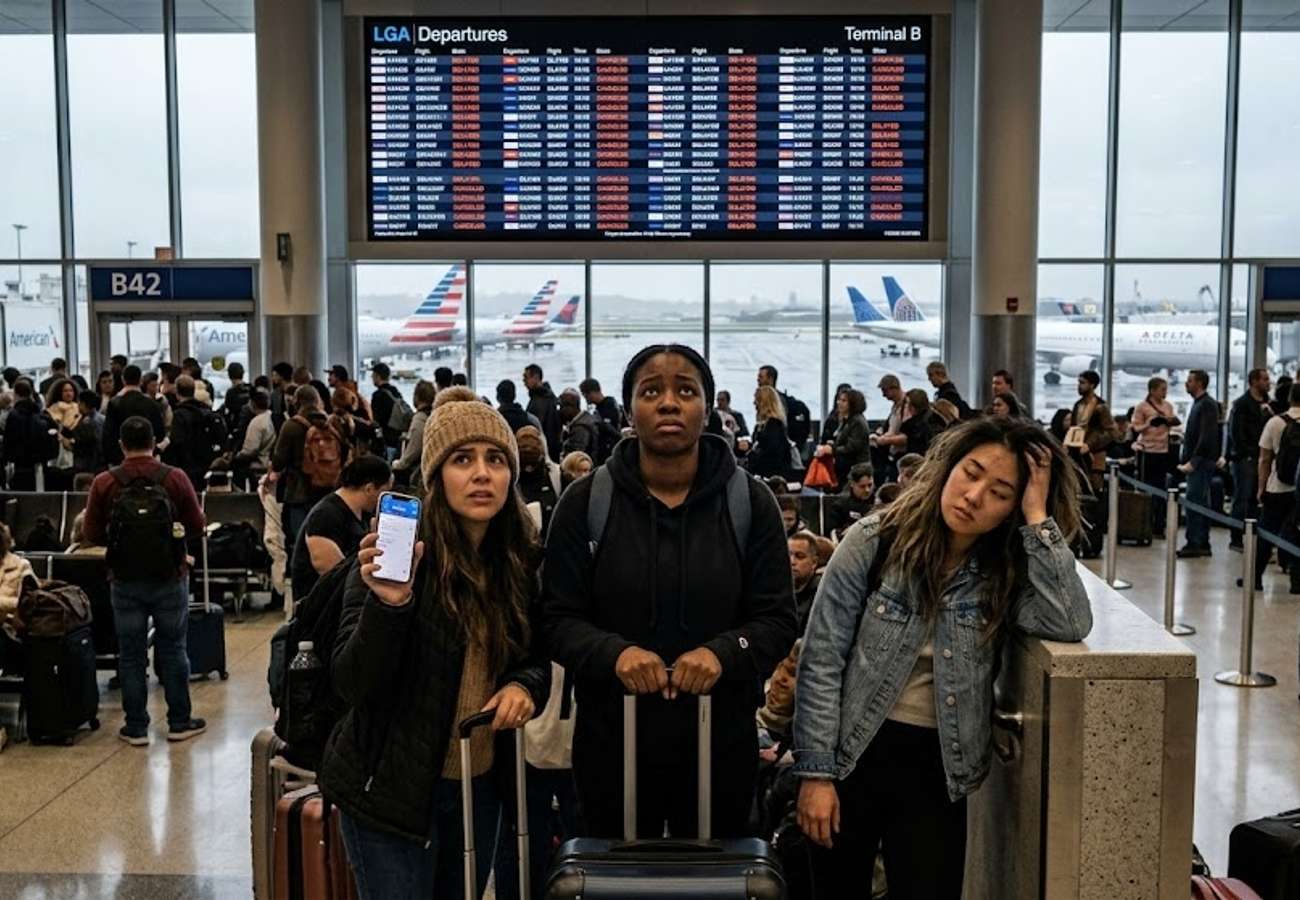
Image generated by AI
Air traffic staffing constraints triggered a ground stop at LaGuardia and rolling delays at JFK, straining New York’s already congested summer travel corridor.
The Disruption Details
On July 30, 2026, New York City air travel faced fresh disruption as a ground stop was issued at LaGuardia Airport. This ground stop temporarily halted departures bound for the airport, forcing airlines to hold aircraft at origin cities and pause some operations already on the ground. Flight-tracking data and airline status pages showed clusters of delayed and diverted services into New York, including to Newark Liberty, as carriers attempted to work around the constraint on LaGuardia arrivals.
Simultaneously, schedules at John F. Kennedy International Airport came under visible strain, with rolling departure and arrival delays accumulating through the day. According to published coverage and airline advisories, carriers warned passengers of extended tarmac times and last-minute gate changes as they navigated a combination of staffing and airspace capacity limits. Publicly available information indicates that staffing shortages in the region’s air traffic system played a central role in these simultaneous disruptions.
The simultaneous disruption at LaGuardia and JFK underscored the vulnerability of the New York metropolitan airspace, where even short-lived constraints can quickly cascade into widespread delays. With three major airports operating close to their regulated capacity caps, modest reductions in air traffic handling can magnify into hours of schedule dislocation for travelers.
Flight & Airport Impact Breakdown
Our analysis of flight tracking systems and airline advisories reveals the following operational impacts across the New York metropolitan area:
- LaGuardia Airport (LGA): A ground stop temporarily halted all departures bound for the facility. Aircraft at origin cities were held until release times were issued.
- John F. Kennedy International Airport (JFK): Schedules experienced rolling departure and arrival delays accumulating throughout the day, with airlines warning of extended tarmac times.
- Newark Liberty International Airport (EWR): Received diverted flights as airlines attempted to work around the arrival constraints at LaGuardia.
- Outstation Delays: Aircraft at origin cities were held waiting for release times to New York, resulting in departure delays across the national network.
- Airborne Holding: Some flights departed only to divert or enter extended airborne holding when arrival rates were further reduced.
- Crew Duty Limits: Same-day cancellations occurred when crews were no longer able to operate within duty-time limits after hours of delay.
Passenger Rights & Advisory
For the affected passenger, this means navigating a complex web of airline policies and federal regulations. Our analysis of the policy suggests that while U.S. Department of Transportation (DOT) rules do not mandate cash compensation for air traffic control or staffing delays, passengers are entitled to specific protections.
If a flight is canceled or significantly delayed, travelers can request a refund for the unused portion of their ticket. During ground stops, airlines must adhere to DOT tarmac delay rules, which limit the time a domestic flight can remain on the tarmac to three hours before passengers must be given the opportunity to deplane.
Airlines operating in and out of New York shifted quickly into recovery mode, issuing travel waivers. These waivers allow passengers on affected routes to change plans without additional fees. Travelers should:
- Check their airline's specific travel waiver terms, as these vary by carrier and often permit free rebooking within a specific time window.
- Request a full refund if they no longer wish to travel due to significant delays or cancellations.
- Monitor flight status closely via airline apps or official flight tracking systems like FlightAware.
- Allow additional connection time and consider early-morning departures, which historically offer a better chance of avoiding the worst of cascading delays.
Operational Jargon and Traveler Reality
For travelers, the operational jargon of ground stops and staffing programs translated into long lines at check-in, crowded gate areas, and a spike in missed connections. Social media posts and airline forums described aircraft holding at outstations waiting for release times to New York. Some passengers reported being rebooked through alternate hubs or shifted between New York airports as airlines tried to thread aircraft through narrow operating windows.
Travelers already in the terminals at LaGuardia and JFK encountered rolling updates on departure boards, with successive pushes of estimated times as traffic management initiatives were adjusted. Publicly available data showed wide variance between airlines and routes. Some carriers were able to move a portion of their schedules, while others saw a large share of flights significantly delayed.
Industry Analyst View
Reports indicate that this latest disruption is linked to staffing challenges in the air traffic facilities that manage flows into the New York area. Federal notices over the past two years have repeatedly highlighted controller staffing as a key constraint on operations at JFK and LaGuardia. This prompted temporary waivers that allowed airlines to fly fewer peak-time slots without penalty to ease pressure on the system.
Those measures were designed to buy time for recruiting and training additional controllers, but the need for a fresh ground stop at LaGuardia suggests that the margin for error remains slim. Publicly available information on earlier seasons shows that when staffing levels fall below planned thresholds, traffic managers often resort to ground stops and ground delay programs to keep overall volumes within what facilities can safely handle.
The New York terminal area is among the most complex in the United States, with converging arrival streams, dense departure banks, and frequent interactions between commercial, cargo, and business aviation. Experts cited in previous analyses of the region’s airspace have noted that this complexity means staffing gaps can have a larger operational impact here than at less congested airports.
Balancing Safety, Schedules, and Recovery
According to published coverage, airlines operating in and out of New York shifted quickly into recovery mode. Some carriers concentrated on preserving long-haul and high-demand flights, trimming frequencies or downguaging equipment on shorter domestic sectors to free up aircraft and crews.
Traffic managers used tools such as ground delay programs and flow restrictions to meter traffic into the constrained airspace. These measures are intended to match demand with the reduced staffing capacity while maintaining safety margins. Although disruptive in the short term, they are seen as preferable to allowing uncontrolled airborne queues or excessive congestion on taxiways and in terminal airspace.
Observers note that once a ground stop is lifted, recovery can take many hours. Aircraft and crews are often out of position, and gates and slots must be re-sequenced. As a result, passengers booked on later flights can feel the knock-on effects well after the initial constraint ends, particularly at hub airports where one delayed arrival can impact multiple onward departures.
Broader Resilience Questions
The latest episode feeds into a broader debate over how resilient New York’s air transport system is to staffing shocks and extreme weather, both of which have become more prominent in recent summers. Industry analyses of prior seasons have already ranked JFK, LaGuardia, and Newark among the nation’s most delay-prone airports, even under normal operating conditions.
Plans to address those vulnerabilities have ranged from incremental changes, such as refining slot rules and encouraging use of alternative airports, to long-term infrastructure projects and investments in new air traffic technology. However, these initiatives take time, and recent disruptions highlight that near-term solutions still depend heavily on steady staffing and conservative traffic management.
For now, passengers with upcoming itineraries through the New York area are being advised by airlines to monitor flight status closely, allow additional connection time, and consider early-morning departures. As the busy late-summer travel period continues, the region’s ability to keep the system running smoothly despite tight staffing will remain under close watch.
Navigating New York's congested airspace requires vigilance; understanding your rights is your best defense against cascading summer delays.
Related Travel Guides
Disclaimer
This article is for informational and educational purposes only. It does not constitute legal, financial, or professional advice. While we strive to provide accurate and up-to-date information, travel policies, regulations, and conditions change rapidly. Always verify information with official sources before making travel decisions. Nomad Lawyer makes no representations about the accuracy, reliability, completeness, or suitability of the information provided. Readers should consult qualified professionals for advice specific to their circumstances. The views expressed in this article are those of the author and do not necessarily reflect the views of Nomad Lawyer.
Preeti Gunjan
Contributor & Community Manager
A passionate traveller and community builder. Preeti helps grow the Nomad Lawyer community, fostering engagement and bringing the reader experience to life.
Learn more about our team →