
Greece Wildfires Disrupt Peak Summer Travel as Crete Evacuates Thousands and Flames Threaten Outer Suburbs of Athens
Greece battles severe wildfires in Crete and near Athens, forcing 8,000 evacuations and raising safety concerns for peak summer Mediterranean travel.

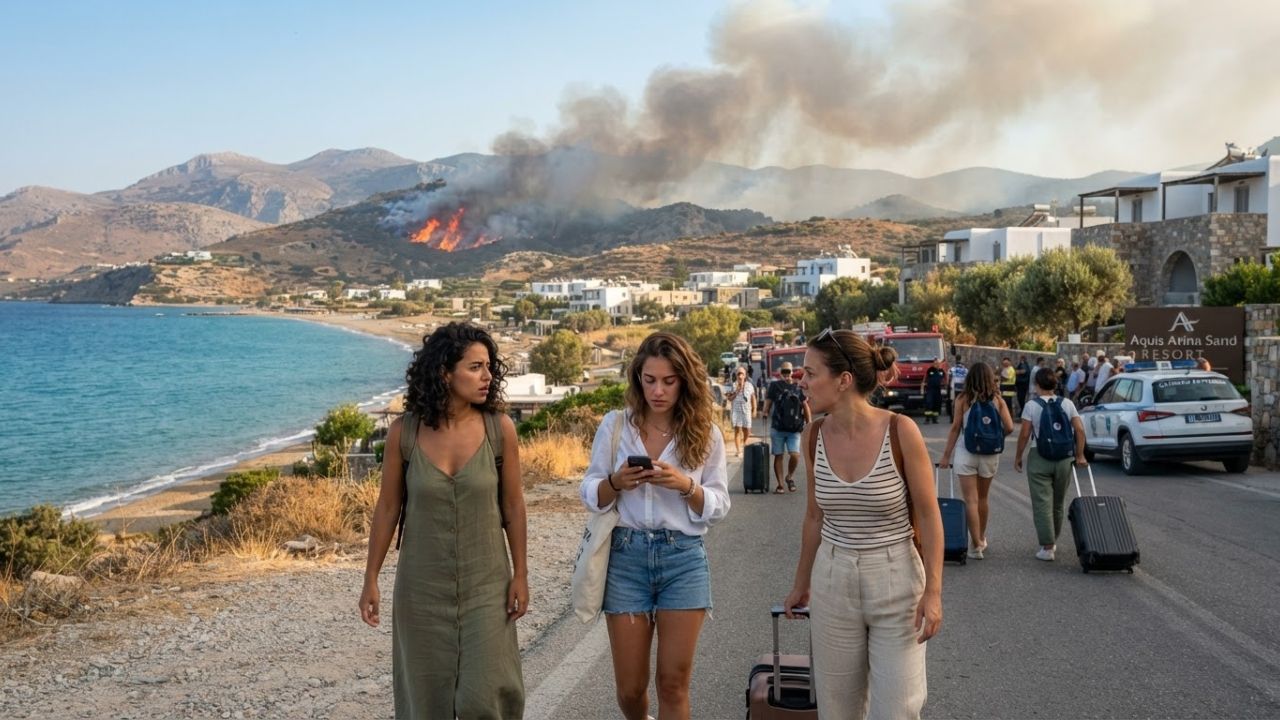
Image generated by AI
Greece's peak summer tourism season faces a major challenge as out-of-control wildfires force thousands of evacuations across Crete and outer Athens suburbs. Strong winds and dry summer temperatures continue to make ground containment operations extremely difficult.
As emergency services battle fast-moving blazes, Greece wildfires disrupt summer tourism networks during the busiest peak vacation period. Civil protection authorities have ordered evacuations across key sectors of Crete, relocating approximately 8,000 residents and tourists from threatened hotels and coastal communities. With flames also approaching the outskirts of Athens, travelers are facing significant safety advisories, road closures, and localized accommodation changes as firefighters race to control the wildfires under severe dry wind conditions.
Regional Hazards: Crete Evacuates Thousands of Residents and Tourists
Crete, Greece’s largest island and one of its most important tourism hubs, has become one of the primary targets for wildfire activity. Driven by high wind speeds, flames have advanced quickly across dry regional terrain, forcing authorities to coordinate large-scale evacuations.
Immigration and regional safety records indicate that around 8,000 people were moved from threatened sectors on the island. This total includes approximately 2,000 international tourists who were evacuated from hotels, guesthouses, and beachfront rentals. Emergency responders have established temporary shelters to host displaced visitors and residents while monitoring fire paths near key vacation centers like Chania, Heraklion, and Rethymno.
Capital Protection: Athens Battles Blazes in Porto Germeno and Mount Poikilo
The wildfire threat has also extended to areas surrounding the Athens metropolitan district, which receives millions of visitors annually. A severe fire near Porto Germeno, a coastal suburb west of Athens, forced immediate evacuation orders for residents in Porto Germeno, Psatha, and Mytikas.
- Maritime Rescues: When land-based evacuation routes became blocked by smoke and flames, rescue teams utilized sea vessels to evacuate hundreds of residents and visitors along the coast.
- Western Outskirts: A separate blaze on Mount Poikilo, on the western fringe of the capital, forced precautionary measures, including relocating patients from a local healthcare facility.
- Wider Attica Region: Firefighting teams have also been deployed to combat outbreaks in Western Attica, Boeotia, Evia, and the Peloponnese, highlighting the national scale of the emergency.
Ground Operations: High Temperatures and Severe Winds Challenge Firefighters
The Hellenic Fire Service has deployed extensive national resources to combat the blazes. These deployments include thousands of ground personnel, specialized wildfire vehicles, water-dropping aircraft, and heavy helicopters.
However, dry vegetation and high temperatures allow the fires to spread with extreme speed. Strong, shifting winds make containment efforts unpredictable, as flames can easily jump across main roads, open fields, and forest firebreaks. During periods of peak winds, water-dropping aircraft are often forced to ground for safety, increasing the reliance on ground crew operations to protect residential perimeters.
Travel Coordination: Managing Hotel Relocations and Regional Flight Routes
While wildfires have caused localized disruptions, Greece's broader international travel network continues to function. Main airports in Athens, Heraklion, and Chania remain open, and ferry transit systems are running scheduled routes to unaffected islands.
Travelers heading to regions near Attica or Crete must monitor safety alerts and maintain direct communication with their lodging providers. Many tour operators are rearranging guest check-ins, moving visitors from high-risk inland locations to safer coastal resorts. Visitors are advised to follow official civil protection instructions and avoid traveling near active emergency operations.
Mediterranean Climate: Wildfire Vulnerability Shifts Tourism Policies
The wildfire crisis in Greece is part of a larger summer hazard pattern affecting multiple southern European countries. Dry weather and extreme heat have also triggered significant fire incidents in France and Spain, raising concerns about the future of peak summer tourism in the Mediterranean.
For national governments, balancing tourism expansion with environmental safety has become an important planning priority. Tourism boards are investing in early-warning systems, fire-prevention infrastructure, and safety guides to protect international visitors during the summer months.
Why This Matters (Information Gain & Experience)
For the traveler, these wildfire incidents mean that checking regional safety alerts before starting a journey is essential. Visitors should verify that their accommodation is fully accessible, as road closures can change transit times and restrict access to popular historical sites.
From a legal and logistical standpoint, these events highlight the importance of comprehensive travel insurance that covers weather-related disruptions and emergency cancellations. Knowing how to access local emergency updates through mobile networks ensures that travelers can respond quickly if evacuation orders are issued, minimizing risks to their families.
Data Table
| Travel Impact Sector | Emergency Status / Activity | Visitor Safety Action |
|---|---|---|
| Accommodation Changes | Selected hotels relocated in fire risk areas | Relocating visitors from risk zones to safe shelters |
| Road Restrictions | Temporary closures near active fire lines | Advising travelers to avoid restricted highway sectors |
| Local Activity Changes | Outdoor excursions and tours suspended | Recommending indoor activities during high smoke periods |
| Transport Operations | Main airports and ferries remain operational | Urging travelers to monitor flight and ferry updates |
| Safety Communications | Emergency alerts broadcast to mobile devices | Directing visitors to follow civil protection warnings |
Key Takeaways
- Evacuation Scale: Around 8,000 people, including approximately 2,000 tourists, were evacuated from threatened areas in Crete.
- Athens Threat: Suburbs like Porto Germeno and Mount Poikilo faced active blazes, requiring maritime evacuations and hospital relocations.
- Wind Challenges: Shifting winds and high temperatures have accelerated the spread of fires, limiting the use of water-dropping planes.
- Transit Continuity: Major Greek airports, harbors, and ferry routes remain active and open outside of immediate fire zones.
- Mediterranean Hazard: The emergency aligns with a wider fire season affecting travel zones in Spain and France.
FAQ
Which parts of Greece are currently affected by the wildfires?
Active fires have been reported in Crete, Attica near Athens, Western Attica, Boeotia, Evia, and parts of the Peloponnese.
Are airports in Greece closed due to the fires?
No, major airports including Athens International Airport, Heraklion Airport, and Chania Airport continue to operate scheduled flights.
How many people have been evacuated from Crete?
Approximately 8,000 people, including 2,000 tourists, were relocated from fire-threatened hotels and residential areas in Crete.
What should I do if my hotel is near a wildfire zone?
Monitor official civil protection alerts, follow evacuation orders immediately, and contact your travel operator or hotel to arrange relocation.
How are evacuations managed if roads are blocked by fire?
Emergency services coordinate coastal evacuations using sea vessels, as seen during the rescue operations in Porto Germeno.
Related Travel Updates and Regional Guides
- Related: Porto Santo Complements Funchal With Luxair Luxembourg Flights, New Airport Terminal Tender and Integrated Buses to Support Sustainable Tourism
- Related: Ireland Tourism Growth Gathers Momentum as Spain, United States and Germany Drive Inbound Leisure Travel Across Five Months in 2026
- Related: Five Affordable Winter Sun Destinations Offering Competitive Travel Packages Outside of Europe for the 2026-2027 Season
Disclaimer
This article is for informational and educational purposes only. It does not constitute legal, financial, or professional advice. While we strive to provide accurate and up-to-date information, travel policies, regulations, and conditions change rapidly. Always verify information with official sources before making travel decisions. Nomad Lawyer makes no representations about the accuracy, reliability, completeness, or suitability of the information provided. Readers should consult qualified professionals for advice specific to their circumstances. The views expressed in this article are those of the author and do not necessarily reflect the views of Nomad Lawyer.
Kunal K Choudhary
Co-Founder & Contributor
A passionate traveller and tech enthusiast. Kunal contributes to the vision and growth of Nomad Lawyer, bringing fresh perspectives and driving the community forward.
Learn more about our team →