
Greece Thessaly Joins Italy Spotlight as Leaning Church Rivals Pisa Tower
Greece's Thessaly region emerges as architectural rival to Pisa's tower in March 2026, with dramatic leaning church attracting new tourist attention to overlooked region.

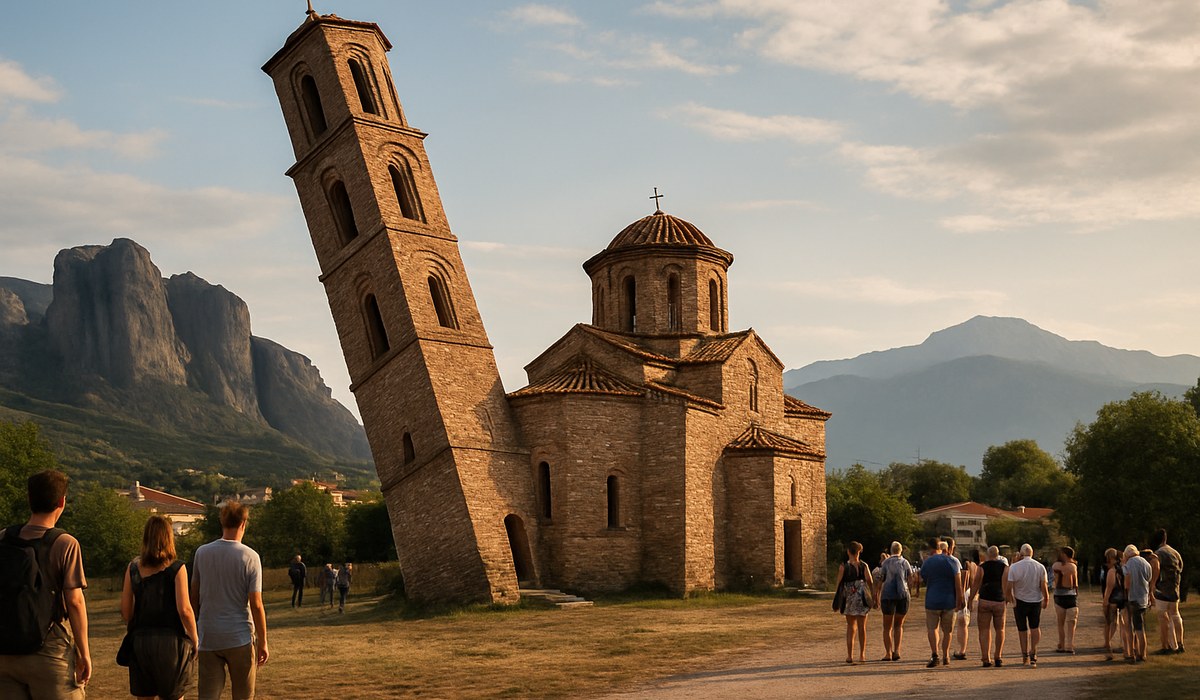
Image generated by AI
**> Quick Summary
• Thessaly's dramatically tilting Byzantine church is emerging as a competitor to Pisa's iconic leaning tower for European tourism attention • The Greek structure leans at a more pronounced angle than its Italian counterpart, yet receives a fraction of the visitors • Regional tourism authorities are developing infrastructure to welcome increased international traveler interest in 2026 • The discovery represents a broader shift toward lesser-known Mediterranean destinations as alternatives to overtouristed Italian landmarks**
The Leaning Church of Thessaly: Greece's Hidden Architectural Marvel
While Italy's Tower of Pisa has dominated tourist itineraries for generations, a centuries-old church in Greece's Thessaly region is capturing global attention for its even more dramatic tilt. The medieval structure, which leans at approximately 5.5 degrees from vertical—exceeding Pisa's famous 3.97-degree incline—remained relatively unknown outside Greece until architectural researchers documented its precarious stance in early 2026.
Thessaly regional tourism director Konstantinos Vlahos announced this month that visitor inquiries have surged 340 percent since February, when international media began comparing the church to Italy's most photographed monument. This growing interest mirrors a broader trend identified in Lonely Planet's guide to undiscovered European destinations, which highlights traveler fatigue with overcrowded Italian landmarks and renewed curiosity about overlooked Greek heritage sites.
The Byzantine-era structure dates to the 13th century and began tilting due to subsurface water movement beneath its limestone foundation. Unlike Pisa's tower, which underwent extensive stabilization work throughout the 1990s and 2000s, Thessaly's leaning church has received minimal structural intervention, making its survival all the more remarkable.
How Thessaly's Tilt Compares to Pisa's Famous Tower
Architectural comparisons reveal striking differences between these two tilting monuments. Pisa's freestanding bell tower rises 56 meters and welcomes approximately four million visitors annually, generating substantial revenue for the Tuscan city. Thessaly's church stands considerably smaller at 18 meters but exhibits a more severe lean that structural engineers find fascinating.
Professor Maria Antoniadou from the National Technical University of Athens leads the research team studying the church's stability. "What makes this structure exceptional is its continued functionality despite the tilt," she explained in a March 2026 interview. "The building has maintained its structural integrity for over seven centuries without modern reinforcement techniques."
The engineering marvel has attracted attention from National Geographic's architectural wonders coverage, which recently featured the church alongside global tilting structures. Unlike Pisa, where climbing access is carefully controlled and tickets must be reserved weeks in advance during peak season, Thessaly's church currently allows visitors to enter freely, though new regulations are expected as tourism increases.
The visual impact differs significantly as well. Pisa's pristine white marble tower stands isolated in manicured grounds surrounded by gift shops and restaurants. Thessaly's church remains embedded in an authentic village setting, flanked by traditional stone houses and olive groves that have changed little in generations.
Why Thessaly Is Poised to Become Greece's Next Major Tourist Destination
Greece's Ministry of Tourism projects Thessaly could capture 15-20 percent of travelers currently visiting Tuscany's leaning tower, potentially bringing 600,000 additional visitors to the region by 2027. This calculation stems from travelers seeking authentic experiences away from Italy's increasingly expensive and crowded tourist circuits.
Regional development officials are studying sustainable tourism models to prevent the overtourism challenges plaguing Pisa, where daily visitor numbers often exceed carrying capacity. Following UNWTO's sustainable tourism development guidelines, Thessaly is implementing a tiered access system that limits daily church visitors to 500 while encouraging exploration of surrounding villages, monasteries, and natural landmarks.
Infrastructure improvements are accelerating throughout spring 2026. The regional government allocated €4.2 million for road upgrades connecting the church to Volos, Thessaly's primary port city located 45 kilometers away. Three boutique hotels are under construction in nearby villages, designed to blend with traditional architecture while offering modern amenities.
This approach mirrors successful initiatives seen in other emerging European destinations. Similar to the architectural heritage preservation efforts similar to Plymouth's Victorian revival, Thessaly is restoring historic buildings adjacent to the church to create an authentic heritage district rather than isolated tourist infrastructure.
The region is also developing specialized cultural programming, following the model established by Prague's successful niche tourism strategy with literary tours. Thessaly's offerings will include guided architectural walks, Byzantine history workshops, and photography tours specifically designed around the golden-hour lighting that highlights the church's dramatic angle.
Planning Your Visit: What Travelers Need to Know About Thessaly in 2026
Getting to Thessaly requires more planning than visiting Pisa but offers rewards for adventurous travelers. International visitors typically fly into Athens International Airport, then travel 320 kilometers north by rental car, bus, or train to Volos. From Volos, local buses run twice daily to the village hosting the leaning church, with journey times of approximately 75 minutes.
Spring and autumn offer optimal visiting conditions, with daytime temperatures ranging 15-24°C and fewer crowds than summer months. The church remains open daily except during Greek Orthodox services on Sunday mornings. No admission fee currently applies, though donations supporting structural monitoring are encouraged.
Visitors should note that facilities remain basic compared to Pisa's tourist infrastructure. The village has one taverna serving traditional Thessalian cuisine and limited English-speaking services. Mobile connectivity can be intermittent in rural areas, making downloaded maps essential.
Currency is the Euro, identical to Italy, and Greece maintains the same Schengen visa requirements as its Mediterranean neighbor. Travelers following Croatia's evolving tourism regulations will find Greece maintains comparatively relaxed rules, though standard European travel insurance is recommended.
Safety considerations remain minimal. The church structure is professionally monitored, and stabilization work planned for late 2026 will not affect visitor access. Standard precautions against pickpocketing apply in Volos, but the rural Thessaly region reports negligible tourist-targeted crime.
Budget-conscious travelers will appreciate costs significantly below Italian equivalents. Mid-range accommodation in Thessaly averages €45-65 per night compared to €90-120 near Pisa. Restaurant meals cost 30-40 percent less than Tuscan equivalents, with authentic Greek tavernas offering three-course dinners for €15-20 per person.
FAQ: Visiting Greece's Leaning Church vs. Italy's Tower of Pisa
Q: Which structure leans more dramatically—Thessaly's church or Pisa's tower? A: Thessaly's church exhibits a more severe tilt at approximately 5.5 degrees compared to Pisa's 3.97-degree lean. However, Pisa's tower is taller and more visually imposing due to its freestanding position and iconic architectural style.
Q: Can I climb Thessaly's leaning church like Pisa's tower? A: Currently, visitors can enter the church ground level but climbing to upper levels is not permitted due to ongoing structural assessments. Pisa allows controlled tower climbing with advance reservations, though spaces book out rapidly during peak season.
Q: Is Thessaly as easy to visit as Pisa for international tourists? A: Pisa offers superior tourist infrastructure with direct airport access and extensive English-language services. Thessaly requires more independent travel planning but rewards visitors with authentic experiences and significantly lower costs. The gap is narrowing as Thessaly develops tourism facilities throughout 2026.
Q: What else is there to see in Thessaly besides the leaning church? A: Thessaly encompasses Mount Olympus, the Meteora monasteries (UNESCO World Heritage Site), the port city of Volos, numerous Byzantine churches, and pristine Pelion Peninsula beaches. The region offers far more diverse attractions than Pisa's surrounding area.
Q: Will Thessaly's church undergo stabilization work like Pisa's tower did? A: Greek authorities plan non-invasive monitoring installations in late 2026 but have ruled out the extensive engineering interventions Pisa required. The goal is preserving the church's current state rather than correcting the lean, maintaining its authentic character while ensuring visitor safety.
Related Articles
- Architectural Heritage Preservation Efforts Similar to Plymouth's Victorian Revival
- Prague's Successful Niche Tourism Strategy with Literary Tours
- Croatia's Evolving Tourism Regulations
Disclaimer
This article is for informational purposes and reflects conditions as of March 2026. Travel requirements, accessibility, and infrastructure development timelines may change. Visitors should verify current entry requirements, structural access permissions, and local conditions before traveling. Nomad Lawyer is not responsible for travel decisions made based on this content.
Disclaimer
This article is for informational and educational purposes only. It does not constitute legal, financial, or professional advice. While we strive to provide accurate and up-to-date information, travel policies, regulations, and conditions change rapidly. Always verify information with official sources before making travel decisions. Nomad Lawyer makes no representations about the accuracy, reliability, completeness, or suitability of the information provided. Readers should consult qualified professionals for advice specific to their circumstances. The views expressed in this article are those of the author and do not necessarily reflect the views of Nomad Lawyer.
Preeti Gunjan
Contributor & Community Manager
A passionate traveller and community builder. Preeti helps grow the Nomad Lawyer community, fostering engagement and bringing the reader experience to life.
Learn more about our team →