
Greece Deploys AI Tourism Tracker to Combat Overtourism
Skiathos joins Spain, Portugal, and France in rolling out real-time tourism intelligence systems to manage visitor flows, protect infrastructure, and boost local economies while preventing overtourism.

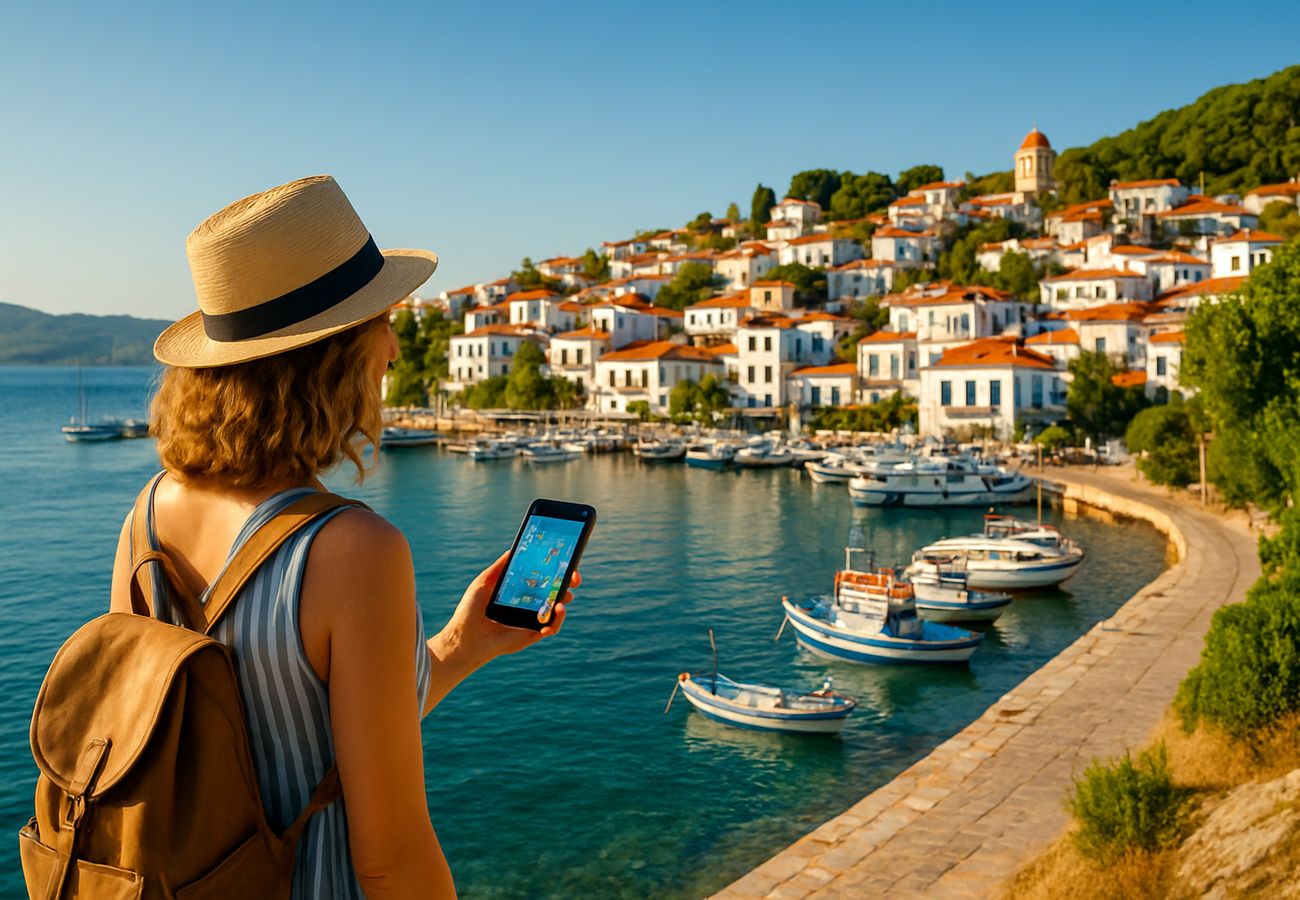
Image generated by AI
Greece Goes Digital: The Tourism Intelligence Game-Changer Nobody Saw Coming
Greece just quietly joined the big leagues of smart tourism management. While most travelers are still snapping Instagram photos at overcrowded Santorini, the island of Skiathos has rolled out something far more sophisticated: a real-time Tourism Intelligence System (TIS) designed to solve the overtourism crisis that's quietly suffocating Europe's most beloved destinations.
This isn't just another monitoring system. It's a fundamental reshaping of how entire islands manage the millions of visitors flooding their shores each year. And frankly, it's the kind of technology that should have existed five years ago.
The Problem Europe Finally Admitted
Every summer, the same nightmare plays out across Mediterranean hotspots. Narrow streets collapse under foot traffic. Beaches transform into human parking lots. Water systems strain. Locals flee. Residents grow resentful. Tourists leave disappointed. Nobody wins.
Traditional tourism management couldn't cut it. Counting arrivals at airports and ports told you how many people showed up—nothing more. Where did they go? How long did they stay? Were they overwhelming specific beaches or neighborhoods? Nobody really knew.
Reddit: "Visited Santorini last summer. Couldn't find a square inch of sand that wasn't packed. Definitely going somewhere else next year." — r/travel
Skiathos recognized this blind spot and decided to fix it.
How the System Actually Works
The new Tourism Intelligence System integrates multiple real-time data streams into a single analytical platform. Think of it as a nervous system for the entire island—constantly sensing, processing, and responding.
The system monitors:
Visitor flows – Tracks arrivals, departures, and movement patterns across the island in real time.
Accommodation capacity – Monitors hotel occupancy rates and rental availability to prevent overcrowding.
Mobility patterns – Observes traffic, public transport usage, and congestion at beaches and cultural sites.
Visitor feedback – Collects satisfaction surveys and reviews to inform service improvements.
Demand forecasting – Predicts high-traffic periods weeks in advance so authorities can adjust staffing and services.
Infrastructure stress – Identifies locations under strain before roads crack or water systems fail.
What makes this different from previous attempts? The system doesn't just report data—it predicts problems before they happen. If the algorithm detects that a beach is heading toward dangerous overcrowding, authorities can implement mitigation measures before thousands of angry tourists show up.
Spain, Portugal, France, Germany, Austria, Croatia—And Now Greece
Skiathos isn't pioneering this approach alone. A growing coalition of European destinations has already implemented similar systems.
Spain deployed real-time platforms across major cities and islands to manage arrivals and hotel capacity. Portugal uses predictive analytics to anticipate seasonal peaks. France monitors congestion in Paris, the Alps, and coastal regions. Germany integrated AI dashboards into urban and Alpine resorts. Austria combined tourism data with environmental monitoring to protect the Alps. Croatia adopted real-time analytics across its Adriatic coastline and heritage sites.
Greece is now officially part of this digital revolution. And it's happening faster than most travelers realize.
What This Actually Means for Tourists
Here's the uncomfortable truth: strict capacity management could mean fewer people visiting popular destinations. But here's the upside—the experience improves dramatically.
With real-time monitoring, you get:
Fewer crowds – Popular beaches and cultural sites remain accessible instead of turning into human zoos.
Smarter transport – Traffic management ensures you're not stuck in gridlock trying to reach a beach.
Better services – Staff and resources are allocated based on actual demand, not guesswork.
Personalized recommendations – The system learns visitor behavior patterns and can suggest less-crowded alternatives that actually match your interests.
The result? Visitors end up having better trips. Fewer bottlenecks. More authentic experiences. Higher satisfaction. More repeat visitors.
That's the win-win nobody talks about.
The Real Prize: Protecting Infrastructure and Communities
Beyond visitor satisfaction, Skiathos is protecting something irreplaceable—its own future.
Overtourism doesn't just annoy residents; it destroys destinations. Water supplies can't sustain million-visit surges. Roads deteriorate under unsustainable foot traffic. Ancient sites crumble from contact with millions of hands. Historic neighborhoods lose character as locals are priced out by vacation rental speculation.
By managing visitor flows intelligently, Skiathos ensures:
Water and energy remain sustainable during peak seasons.
Environmental zones are protected from ecological damage.
Cultural heritage is preserved for future generations.
Local economies thrive year-round instead of collapsing after peak season.
Residents actually enjoy living on their own island.
This is how destinations survive the 21st-century tourism tsunami. Not by turning people away—by managing them smartly.
The Long Game: Predictive Planning
What makes this system genuinely revolutionary is its predictive capability. Authorities can now:
Assess the actual carrying capacity of beaches, streets, ports, and cultural sites.
Forecast visitor flows months in advance and adjust marketing accordingly.
Implement targeted interventions during predictable high-demand periods.
Shift events and promotions to distribute tourism more evenly across seasons.
This level of strategic control transforms tourism from a chaotic force to a managed economic engine. Instead of being knocked around by seasonal swings, destinations can shape their own destiny.
Is This the Blueprint for Global Tourism?
Skiathos is essentially writing the playbook for 21st-century destination management. Other tourist hotspots—from Barcelona to Venice to Thailand's islands—are watching closely.
The key lessons being learned:
Start by integrating existing data sources (hotel bookings, transport records, mobile signals) instead of launching expensive new infrastructure.
Include environmental and social metrics alongside visitor counts.
Make real-time data accessible to local businesses, transport operators, and hospitality staff.
Use predictive analytics, not just historical data.
Prioritize resident wellbeing alongside visitor satisfaction.
The technology is proven. The framework works. The only question now is whether other destinations will act before their infrastructure collapses under visitor weight.
The Legal and Ethical Question Nobody's Asked
Here's where it gets tricky. Real-time visitor tracking raises privacy concerns. How is Skiathos collecting location data? Are tourists being tracked without explicit consent? Are privacy regulations like GDPR being properly applied?
According to data protection authorities in the EU, tourism intelligence systems must operate with explicit user consent and transparent data handling practices. Skiathos' implementation hasn't yet released detailed privacy protocols, which merits closer scrutiny from both travelers and regulators.
This technology is powerful. It must be deployed responsibly.
What Happens Next?
Within the next 12 months, expect:
More Greek islands will adopt similar systems, particularly Mykonos, Santorini, and Crete.
EU tourism boards will establish unified standards for data collection and capacity management.
Private tech companies will develop standardized TIS platforms that smaller destinations can deploy affordably.
Countries outside Europe (Portugal's Algarve, Turkey's Mediterranean coast, Morocco) will race to implement competing systems.
This isn't a niche experiment anymore. Real-time tourism intelligence is becoming industry standard for any destination serious about long-term sustainability.
The Bottom Line
Skiathos just proved something Europe needed to prove: overtourism isn't inevitable. It's manageable. Infrastructure doesn't have to collapse. Residents don't have to flee. Tourists don't have to suffer through overcrowded experiences.
Intelligent, data-driven management changes everything.
The question now is whether other destinations will act fast enough to prevent the damage that's already accumulated in places like Venice, Barcelona, and Dubrovnik—or whether they'll wait until their infrastructure is irreversibly broken.
Time's running out.
Smart tourism isn't about turning tourists away—it's about welcoming them smarter.
Related Travel Guides
Alaska Airlines Toy Story Livery: Skies Get Magical in San Jose
Business Class Upgrades on Long-Haul Flights: What Passengers Actually Pay to Cross the Oceans
Disclaimer
This article is for informational and educational purposes only. It does not constitute legal, financial, or professional advice. While we strive to provide accurate and up-to-date information, travel policies, regulations, and conditions change rapidly. Always verify information with official sources before making travel decisions. Nomad Lawyer makes no representations about the accuracy, reliability, completeness, or suitability of the information provided. Readers should consult qualified professionals for advice specific to their circumstances. The views expressed in this article are those of the author and do not necessarily reflect the views of Nomad Lawyer.
Preeti Gunjan
Contributor & Community Manager
A passionate traveller and community builder. Preeti helps grow the Nomad Lawyer community, fostering engagement and bringing the reader experience to life.
Learn more about our team →