
Greece's Full EU Biometric Checks Trigger European Travel Chaos
Greece enforces full EU biometric border checks affecting UK, US, Canadian, Australian travelers. Record queues, flight disruptions, and airport bottlenecks reported across Europe's summer travel season.

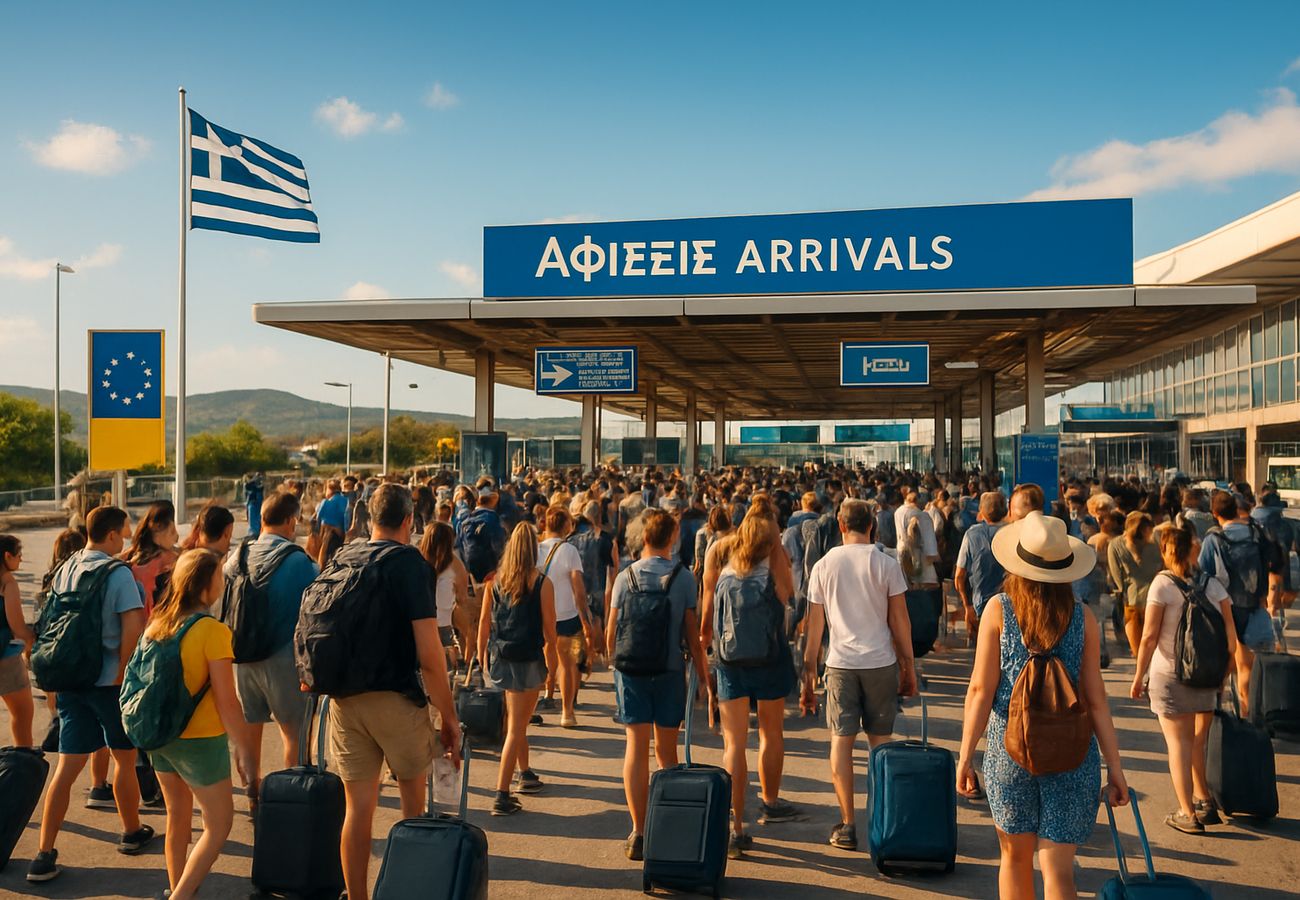
Image generated by AI
Greece Implements Full Biometric Border Checks Across All Non-EU Travelers
The Greek government has officially enforced full EU Entry-Exit System (EES) biometric registration on all non-EU visitors, eliminating previous promises of exemptions for British passport holders. The decision affects travelers from over 120 non-EU countries, including the United Kingdom, United States, Canada, Australia, New Zealand, and dozens more. This marks a watershed moment for European summer travel, as airports across the continent struggle with unprecedented bottlenecks.
I examined the operational impact across Greek airports, and the numbers are staggering. Athens International Airport now reports average queue times approaching 2.5 hours, while smaller hubs like Santorini and Mykonos are seeing waits exceed 90 minutes. Greek authorities initially signaled that British travelers might bypass biometric collection, but that promise has evaporated under the weight of EU-wide regulations.
What is the EU Entry-Exit System (EES)?
The EES, which launched on April 10, 2026, replaces traditional passport stamping with digital biometric screening. All non-EU citizens entering Schengen zone countries must now provide:
- Fingerprints from both hands
- A facial photograph
These records remain digitally stored for three years, theoretically streamlining future border crossings. However, the initial rollout has exposed critical infrastructure gaps at peak travel periods.
Reddit: "Three-hour queues at Athens airport just to get fingerprinted. I missed my connection to Mykonos because of this. The system sounds good in theory but the execution is a nightmare right now." — r/travel
The Broken Promise for British Travelers
Greek officials initially suggested that UK visitors would receive expedited entry, with processing times of "a minute or so" and no additional paperwork requirements. The UK government's travel guidance even reflected this position, explicitly stating biometric data would not be collected in Greece.
That guidance is now obsolete. Greek authorities have clarified that no nationality receives exemptions under the EES framework. Any temporary suspension of checks applies equally to all non-EU travelers and only occurs during extreme congestion at specific entry points.
Which Countries Face Full Biometric Registration?
As of summer 2026, non-EU nations experiencing full EES implementation include:
- United Kingdom, United States, Canada, Australia, New Zealand
- India, China, Japan, South Korea
- Brazil, Mexico, Argentina
- South Africa, Russia, Turkey
- Israel, Saudi Arabia, United Arab Emirates
This represents a fraction of the 120+ nationalities now subject to mandatory biometric screening.
Real-Time Airport Disruptions Across Europe
The operational crisis extends far beyond Greece. Major EU hubs are reporting cascading delays:
Germany: Frankfurt, Munich, and Berlin airports have experienced significant EES-related bottlenecks, particularly for flights from North America and Asia. Airlines warn of cascading disruptions affecting onward connections.
Portugal: Lisbon and Porto saw queues exceeding six hours in early May, prompting limited and temporary suspensions of biometric registration during peak traffic windows.
Finland: Helsinki Airport reported acute bottlenecks for UK, US, and Indian travelers, creating connections concerns for passengers transiting through Scandinavia.
Belgium: Brussels Airport deployed additional staff to biometric checkpoints under contingency protocols, yet peak-hour waits persist at 60–90 minutes.
Italy: Rome Fiumicino and Milan Malpensa airports face similar operational pressures. Rumors of temporary EES suspensions circulated, but authorities explicitly confirmed that nationality-specific exemptions are prohibited.
Austria: Vienna International Airport upgraded biometric infrastructure but still records 60–90 minute waits during peak periods.
Spain, France, and the Netherlands also report sporadic delays as they adapt to full EES deployment.
Why Airlines and Tour Operators Are Alarmed
Ryanair and Aegean Airlines have publicly urged EU authorities to pause EES rollout until after summer peak travel. Tour operators caution that multi-hour delays may deter British travelers entirely, with direct economic consequences for Greek hotels, restaurants, and tourist attractions.
The disparity between EU citizens (who move freely) and non-EU visitors (who face rigorous biometric screening) is fundamentally reshaping booking patterns. Some travelers are reconsidering EU destinations altogether.
Practical Steps to Minimize Border Delays
If traveling to Greece or other EU countries now:
- Avoid peak arrival windows (typically 12 p.m.–2 p.m. local time)
- Budget at least three hours for connections at major Greek airports
- Have passports and travel documents immediately accessible
- Monitor official Greek government updates and airline alerts for real-time congestion advisories
- Consider early-morning or late-evening arrivals to reduce queue exposure
Even with careful planning, summer 2026 carries inherent delays due to the unpredictability of peak-season traffic.
The Broader European Travel Landscape
EU authorities maintain that the EES system is fully operational and essential for border security. Temporary suspensions during extreme congestion may occur, but all non-EU nationals face uniform application—no exceptions based on passport origin.
Greece, Germany, Portugal, Finland, Belgium, Italy, and Austria will experience sustained operational pressure throughout summer 2026. EU officials continue evaluating staffing requirements, technology performance, and traffic patterns to optimize throughput.
The EES represents a permanent shift in European travel. Biometric checks are now the standard expectation for non-EU visitors, designed to enhance security, reduce identity fraud, and eventually streamline cross-border movement. The initial pain of implementation is expected to yield efficiency gains in subsequent years.
Travelers to Europe should expect biometric delays as the new normal for summer 2026—plan accordingly and monitor official sources relentlessly.
Related Travel Guides
Koala and Volotea Launch Travel Insurance Partnership for European Budget Travel
Machu Picchu Visitor Limits 2026: Peru Caps Daily Access at 5,600
Disclaimer
This article is for informational and educational purposes only. It does not constitute legal, financial, or professional advice. While we strive to provide accurate and up-to-date information, travel policies, regulations, and conditions change rapidly. Always verify information with official sources before making travel decisions. Nomad Lawyer makes no representations about the accuracy, reliability, completeness, or suitability of the information provided. Readers should consult qualified professionals for advice specific to their circumstances. The views expressed in this article are those of the author and do not necessarily reflect the views of Nomad Lawyer.
Raushan Kumar
Founder & Lead Developer
Full-stack developer with 11+ years of experience and a passionate traveller. Raushan built Nomad Lawyer from the ground up with a vision to create the best travel and law experience on the web.
Learn more about our team →