
Greece Aligns With Italy And More As Quiet Coastal Escapes Attract Travellers Beyond Crowded Resorts
Greece Aligns With Italy And More As Quiet Coastal Escapes Attract Travellers Beyond Crowded Resorts

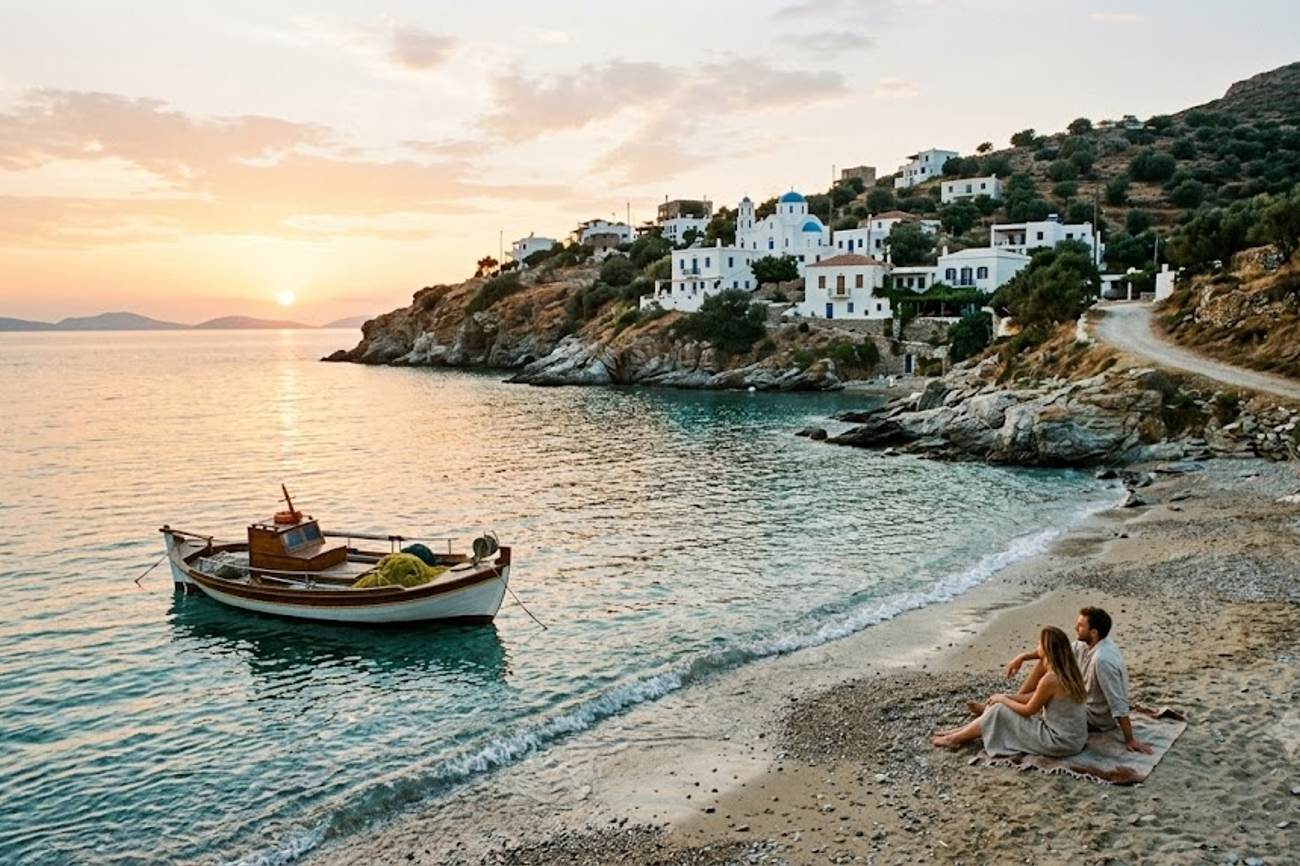
Image generated by AI
While traditional Greek tourism hubs like Santorini and Mykonos have seen saturation levels that trigger local protests, the Ambracian Gulf remains a low-density alternative, offering a stark contrast to the overtourism metrics reported in the Cyclades. This shift toward "slow travel" and nature-centric destinations is not accidental; it reflects a broader movement within the European travel market where high-net-worth and experiential travelers are migrating away from primary hubs toward secondary and tertiary regions to avoid the crowds and price volatility of peak-season hotspots.
The Amvrakikos Shift: Nature-Driven Metrics
The Ambracian Gulf, or Amvrakikos Gulf, is positioning itself as a strategic alternative to the Ionian coast's high-traffic zones. The region's primary draw is its unique geographical profile: a largely enclosed body of water connected to the Ionian Sea via a narrow passage near Preveza. This creates a sheltered ecosystem that supports a biodiversity level rarely found in the more commercialized beach resorts of Greece.
From a data perspective, the Amvrakikos National Park serves as the region's biological anchor. The wetlands here support more than 250 bird species, including high-value sightings such as flamingos, pelicans, and herons. For the travel industry, this transforms the region from a simple "sun and sea" destination into an ornithological and ecological hub. The presence of dolphins and sea turtles further diversifies the product offering, allowing local operators in Menidi and Vonitsa to pivot from generic tourism to specialized guided boat and kayaking excursions.
This transition is part of a wider trend identified by the World Tourism Organization (UNWTO), where nature-based tourism is growing at a faster rate than traditional urban or beach tourism. By leveraging the specific wildlife of the northern wetlands, the Ambracian Gulf is tapping into the "regenerative travel" market—travelers who seek to minimize their footprint while maximizing their connection to local ecosystems.
Comparative Market Analysis: Primary Hubs vs. Secondary Regions
To understand the value proposition of the Ambracian Gulf, one must compare it to the established Greek tourism corridors. While the primary islands focus on high-volume, short-stay luxury, the northwest mainland is optimizing for longer-stay, low-impact visits.
The following table illustrates the divergence in traveler experience and regional focus between the traditional "Blue" tourism of the islands and the "Green/Blue" hybrid tourism of the Ambracian Gulf.
| Metric | Traditional Greek Hubs (e.g., Santorini/Mykonos) | Ambracian Gulf Region (Northwest Mainland) |
|---|---|---|
| Primary Attraction | Luxury Resorts & Nightlife | Wetlands, Birdwatching & History |
| Crowd Density | Extremely High (Peak Season) | Low to Moderate |
| Biodiversity Focus | Low (Urbanized Coasts) | High (250+ Bird Species) |
| Cultural Anchor | Commercialized Shopping/Dining | Traditional Fishing Villages (Koronisia/Vonitsa) |
| Key Historical Sites | Large-scale ruins (Akrotiri) | Specialized sites (Nikopolis, Bridge of Arta) |
| Beach Profile | Volcanic/White Sand (High Traffic) | Diverse (20km Monolithi to Quiet Lygia) |
This data suggests a market bifurcation. The World Travel & Tourism Council (WTTC) has noted a rising demand for "hidden gem" destinations as a response to the volatility of mass tourism. The Ambracian Gulf fits this profile perfectly, offering a blend of Roman history—specifically the city of Nikopolis founded by Augustus in 31 BC—and 17th-century architecture like the Bridge of Arta, without the queue-based experience of the Parthenon.
Practical Traveler Advisory and Strategic Insights
For the individual traveler, the data indicates that the Ambracian Gulf is currently in a "growth window"—a period where infrastructure is sufficient for comfort but not yet scaled to the point of losing its authentic character.
If you are planning a visit to Western Greece, the following actionable strategies are recommended based on current regional patterns:
- Timing for Wildlife: To maximize the probability of flamingo sightings, schedule visits during the spring. This aligns with migratory patterns and avoids the peak heat of July and August, which can limit wildlife activity.
- Logistics and Booking: Unlike the islands, where booking 6-12 months in advance is mandatory for top-tier villas, the Ambracian Gulf allows for more flexibility. However, because specialized guided tours in Menidi and Vonitsa are operated by smaller, local entities, booking 4-6 weeks ahead is advisable to ensure availability of expert guides.
- Itinerary Diversification: Rather than staying in a single hotel, the geography of the gulf suggests a split-stay. Allocate 3 days to the Preveza area for the 20-kilometer stretch of Monolithi Beach and the ruins of Nikopolis, and 2 days in the quieter peninsula of Koronisia for a focused experience in traditional seafood and lagoon exploration.
- Culinary Planning: The region's economy is heavily tied to the gulf's output. Prioritize local tavernas that specialize in smoked eel and grilled sea bream, as these are the regional benchmarks for quality and authenticity.
Forward Projection: The Rise of the "Quiet Coast"
Looking at the current trajectory, the Ambracian Gulf is likely to see a steady increase in "slow travel" arrivals over the next 36 months. As IATA tracks shifting passenger flows, we can expect to see more regional charter flights or improved road connectivity from Athens to the northwest as travelers seek to escape the saturated south.
The region's sustainability will depend on its ability to maintain the balance between tourism growth and the preservation of the Amvrakikos National Park. If the region adopts a "high-value, low-volume" model—similar to the strategies being implemented in parts of Scandinavia or New Zealand—it can avoid the pitfalls of the Cyclades. The focus will likely shift toward "Eco-Luxury," where high-end lodging is integrated into the wetland fringes without disrupting the 250+ bird species that make the region a destination.
We project that by 2027, the Ambracian Gulf will be recognized not just as a side-trip from Preveza, but as a primary destination for the European "nature-first" demographic, leading to an increase in boutique eco-lodges and specialized ornithology retreats.
FAQ: Ambracian Gulf Travel 2025
Will prices in the Ambracian Gulf rise as it becomes more popular? While prices are currently lower than in the Cyclades, a gradual increase is expected as eco-tourism grows. However, it will likely remain a more affordable alternative to the primary islands for the foreseeable future.
Is this a good time to book a nature-focused trip here? Yes. The region is currently in a sweet spot of accessibility and authenticity. Visiting now allows you to experience the wetlands and traditional villages before the potential influx of larger commercial operators.
Which activities are most recommended for first-time visitors? Prioritize a guided kayak tour of the lagoons from Vonitsa, a visit to the ruins of Nikopolis, and a seafood dinner in Koronisia to get a complete cross-section of the region's nature and history.
How does the Ambracian Gulf compare to the Ionian islands in terms of crowds? It is significantly less crowded. While Corfu or Zakynthos deal with extreme peak-season congestion, the Ambracian Gulf offers a secluded atmosphere, making it ideal for those seeking a "slower" holiday.
The shift from the crowded coast to the quiet gulf is more than a change in scenery—it is a strategic move toward sustainable discovery.
Related Travel Guides
- Brazil Connects with Colombia, Chile and 14 More Latin American Destinations as Direct Europe Air Links Expand Amid Tourism Surge
- ICAO Advances Global Air Passenger Rights Reform as 193 Countries Face Major Changes
- British Airways UAE Flights Face Deep Cuts as Emirates and Etihad Gain Ground Across the UK Market
Disclaimer
This article is for informational and educational purposes only. It does not constitute legal, financial, or professional advice. While we strive to provide accurate and up-to-date information, travel policies, regulations, and conditions change rapidly. Always verify information with official sources before making travel decisions. Nomad Lawyer makes no representations about the accuracy, reliability, completeness, or suitability of the information provided. Readers should consult qualified professionals for advice specific to their circumstances. The views expressed in this article are those of the author and do not necessarily reflect the views of Nomad Lawyer.
Preeti Gunjan
Contributor & Community Manager
A passionate traveller and community builder. Preeti helps grow the Nomad Lawyer community, fostering engagement and bringing the reader experience to life.
Learn more about our team →