
Severe Travel Chaos Paralyzes Northern Quebec as 4-Flight Cancellation Wave Strands Air Inuit Passengers Across Nunavik Routes: Latest Airline News
The critical aviation lifeline of Canada's Nunavik region has been severely fractured, with Air Inuit suffering a complete 4-flight cancellation wave disrupting vital services to Aupaluk, Kangirsuk, and Tasiujaq.

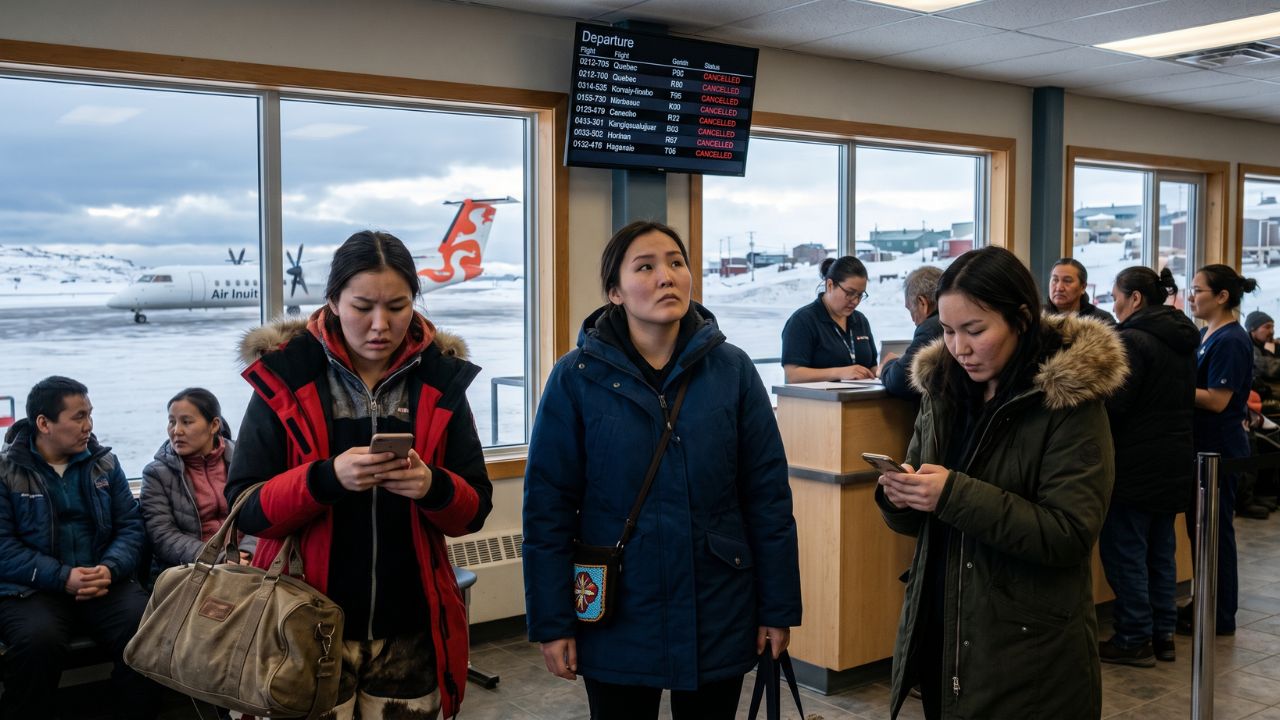
Image generated by AI
In a highly destructive operational breakdown that is currently severing the most vital transportation lifelines in Northern Quebec, Canada's remote Nunavik region has been hit by a severe wave of localized airport disruptions. According to official aviation tracking data for the current reporting period, the regional transport network has buckled under an unusual systemic failure, officially recording exactly 4 crippling flight cancellations with absolutely zero recorded delays. As the region's primary carrier, Air Inuit, battles this sudden structural collapse, severe travel chaos is ravaging extremely vulnerable indigenous communities. With critical passenger, medical, and cargo routes bound for Aupaluk, Kangirsuk, and Tasiujaq completely suspended, this logistical bottleneck highlights the extreme fragility of Arctic aviation and represents the premier headline in today's breaking airline news and essential global aviation updates.
By introducing direct passenger coordination and dynamic scheduling backups, the regional aviation hubs target growing passenger demand across vital commerce sectors. The choice to coordinate flight departures in phases helps to manage gate capacity, supporting the country's broader regional transportation network.
Context: The Collapse of the Nunavik Lifeline
Aviation in Canada's remote Arctic and sub-Arctic regions does not operate like a traditional commercial network; it functions as an absolutely critical lifeline.
Because communities in Nunavik possess zero year-round road connectivity, they are entirely dependent on scheduled flights for basic survival, including medical evacuations, educational mobility, and food supply procurement. The current operational crisis is uniquely severe due to its specific data pattern: exactly 4 cancellations and 0 delays. In major international hubs, delays outnumber cancellations. Here, a 100% cancellation rate indicates a complete, pre-emptive suspension of the routing network rather than staggered schedule disruptions. When Air Inuit is forced to ground an aircraft—whether due to extreme northern weather variability or strict aircraft rotation constraints—the ripple effect is devastating. For the passengers stranded in Aupaluk or Kangirsuk, this breakdown translates directly into missed essential medical appointments, severed supply chains, and extreme logistical isolation.
To view live flight schedules, real-time community hub maps, or specific delay protocols for the Northern Quebec network, travelers must consult the official Canadian aviation directories. For direct booking access, specific cargo rules, and rebooking options, passengers should check the official Air Inuit portal. To explore live flight tracking and monitor the exact severity of the Nunavik airspace closures, passengers can consult the official FlightAware tracking service.
Section-Wise Breakdown of the Regional Meltdown
Aupaluk: The Epicenter of the Disruption
The operational breakdown was heavily concentrated across three key community hubs, with Aupaluk recording the highest absolute operational impact. Serving as one of the smallest communities in Nunavik, Aupaluk's airstrip is categorized as an essential regional connector under Canadian government infrastructure planning principles. When flights to Aupaluk are hard-canceled, the community is instantly cut off from larger administrative and medical centers down south, paralyzing all inbound logistics.
Kangirsuk and Tasiujaq: The Ripple Effect
The disruption instantly spread to secondary hubs, inflicting hard cancellations on routes servicing Kangirsuk and Tasiujaq. The cancellation distribution explicitly suggests a network-linked disruption rather than isolated, airport-level technical issues. In the Nunavik aviation loop, carriers operate with highly limited aircraft rotation capacity. A single aircraft services multiple communities in a strict sequence; therefore, if the flight to Aupaluk is canceled, the subsequent legs to Kangirsuk and Tasiujaq are mathematically destroyed, stranding passengers across the entire coastline.
Air Inuit: Absorbing the Full Blow
The full, 100% operational impact of this breakdown was absorbed exclusively by Air Inuit, which recorded all four cancellations across its active scheduled services. As the government-recognized essential service operator for the region, Air Inuit's fleet is designed to withstand harsh environments, but it remains highly vulnerable to tight turnaround dependencies and the logistical bottlenecks inherent in operating small turboprop fleets in the sub-Arctic.
Technical Roster: Nunavik Disruption Matrix
To ensure absolute factual accuracy regarding the sheer scale of this remote Canadian aviation failure, the following table details the core operational metrics and the specific market impacts generated by the Air Inuit breakdown:
| Airline / Operating Hub | Operational Disruption Metric | Regional Travel Market Impact |
|---|---|---|
| Air Inuit | 4 Total Cancellations | Primary carrier suffers full route suspension on key segments |
| Aupaluk | Highest Cancellation Impact | Epicenter of disruption; community isolated from southern supply chains |
| Kangirsuk / Tasiujaq | Secondary Network Cancellations | Severe ripple effect paralyzing interconnected coastal flight sequences |
| System-Wide Delays | 0 Recorded Delays | Indicates pre-emptive, complete route suspensions rather than rolling delays |
| Logistical Disruption | Severed Medical & Cargo Lines | Passengers lose access to essential healthcare, education, and food supplies |
Passenger Impact: Stranded in the Sub-Arctic
For the everyday passengers currently trapped in Aupaluk, Kangirsuk, or Tasiujaq, the logistical reality is fundamentally different—and far more dangerous—than being stranded in a southern mega-hub like Toronto or Montreal.
In Nunavik, air travel is strictly non-discretionary. Passengers whose flights are among the 4 outright cancellations are now facing a brutal reality: there are no alternative airlines, no rental cars, and no train stations to pivot toward. With zero alternative delay recovery slots indicated in the current schedule, these stranded passengers face an accumulating backlog. If an aircraft is not immediately repositioned during the next operational shift, residents risk running dangerously low on fresh food supplies at local cooperatives, and patients requiring critical, non-emergency medical treatment in southern hospitals are forced to abandon their appointments entirely.
Industry Analysis: The Fragility of the Northern Network
Aviation industry analysts view the 4-flight cancellation wave across Nunavik as a textbook symptom of the extreme structural vulnerability inherent in remote, small-fleet Arctic operations.
While a 4-flight disruption is mathematically invisible at an airport like London Heathrow, in northern Quebec, it represents a catastrophic system failure. Analysts note that Canadian aviation policy prioritizes these essential routes, but physical reality often dictates the outcome. Because Air Inuit relies heavily on small fleet deployment cycles, there is virtually zero spare aircraft capacity to inject into the network when weather instability or mechanical constraints strike. Government-backed transportation resilience strategies highlight the absolute necessity of maintaining this connectivity, yet this event proves that until larger fleet reserves are permanently stationed in the north, these indigenous and remote communities will remain highly exposed to sudden, debilitating operational isolation.
Actionable Advice for Surviving Nunavik Disruptions
If you are a traveler or resident relying on Air Inuit schedules through Aupaluk, Kangirsuk, or Tasiujaq during this massive disruption wave, execute this extreme survival checklist immediately:
- Prioritize Medical Travel: If your canceled flight was scheduled for an essential medical transfer to a southern hospital, immediately contact local health authorities or the nursing station. Do not rely solely on standard airline rebooking algorithms; medical travel can sometimes be expedited via dedicated medevac flights if the situation becomes critical.
- Monitor Pre-Emptive Cancellations: Because Air Inuit logged 0 delays and 4 outright cancellations, recognize that the airline uses pre-emptive grounding to avoid trapping passengers at the airstrip. Do not leave for the airport until you have explicitly verified your flight status via the airline's dispatch or mobile app.
- Secure Essential Supplies: Recognize that a passenger flight cancellation also means a cargo cancellation. If the disruption extends beyond 24 hours, local supply chains will tighten. Ensure your household has secured any necessary prescription medications or critical supplies before community backlogs accumulate.
- Understand Fleet Repositioning: The recovery of this network depends entirely on weather windows and fleet repositioning. Remain highly flexible. When Air Inuit clears the backlog, flights may operate at highly unusual hours to clear the stranded passenger volume; be ready to board at a moment's notice.
FAQ: Nunavik Regional Flight Disruptions 2026
How severe is the current operational breakdown affecting the Nunavik region?
The regional network has suffered a highly specific logistical collapse, officially recording exactly 4 outright flight cancellations and 0 flight delays during the reporting period.
Which major communities and airlines are most affected by this travel chaos?
Air Inuit absorbed 100% of the operational failure, severely disrupting critical passenger and cargo routes bound for the remote communities of Aupaluk, Kangirsuk, and Tasiujaq.
Why are flight cancellations in Northern Quebec considered so dangerous?
Because these remote communities have absolutely zero year-round road connectivity, they rely entirely on aviation for basic survival, including medical access, food supply chain continuity, and essential government services.
The Breaking Point of the Arctic Lifeline
The catastrophic wave of 4 outright cancellations ravaging the Nunavik air network proves definitively that Canada's northern aviation infrastructure is operating on a razor's edge in 2026. By utterly devastating the highly scheduled, interconnected operations of Air Inuit, this disruption has ruthlessly exposed the deep logistical fragility of sub-Arctic community lifelines. As the airline desperately attempts to reposition its fleet and clear the backlog of stranded residents, travelers and policymakers must accept a brutal reality: navigating Canada's remote northern gateways requires extreme flexibility, aggressive contingency planning, and the absolute understanding that a single canceled flight can isolate an entire community.
Key Takeaways
- Targeted 4-Flight Breakdown: The Nunavik regional network has been paralyzed by a highly specific operational collapse, recording 4 complete flight cancellations and exactly 0 delays.
- Air Inuit Fleet Crippled: The primary essential service operator absorbed the entire impact, forcing a complete suspension of key routing segments.
- Aupaluk Epidemic: The remote community of Aupaluk suffered the highest operational impact, instantly cutting off the settlement from southern supply lines.
- Ripple Effect Cancellations: Due to tight aircraft rotation sequencing, the disruption immediately forced secondary cancellations in Kangirsuk and Tasiujaq.
- Structural Vulnerability: Analysts confirm the massive community impact is a direct result of relying on small fleet deployments in regions with zero alternative road connectivity.
Related Travel Guides
Severe Travel Chaos Paralyzes Los Angeles Across Major Airlines
Severe Travel Chaos Paralyzes San Diego Across Major Airlines
Disclaimer
This article is for informational and educational purposes only. It does not constitute legal, financial, or professional advice. While we strive to provide accurate and up-to-date information, travel policies, regulations, and conditions change rapidly. Always verify information with official sources before making travel decisions. Nomad Lawyer makes no representations about the accuracy, reliability, completeness, or suitability of the information provided. Readers should consult qualified professionals for advice specific to their circumstances. The views expressed in this article are those of the author and do not necessarily reflect the views of Nomad Lawyer.
Kunal K Choudhary
Co-Founder & Contributor
A passionate traveller and tech enthusiast. Kunal contributes to the vision and growth of Nomad Lawyer, bringing fresh perspectives and driving the community forward.
Learn more about our team →